
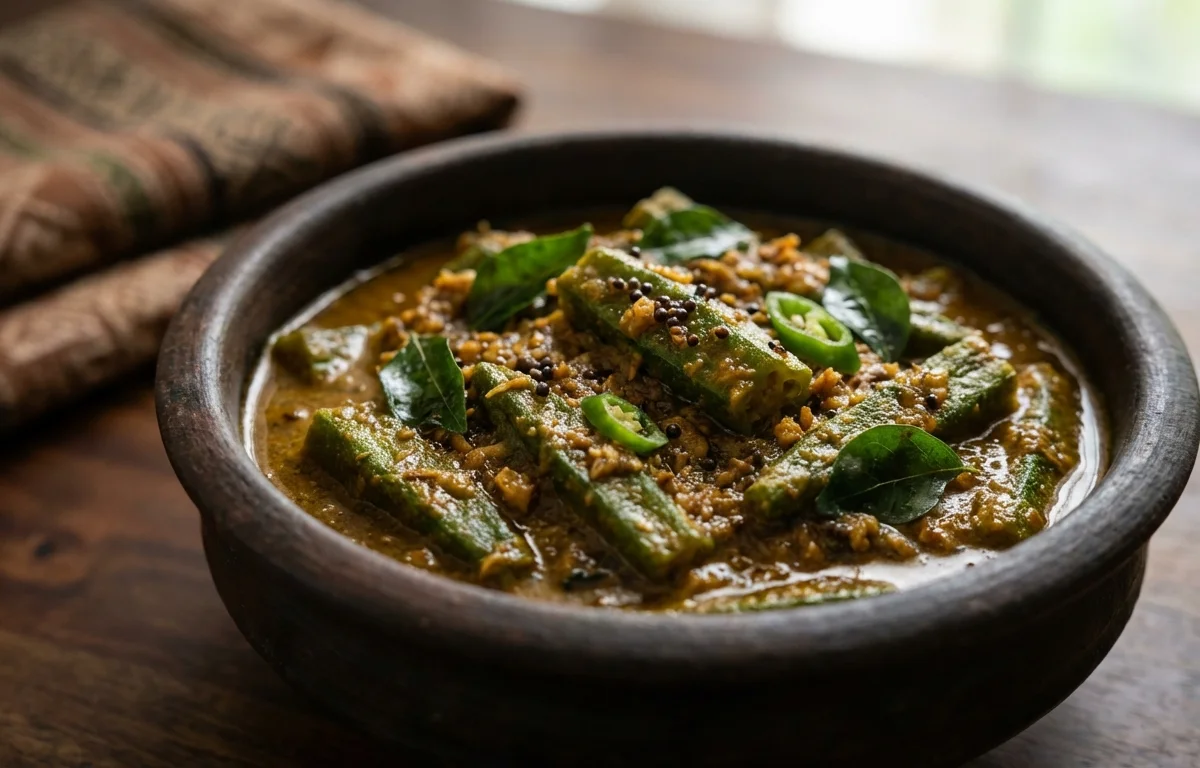
Vendakka Theeyal
This Kerala-style okra curry gets its deep, rich taste from roasted coconut, coriander, and tamarind. The gravy is dark, slightly tangy, and full of warm spice, making it a lovely partner for plain rice.
For 4 servings
- prep · ~10 min
Soak the tamarind and prep the okra.
1.Soak the tamarind in a little warm water for 10 minutes.2.Trim the okra and cut it into 1 inch pieces.3.Slice the shallots and peel the garlic cloves. - roast · ~8 min
Roast the coconut and spices.
1.Heat 1 tsp coconut oil in a pan over medium heat.2.Add coriander seeds, dried red chili, and fenugreek seeds; roast for 1 minute.3.Add grated coconut and roast, stirring often, until deep golden brown and fragrant.4.Take it off the heat and let it cool slightly.TIPKeep the heat medium and stir constantly once the coconut starts coloring so it browns evenly without turning bitter. - mix · ~3 min
Grind the roasted mixture.
Transfer the roasted coconut mixture to a blender. Add the soaked tamarind with its liquid and blend with a little water to a smooth, thick paste.
- temper · ~6 min
Make the tempering.
1.Heat the remaining coconut oil in a kadai over medium heat.2.Add mustard seeds and let them splutter.3.Add curry leaves and stir for a few seconds.4.Add the shallots and garlic, then cook until the shallots soften and turn lightly golden. - saute · ~8 min
Cook the okra.
Add the okra and turmeric powder to the pan. Cook for 6 to 8 minutes, stirring now and then, until the okra loses most of its sliminess and is lightly cooked.
TIPCook the okra uncovered so the moisture can evaporate and the curry stays smooth rather than sticky. - simmer · ~10 min
Simmer the theeyal.
Add the ground coconut paste, water, and salt. Mix well and bring to a gentle simmer. Cook for 8 to 10 minutes until the gravy thickens and the okra is fully tender.
- rest · ~5 min
Let the curry rest for 5 minutes.
- serve
Serve hot with plain rice.
What to keep in mind.
7 tips from the recipe — small details that make a real difference to the final dish.
- 1Dry the cut okra well before cooking so it sautees instead of turning sticky in the gravy.
- 2Roast the coconut until a deep golden brown, not just pale gold; that dark roast gives theeyal its signature color and depth.
- 3Use medium heat while roasting the coconut-spice mix, because scorched fenugreek or chili can make the curry bitter.
- 4Cook the okra uncovered until the slime reduces before adding the ground paste and water.
- 5Grind the roasted coconut with tamarind to a very smooth paste so the gravy turns velvety rather than grainy.
- 6Let the curry rest after simmering; the roasted coconut and tamarind flavors meld and the gravy thickens slightly.
- 7This theeyal tastes even better the next day, so it is a great make-ahead curry for rice meals.
Adapt it for your goals.
Jaggery-balanced
Add a small pinch of jaggery at the end to round out the tamarind's sharpness without making the curry sweet.
shallot heavyShallot-heavy
Use extra shallots for a sweeter, more traditional base that pairs especially well with the dark roasted coconut.
mixed vegetableMixed-vegetable
Swap part of the okra with small brinjal or pearl onions for another classic theeyal-style variation and a different texture.
Why this is on our healthy list.
Fiber-Rich Vegetables
Okra and shallots add fiber, which helps make this rice-side curry more satisfying and supports digestion.
Plant-Based Fats
Coconut and coconut oil contribute richness from plant sources, helping the spices taste fuller and more rounded.
Phytonutrient-Packed Spices
Coriander, fenugreek, turmeric, garlic, and curry leaves bring aromatic compounds and beneficial plant nutrients.
Frequently asked questions
Dry the okra well, cook it uncovered, and saute it for several minutes before adding the ground coconut-tamarind paste.



.webp)


.webp)