
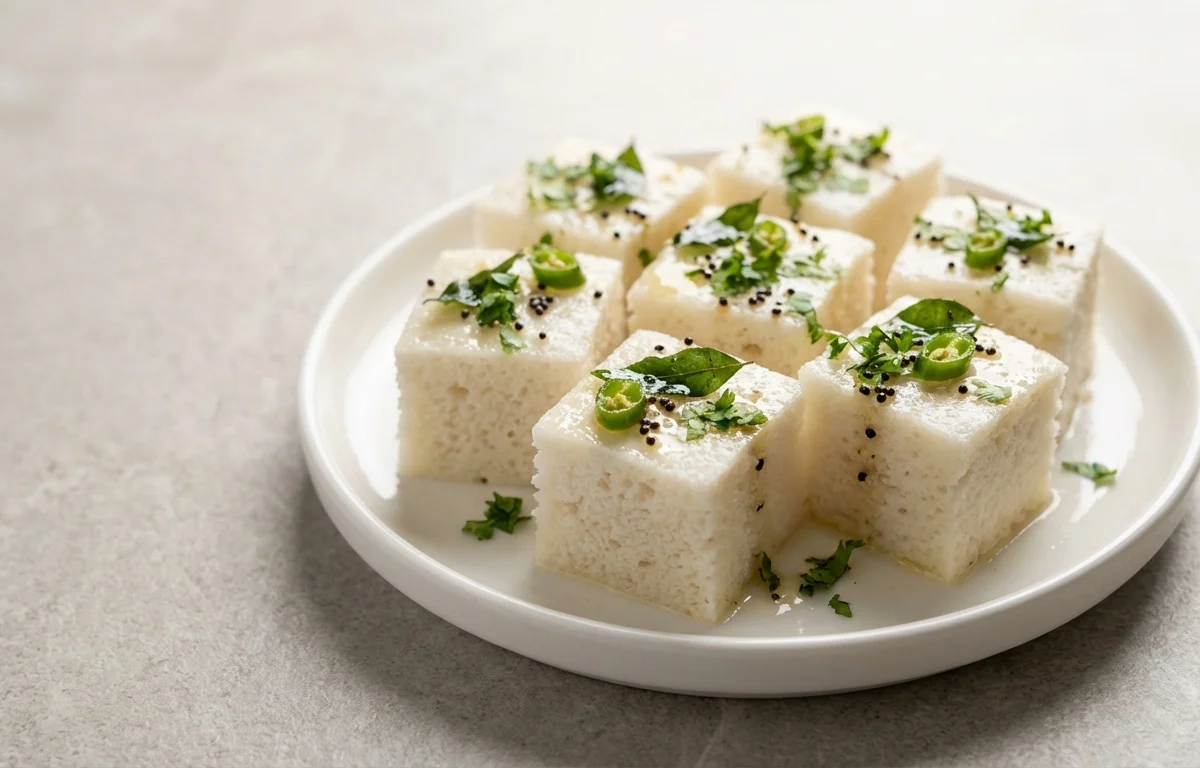
White Dhokla
Soft, airy steamed cakes with a subtle tang from overnight fermentation. This all-rice cousin of the classic khaman dhokla is a beloved Gujarati snack that stays pristine white, with a gentle tempering of sesame and green chilies making every bite sing with flavor.
For 4 servings
- prep · ~300 min
Soak the rice and urad dal.
Wash 1 cup raw rice with 1/4 cup urad dal. Soak together in enough water to cover for 5 hours.
TIPSoaking softens the grains and helps the batter ferment evenly. - prep · ~5 min
Grind to a smooth batter.
Drain the soaked rice and dal. Transfer to a mixer grinder, add 1/2 cup sour yogurt and grind adding water gradually (about 1 cup total) until the batter is smooth with a thick pouring consistency.
TIPThe batter should coat the back of a spoon — if it drips off too quickly, you added too much water. - rest · ~480 min
Ferment the batter overnight.
Add a pinch of salt to the batter. Mix once in one direction. Cover the bowl and keep in a warm place to ferment for 8 hours or overnight until it doubles and develops small air pockets.
TIPOn colder days, place the bowl inside an oven with just the light on, or wrap in a tea towel for extra warmth. - prep · ~1 min
Prepare the steamer and add fruit salt to the batter.
Grease idli plates lightly with oil. Pour water in the steamer base and bring to a full rolling boil. Right before steaming, sprinkle 1 tsp fruit salt over the fermented batter and whisk briskly for 1 minute — the batter will become light and frothy.
TIPDo not rest the batter after adding fruit salt; pour immediately or the air bubbles escape and dhokla becomes flat. - steam · ~15 min
Steam the white dhoklas.
1.Pour the frothy batter immediately into the greased idli moulds, filling each about 3/4 full.2.Place the plates in the steamer, cover and steam on high heat for 12-15 minutes.3.Insert a toothpick in the center of a dhokla; if it comes out clean, they are done.TIPKeep the steamer lid wrapped in a kitchen towel to prevent condensed steam from dripping onto the dhoklas. - rest · ~3 min
Cool and demould.
Take out the idli plates and let them cool for 2-3 minutes. Gently scoop out the dhoklas with a spoon and place them on a serving plate.
TIPDon't try to remove them piping hot — a short rest helps them firm up and release cleanly. - temper · ~2 min
Make the tempering.
1.Heat 2 tsp oil in a small pan over medium heat.2.Add 1 tsp mustard seeds and let them crackle fully (20-30 sec).3.Add 1 tsp sesame seeds and fry until they pop lightly (10 sec).4.Toss in 2 slit green chilies and 8 curry leaves; sauté until fragrant (15 sec).TIPSplash the tempering over the dhoklas right before serving — the crackling sound is part of the experience. - mix · ~1 min
Pour the tempering over the dhoklas.
Quickly mix 1 tsp sugar with 2 tsp water and pour into the hot tempering. Stir once, then drizzle the entire tempering evenly over the steamed dhoklas.
TIPThe sugar-water mix balances the tang and gives the dhoklas a subtle shine. - garnish
Garnish and serve warm.
Sprinkle chopped cilantro and grated fresh coconut over the top. Serve immediately with green chutney or fried green chilies.
What to keep in mind.
7 tips from the recipe — small details that make a real difference to the final dish.
- 1Ensure batter ferments in a warm spot (25-30°C) until doubled and bubbly for best texture.
- 2Grind the rice and urad dal to a very smooth paste; a coarse batter yields dense dhoklas.
- 3Add fruit salt (Eno) just before steaming and whisk immediately—do not let the batter rest.
- 4Steam on high heat without opening the lid midway, or the dhoklas may collapse.
- 5Wrap the steamer lid in a clean kitchen towel to absorb condensation and prevent soggy tops.
- 6Cool dhoklas for 2-3 minutes before unmoulding to avoid tearing the soft cakes.
- 7Pour the tempering generously over each dhokla right before serving for maximum aroma and flavor.
Adapt it for your goals.
Vegan
Replace yogurt with an equal quantity of sour plant-based yogurt or a mixture of water and 1 tablespoon lemon juice; the tang is essential for fermentation and flavor.
gluten freeGluten-free
This recipe is naturally gluten-free as it uses rice and urad dal; just ensure the fruit salt (Eno) is labeled gluten-free if you are highly sensitive.
low oilLow-oil
Reduce the tempering oil to 1 teaspoon and skip the sugar-water drizzle; the dhoklas will be less rich but still satisfyingly soft and tangy.
herb infusedHerb-infused
Add 2 tablespoons finely chopped fresh coriander or mint to the batter before steaming for a subtle herbal note that complements the tempering.
Why this is on our healthy list.
Fermented for Gut Health
The overnight fermentation of rice and urad dal produces natural probiotics and enzymes that aid digestion and support a healthy gut microbiome.
High in Plant Protein
Urad dal is rich in plant-based protein, making these dhoklas a satisfying snack that helps maintain muscle health and keeps you fuller for longer.
Low in Fat and Cholesterol-Free
Steaming eliminates the need for frying, resulting in a light dish with very little fat (mostly from the tempering oil), and no cholesterol whatsoever.
Provides Sustained Energy
The combination of rice and urad dal offers complex carbohydrates and protein that release energy slowly, preventing sudden blood sugar spikes.
Frequently asked questions
Yellowing usually happens if the batter contains turmeric (not used here) or if the steaming water is not at a rolling boil before adding the batter. Use a clean steamer and full heat to maintain the white color.


