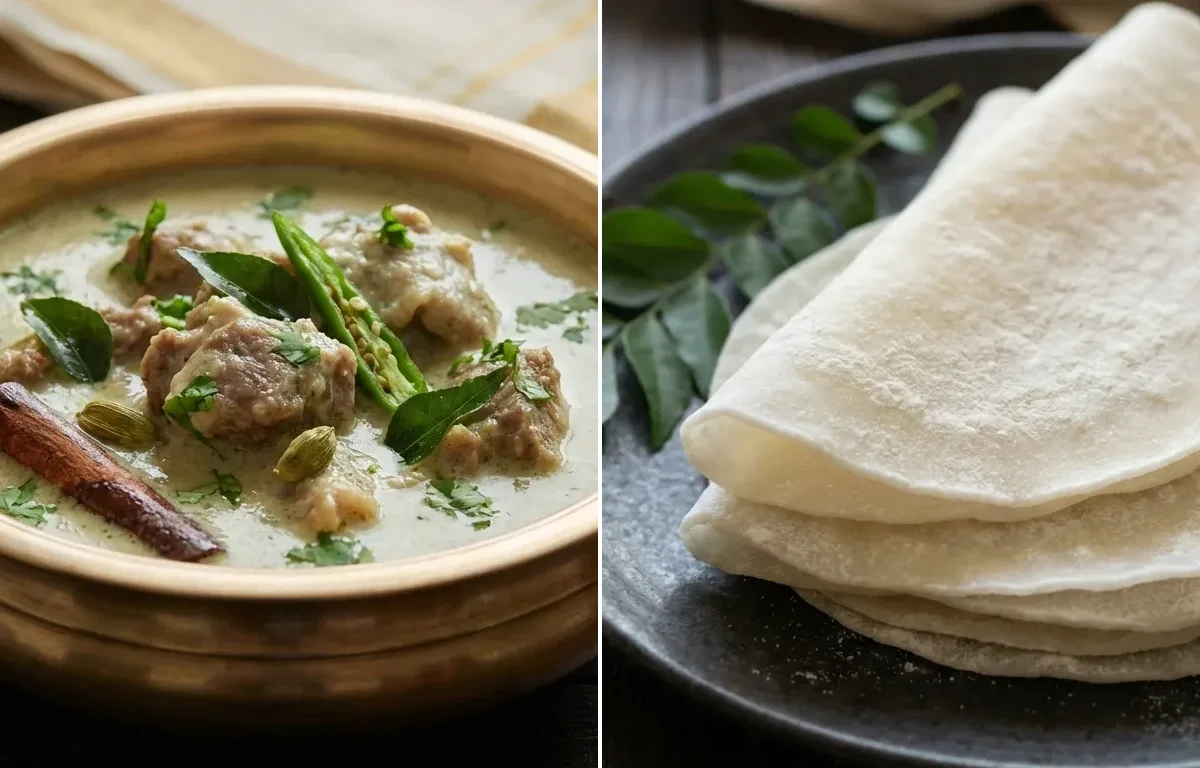
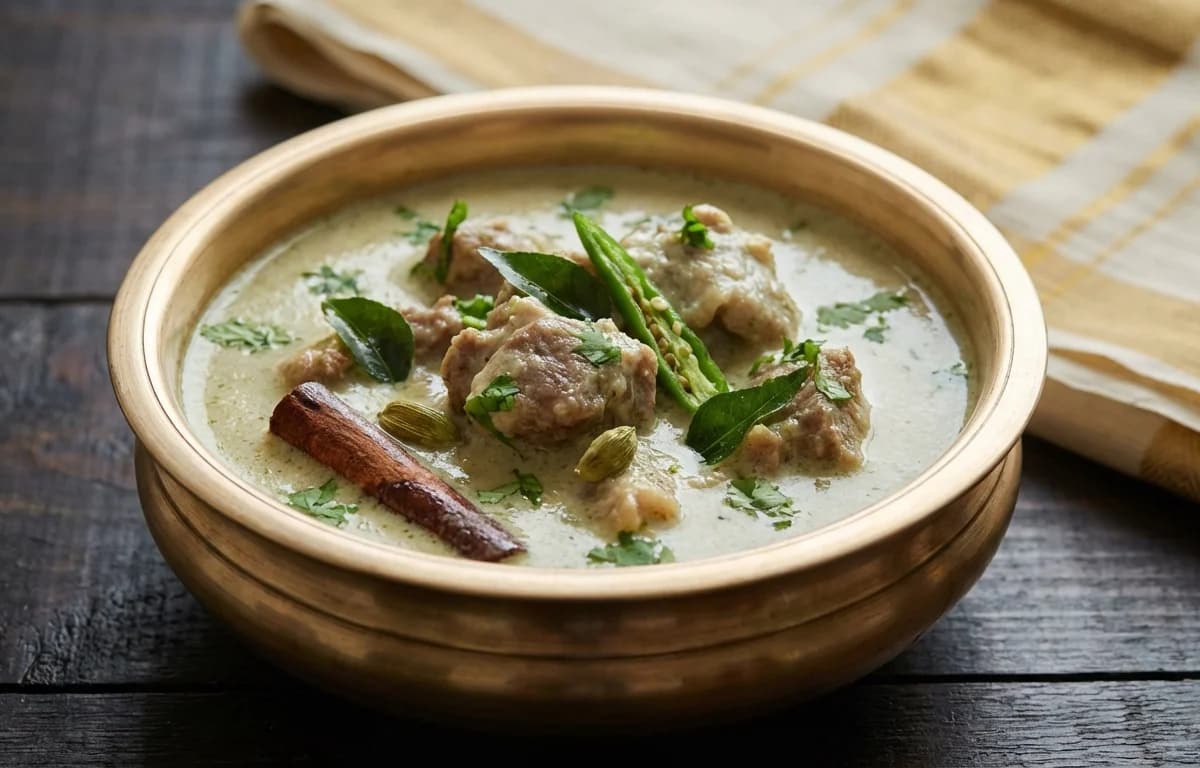
Tender mutton pieces simmered in a rich, creamy white gravy made from coconut, cashews, and aromatic spices. This classic Kerala dish is mildly spiced and pairs perfectly with appam, parotta, or ghee rice.
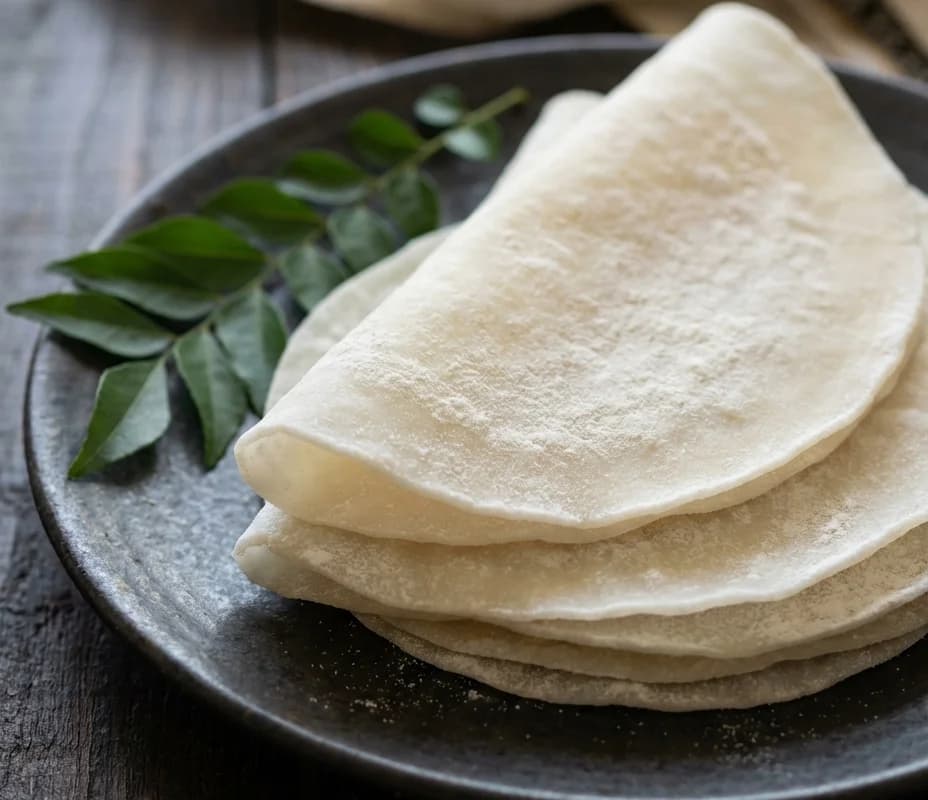
Discover the art of making Pathiri, the paper-thin, soft rice flatbread from the Malabar coast of Kerala. Made with just roasted rice flour and water, these delicate rotis are the perfect, melt-in-your-mouth accompaniment for rich, spicy curries.
Prep15 min
Cook20 min
Servings4
Serving size: 1 serving
About Malabari Mutton Kurma with Pathiri
Creamy, aromatic Malabari Mutton Kurma with soft Pathiri - a soul-satisfying meal for any time!
This indian dish is perfect for breakfast. With 699.8599999999999 calories and 41.23g of protein per serving, it's a nutritious choice for your meal plan.
Other Cuisines to Explore
Discover authentic meals from cuisines around the world.
2 tbsp Coriander Leaves (Freshly chopped, for garnish)
1.5 tsp Salt (Or to taste, to be divided)
2 cup Water (1.5 cups for cooking mutton, 0.5 cup for gravy adjustment)
Instructions
1
Pressure Cook the Mutton
In a pressure cooker, combine the mutton pieces, 1/4 tsp of turmeric powder, 3/4 tsp of salt, and 1.5 cups of water.
Mix well, secure the lid, and cook on medium-high heat for 5-6 whistles, or for about 20-25 minutes, until the mutton is tender and falls off the bone easily.
Turn off the heat and allow the pressure to release naturally. Set aside the cooked mutton and its stock; do not discard the stock.
2
Prepare the Coconut-Cashew Paste
While the mutton cooks, soak the cashew nuts and poppy seeds in 1/4 cup of warm water for at least 15 minutes to soften them.
In a blender, combine the soaked cashews and poppy seeds (with their soaking water), fresh grated coconut, and fennel seeds.
Grind to a very smooth, thick paste. Add a tablespoon or two of extra water if needed to facilitate grinding, but keep the paste thick.
3
Build the Gravy Base
Heat coconut oil in a heavy-bottomed pan or kadai over medium heat. Add the whole spices: cinnamon stick, cloves, and green cardamom. Sauté for 30-40 seconds until fragrant.
Add the thinly sliced onions and sauté for 8-10 minutes, stirring occasionally, until they are soft and translucent with light golden edges.
Add the ginger-garlic paste and slit green chilies. Sauté for another 1-2 minutes until the raw aroma disappears.
Add the chopped tomato and cook for 4-5 minutes, until it becomes soft and mushy.
4
Combine and Simmer the Kurma
Reduce the heat to low. Add the spice powders: the remaining 1/4 tsp turmeric powder, coriander powder, and garam masala. Stir for 1 minute until aromatic.
Pour in the cooked mutton along with all of its stock. Mix everything together.
Stir in the ground coconut-cashew paste and the remaining 3/4 tsp of salt. Combine thoroughly. If the gravy is too thick, add up to 1/2 cup of hot water to reach your desired consistency.
Bring the curry to a gentle simmer. Immediately reduce the heat to the lowest setting, cover the pan, and let it simmer for 8-10 minutes. Do not boil vigorously, as this can cause the coconut paste to split.
5
Garnish and Serve
Turn off the heat. Stir in the fresh curry leaves and chopped coriander leaves.
Let the kurma rest, covered, for at least 10 minutes to allow the flavors to deepen.
Serve hot with appam, Kerala parotta, idiyappam, or ghee rice.
286cal
4gprotein
55gcarbs
5gfat
Ingredients
2 cup Roasted Rice Flour (Also known as idiyappam flour. Do not use regular rice flour.)
2 cup Water (Use boiling water for best results.)
0.75 tsp Salt (Adjust to taste.)
1 tbsp Coconut Oil (Adds flavor and softness to the dough.)
0.25 cup Rice Flour (For dusting while rolling.)
Instructions
1
Boil Water and Prepare Base
In a wide, heavy-bottomed pan, bring 2 cups of water to a vigorous, rolling boil. This is a critical step.
Once boiling, add 0.75 tsp of salt and 1 tbsp of coconut oil. Stir well to combine.
2
Form the Dough
Reduce the heat to the absolute lowest setting. Add all 2 cups of roasted rice flour to the pan at once.
Using a sturdy wooden spoon or spatula, mix quickly and vigorously for about 30-60 seconds until the flour absorbs all the water and forms a single, crumbly mass.
Turn off the heat, cover the pan with a tight-fitting lid, and let it rest for 8-10 minutes. This allows the flour to cook in the residual steam, which is essential for soft pathiri.
3
Knead the Dough
Transfer the warm dough mixture to a large plate, bowl, or clean countertop. Be careful as it will be very hot.
To handle the heat, dip your hands in cool water or lightly grease them with oil.
Knead the dough for 5-7 minutes while it is still warm. Press, fold, and stretch until it transforms from a crumbly mass into a completely smooth, soft, and pliable dough with no cracks, similar to soft play-doh.
4
Shape and Roll the Pathiri
Divide the smooth dough into 16 equal-sized small balls. Roll them between your palms until smooth.
Keep the dough balls covered with a damp cloth at all times to prevent them from drying out.
Take one ball, flatten it slightly, and dust it generously with dry rice flour on both sides.
Using a rolling pin, roll it into a very thin circle, about 5-6 inches in diameter. Aim for a paper-thin consistency, dusting with more flour as needed to prevent sticking.
5
Cook the Pathiri
Heat a non-stick tawa or flat skillet over medium-high heat. Do not grease the tawa.
Carefully place a rolled pathiri on the hot tawa. Cook for about 20-30 seconds, or until you see small bubbles appear on the surface.
Flip the pathiri and cook the other side for another 20-30 seconds.
Flip it one last time. Gently press the edges with a flat spatula or a folded cloth. The pathiri should puff up like a balloon.
Once fully puffed, immediately remove it from the tawa to prevent it from becoming hard or crispy.
6
Store and Serve
Place the cooked pathiri directly into a casserole dish or a container lined with a clean kitchen towel. Keep it covered.
Repeat the rolling and cooking process for all the remaining dough balls, stacking them in the casserole as you go. The trapped steam will keep them exceptionally soft.
Serve hot with traditional Kerala curries like chicken stew, fish molee, or egg roast.