
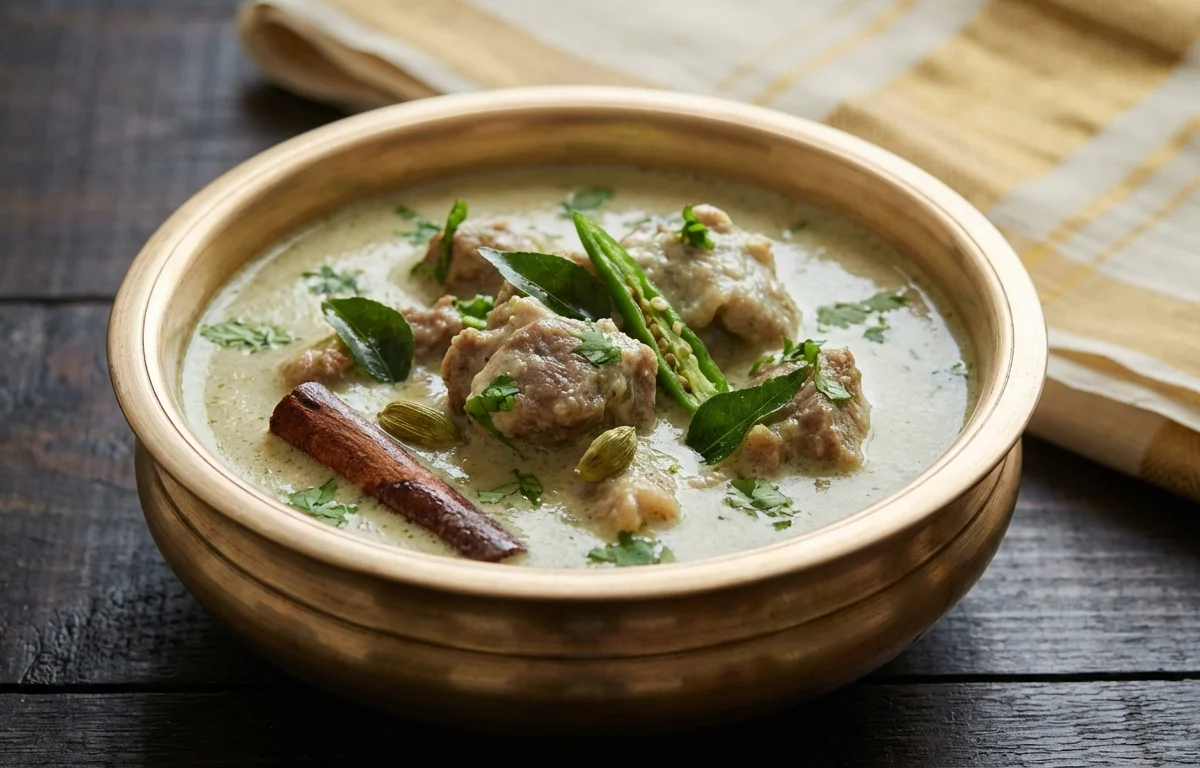
Malabari Mutton Kurma
A fragrant Kerala-style mutton kurma with tender meat, sweet onions, fresh coconut, and warm whole spices. The gravy is rich yet balanced, making it a lovely partner for appam, neer dosa, or parotta.
For 4 servings
- prep · ~7 min
Prepare the coconut paste.
1.Heat a small pan over low heat.2.Add grated fresh coconut and fennel seeds.3.Roast until the coconut turns light golden and smells nutty, 3 to 4 minutes.4.Cool slightly, then grind with cashews and 0.5 cup water to a smooth paste.TIPKeep the heat low while roasting the coconut so it browns evenly without burning. - pressure cook · ~30 min
Cook the mutton until tender.
1.Add mutton, 1 cup water, turmeric powder, 0.25 tsp salt, and black pepper to a pressure cooker.2.Mix well and close the lid.3.Pressure cook on medium heat for 20 to 25 minutes until the meat is tender.4.Let the pressure drop naturally before opening.TIPBone-in pieces give the kurma a deeper flavor and help the gravy taste richer. - saute · ~9 min
Cook the whole spices and onions.
1.Heat coconut oil in a wide pan over medium heat.2.Add cinnamon, green cardamom, cloves, bay leaf, and curry leaves.3.Cook for 20 to 30 seconds until fragrant.4.Add sliced onions and cook until soft and lightly golden, 6 to 8 minutes. - saute · ~7 min
Build the masala base.
1.Add ginger, garlic, and green chili to the onions.2.Cook for 1 minute until the raw smell fades.3.Add chopped tomato, coriander powder, red chili powder, and the remaining 0.25 tsp salt.4.Cook until the tomatoes soften and the masala looks thick, 5 to 6 minutes.TIPCook the tomatoes fully here so the final gravy tastes rounded and not sharp. - simmer · ~5 min
Combine the mutton and coconut paste.
1.Add the cooked mutton with its cooking liquid to the pan.2.Stir in the coconut-cashew paste.3.Add the remaining 0.5 cup water and mix until smooth.4.Bring the kurma to a gentle simmer. - simmer · ~12 min
Simmer the kurma until thick and fragrant.
Cover loosely and simmer on low heat for 10 to 12 minutes, stirring now and then, until the gravy thickens and coats the mutton nicely.
TIPIf the gravy gets too thick, loosen it with a few spoonfuls of hot water. - garnish
Garnish with cilantro.
- serve
Serve the kurma hot.
Serve with appam, parotta, neer dosa, or plain rice.
What to keep in mind.
7 tips from the recipe — small details that make a real difference to the final dish.
- 1Roast the coconut only to light golden; dark browning can make the kurma taste bitter.
- 2Let the pressure release naturally so the mutton finishes tenderizing and stays juicy.
- 3Slice the onions thinly and cook them until lightly golden for a sweeter, fuller gravy base.
- 4Grind the coconut and cashews to a very smooth paste so the kurma stays silky, not grainy.
- 5Keep the final simmer gentle after adding the coconut paste to prevent splitting or sticking.
- 6This kurma tastes even better after 30 minutes of resting, when the whole spices settle into the gravy.
- 7Reheat on low heat with a splash of hot water, as coconut-based gravies thicken noticeably on standing.
Adapt it for your goals.
Spicier
Add 1 to 2 extra green chilies and a little more black pepper for a sharper heat that still suits the creamy coconut gravy.
low oilLow-oil
Reduce the coconut oil slightly and sauté the onions on medium-low heat; you still get a fragrant kurma with a lighter finish.
chickenChicken
Use bone-in chicken instead of mutton for a faster weeknight version; reduce the pressure-cooking or simmering time accordingly.
no cashewNo-cashew
Skip the cashews and increase coconut slightly for a nuttiness-free version that remains true to the dish's coconut-rich style.
Why this is on our healthy list.
Protein-Rich Main Dish
Mutton provides substantial protein, making this kurma filling and satisfying when served with appam, dosa, or rice.
Rich in Aromatic Spices
Ginger, garlic, fennel, pepper, and curry leaves add depth while contributing beneficial plant compounds to the dish.
Naturally Thickened Gravy
Fresh coconut and cashews give body and richness without relying on refined thickeners or packaged cream.
Frequently asked questions
Yes. Simmer the mutton covered in a heavy pot until tender, adding water as needed; it will take much longer than pressure cooking.


