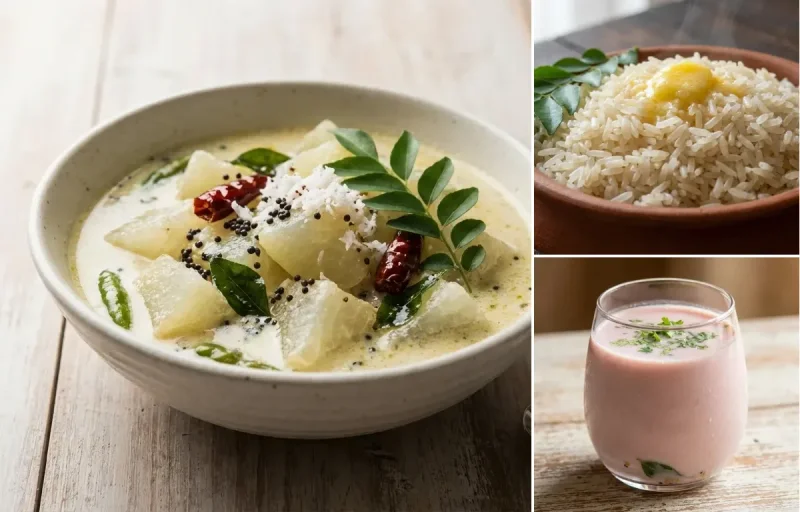
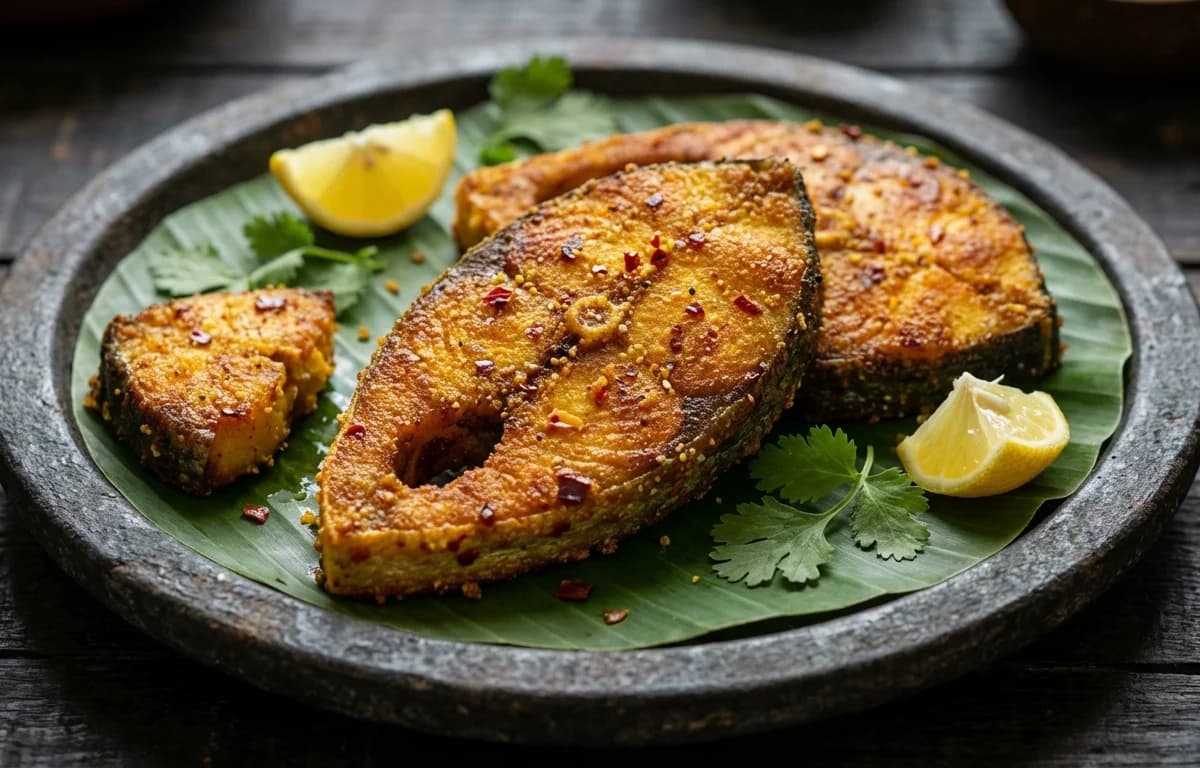
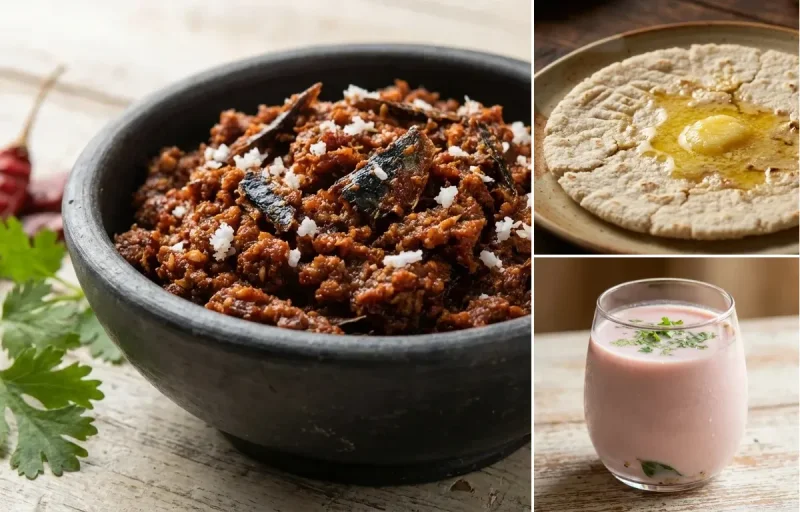
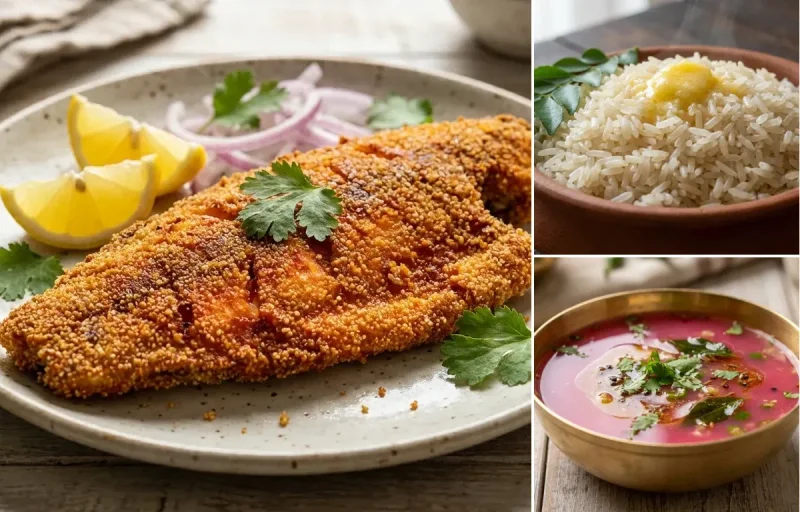
Crispy, pan-fried seer fish steaks coated in a spicy Maharashtrian marinade and a crunchy semolina crust. A coastal favorite that's quick to make and bursting with flavor, perfect as an appetizer or a main course.
Prep45 min
Cook15 min
Soak30 min
Servings4
Serving size: 1 serving
348cal
36gprotein
27gcarbs
Ingredients
600 g Surmai Fish Steaks (About 4 thick steaks)
2 tbsp Ginger Garlic Paste
1.5 tsp Kashmiri Red Chili Powder (Adjust to your spice preference)
0.5 tsp Turmeric Powder
1 tsp Malvani Masala (Use garam masala as a substitute if unavailable)
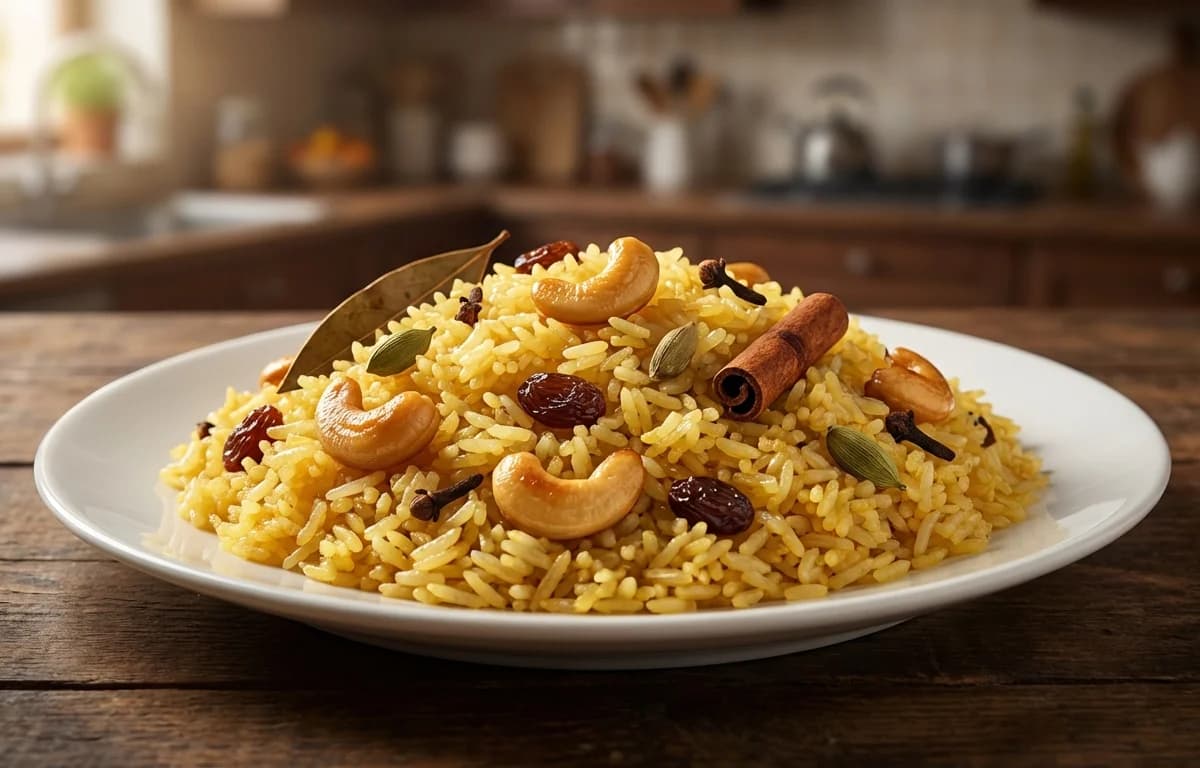
A fragrant and lightly sweet rice pilaf from Bengal, made with aromatic gobindobhog rice, ghee, cashews, and raisins. This festive dish, with its beautiful yellow hue, is a celebratory classic that pairs wonderfully with rich curries.
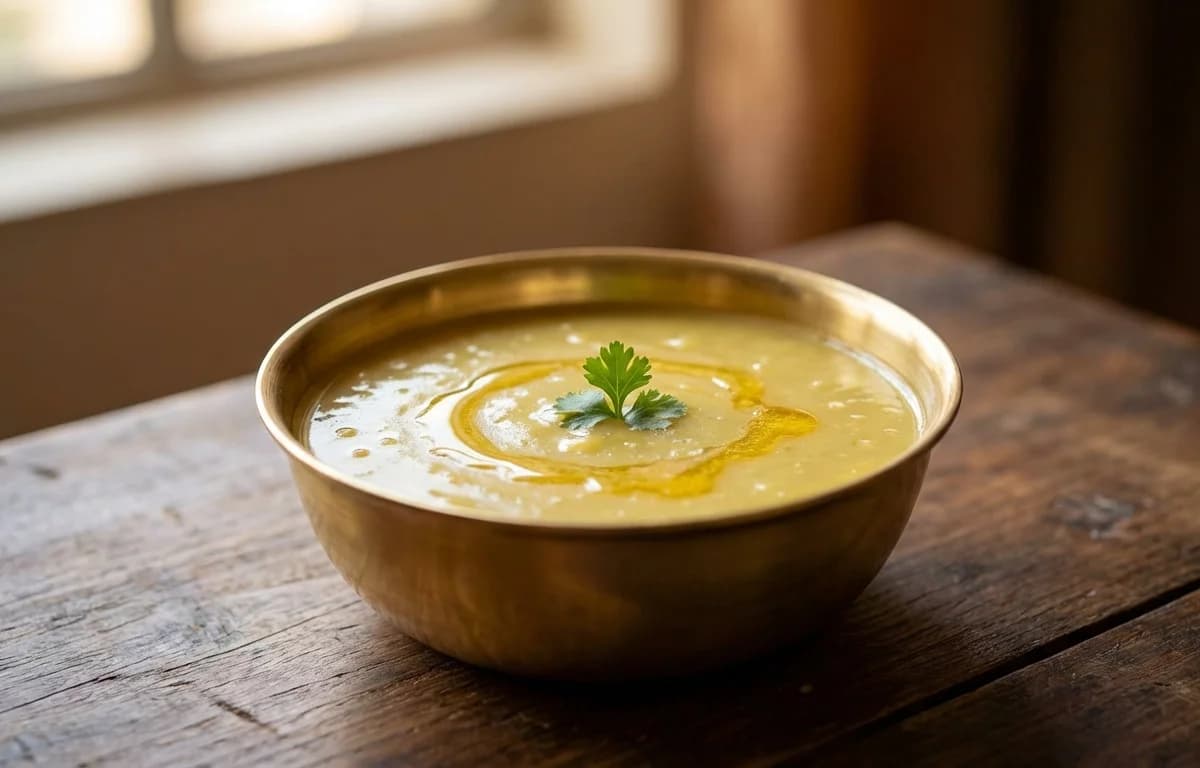
A simple, comforting Maharashtrian dal made from split pigeon peas. Lightly seasoned with turmeric and asafoetida, this soothing lentil dish is a staple in festival feasts, traditionally served with steamed rice and a dollop of ghee.
A refreshing and tangy pink-hued drink from the Konkan coast. Made with coconut milk and sour kokum, this digestive cooler is the perfect balance to a spicy meal.
Prep15 min
Cook5 min
Soak30 min
Servings4
About Surmai Tawa Fry, Bengali Mishti Pulao, Varan and Sol Kadhi
Crispy Surmai Tawa Fry with fluffy rice, dal & Solkadhi - a protein-packed, gut-friendly treat.
This konkani dish is perfect for lunch. With 1228.95 calories and 54.98g of protein per serving, it's a nutritious choice for your meal plan.
Other Cuisines to Explore
Discover authentic meals from cuisines around the world.
2 tbsp Coriander Leaves (Freshly chopped, for garnish)
1 serving Onion Rings (For serving)
1 serving Lemon Wedges (For serving)
Instructions
1
Prepare and Marinate the Fish (35 minutes)
Rinse the surmai steaks under cold water and pat them completely dry with paper towels. This is a crucial step for a crispy finish.
In a bowl, combine the ginger-garlic paste, Kashmiri red chili powder, turmeric powder, Malvani masala, lemon juice, and salt. Add 1 tablespoon of water to form a thick, smooth paste.
Generously rub this marinade paste all over the fish steaks, ensuring they are evenly coated.
Let the fish marinate for at least 30 minutes at room temperature. For deeper flavor, you can marinate it for up to 2 hours in the refrigerator.
2
Prepare the Coating (2 minutes)
On a wide plate or tray, mix the fine rava and rice flour together. You can add a small pinch of salt to the coating for extra flavor.
3
Coat the Fish Steaks (3 minutes)
Take each marinated fish steak one by one and dredge it in the rava-rice flour mixture.
Press gently but firmly to ensure the coating adheres well to all sides. Shake off any excess coating.
4
Shallow Fry the Fish (10-12 minutes)
Heat the vegetable oil in a wide, heavy-bottomed pan (tawa) or skillet over medium heat. The oil should be hot but not smoking.
To test if the oil is ready, drop a pinch of the rava coating into it; if it sizzles immediately, the oil is at the right temperature.
Carefully place the coated fish steaks on the pan, ensuring not to overcrowd it. Fry in batches if necessary.
Fry for 5-6 minutes on the first side, or until the crust is deep golden brown and crisp. Avoid moving the fish around.
Gently flip the steaks and fry for another 5-6 minutes on the other side until cooked through. The fish is done when it flakes easily with a fork.
5
Serve Immediately (3 minutes)
Once cooked, remove the fish from the pan and place it on a wire rack or a plate lined with paper towels to drain any excess oil.
Garnish with freshly chopped coriander leaves.
Serve hot with onion rings and lemon wedges on the side.
Servings
4
Serving size: 1 serving
510cal
7gprotein
81gcarbs
18gfat
Ingredients
1.5 cup Gobindobhog Rice (Basmati rice can be used as a substitute)
4 tbsp Ghee
0.25 cup Cashew Nuts (Halved or whole)
0.25 cup Raisins
3 tbsp Sugar (Adjust to taste)
1 tsp Ginger Paste
0.25 tsp Turmeric Powder (For color)
1 tsp Salt
2 pcs Bay Leaf
1 inch Cinnamon Stick
4 pcs Green Cardamom (Lightly crushed to release aroma)
4 pcs Cloves
1 strand Mace (Also known as Javitri)
3 cup Hot Water (Using hot water helps keep rice grains separate)
Instructions
1
Prepare the Rice
Gently wash the gobindobhog rice under cold running water until the water runs clear. Be careful not to break the grains.
Soak the washed rice in fresh water for 20-30 minutes.
After soaking, drain the rice completely using a fine-mesh sieve. Let it sit in the sieve for 10 minutes to remove all excess water.
2
Fry Nuts and Raisins
Heat 2 tbsp of ghee in a heavy-bottomed pan or kadai over medium heat.
Add the cashew nuts and fry for 1-2 minutes until they turn a light golden brown.
Add the raisins and fry for another 30 seconds until they plump up. Immediately remove the cashews and raisins with a slotted spoon and set aside.
3
Sauté Spices and Rice
In the same pan, add the remaining 2 tbsp of ghee.
Once the ghee is hot, add the bay leaves, cinnamon stick, crushed green cardamoms, cloves, and mace. Sauté for 30-40 seconds until the spices release their aroma.
Add the drained rice to the pan. Gently sauté for 2-3 minutes, ensuring each grain is coated with ghee. Avoid vigorous stirring.
4 cup Water (Divided; 2 cups for cooking and 2 cups for adjusting consistency)
0.5 tsp Turmeric Powder
0.25 tsp Hing (Asafoetida)
1 tsp Salt (Adjust to taste)
1 tsp Jaggery (Optional, for a subtle sweetness)
2 tbsp Ghee (For serving)
Instructions
1
Cook the Dal
Rinse the toor dal thoroughly under cold running water until the water runs clear. Soaking the dal for 30 minutes is optional but recommended for faster cooking.
Drain the dal and transfer it to a pressure cooker.
Add 2 cups of water, turmeric powder, and hing to the cooker.
Secure the lid and pressure cook on medium heat for 4-5 whistles, or approximately 15 minutes, until the dal is completely soft and mushy.
2
Mash and Simmer
Allow the pressure to release naturally from the cooker. This ensures the dal is perfectly cooked.
Open the lid and, while the dal is still hot, use a whisk or an immersion blender to mash it into a smooth, creamy paste. There should be no whole lentils visible.
Place the cooker back on the stove over low heat.
Pour in the remaining 2 cups of hot water, salt, and the optional jaggery. Stir well to combine everything.
Bring the mixture to a gentle boil and let it simmer for 5-7 minutes, stirring occasionally, until it reaches a smooth, flowing, soupy consistency.
3
Serve
Turn off the heat. Pour the hot varan into serving bowls.
Just before serving, add a generous dollop of ghee to each bowl.
Serve immediately with hot steamed rice (bhaat) for a classic Maharashtrian meal.
2 tbsp Coriander Leaves (Finely chopped, for garnish)
Instructions
1
Prepare Kokum Extract
In a medium bowl, soak the kokum pieces in 1 cup of warm water for about 15-20 minutes. This will soften them and help release their flavor.
After soaking, use your hands to squeeze the kokum pieces thoroughly in the water to extract all the tangy juice.
Strain this liquid through a fine-mesh sieve into a large mixing bowl. Discard the squeezed kokum pulp.
2
Extract Fresh Coconut Milk
While the kokum is soaking, add the fresh grated coconut, green chilies, ginger, and garlic to a blender.
Pour in 1 cup of water and blend on high for 1-2 minutes until you have a smooth, thick paste.
Line a sieve with a muslin cloth and place it over a bowl. Pour the coconut mixture into the cloth and squeeze tightly to extract the thick, first-press coconut milk. Collect this in the bowl.
Transfer the leftover coconut pulp back to the blender, add the remaining 1 cup of water, and blend again for 30-40 seconds. Strain this through the same muslin cloth to get the thin, second-press coconut milk.
Combine both the thick and thin coconut milk extracts.
Stir in the ginger paste, turmeric powder, sugar, and salt. Mix gently for another minute.
4
Cook the Pulao
Pour in 3 cups of hot water and give it a gentle stir.
Bring the water to a vigorous boil over high heat.
Once boiling, reduce the heat to the absolute lowest setting. Cover the pan with a tight-fitting lid and let it cook undisturbed for 15 minutes.
Do not open the lid during this 'dum' cooking process, as the trapped steam is essential for cooking the rice perfectly.
5
Rest and Garnish
After 15 minutes, turn off the heat but keep the lid on. Let the pulao rest for at least 10 minutes. This step is crucial for the grains to firm up and become fluffy.
Open the lid, sprinkle the fried cashews and raisins over the top.
Gently fluff the rice with a fork to separate the grains. Serve hot with your favorite curry.
Combine and Season
Gently pour the freshly extracted coconut milk into the bowl containing the strained kokum extract.
Stir well to combine. You will see the mixture turn into a beautiful, pale pink color.
Add salt to taste and stir until it is completely dissolved.
4
Prepare the Tempering (Tadka)
Heat the coconut oil in a small pan (tadka pan) over medium heat. The oil is ready when a mustard seed sizzles upon contact.
Add the mustard seeds and let them splutter, which should take about 30 seconds.
Add the cumin seeds and hing, and sauté for another 10 seconds.
Finally, add the curry leaves. Be careful as they will crackle. Sauté until they become crisp, about 15-20 seconds.
5
Finish and Serve
Immediately pour the hot tempering over the prepared Sol Kadhi. Stir gently to incorporate the flavors.
Garnish with finely chopped coriander leaves.
For the best taste, chill the Sol Kadhi in the refrigerator for at least 30 minutes before serving. Serve cold as a digestive drink after a meal or as a refreshing accompaniment.