
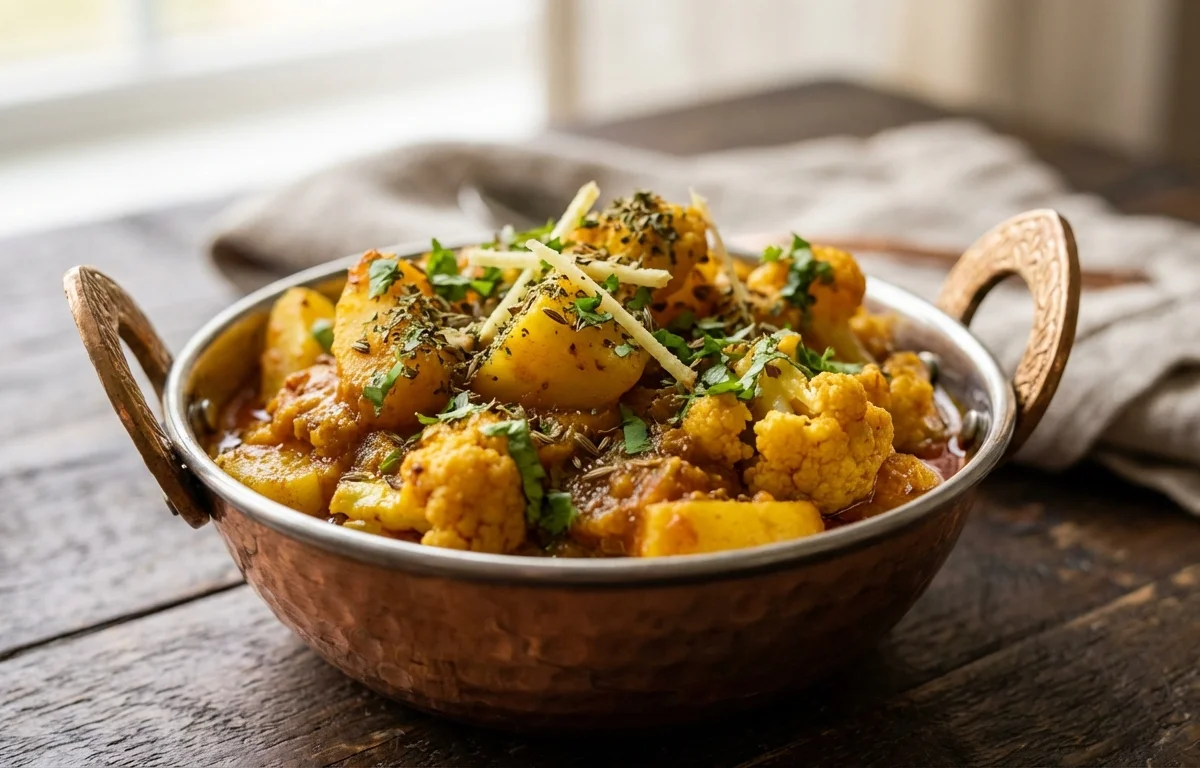
Aloo Gobi Sabzi
A comforting dry sabzi made with tender potatoes, lightly crisp cauliflower, and everyday spices. It cooks into a fragrant, homestyle dish that pairs beautifully with roti, dal, or plain rice.
For 4 servings
- prep · ~15 min
Prep the vegetables.
1.Peel and cube the potato into small even pieces.2.Cut the cauliflower into small florets and rinse well.3.Finely chop the onion and tomato, slit the green chili, and grate the ginger. - saute · ~1 min
Heat the oil and crackle the cumin.
Heat the oil in a wide pan over medium heat. Add the cumin seeds and let them sizzle until fragrant.
TIPUse a wide pan so the vegetables cook evenly and do not steam too much. - saute · ~6 min
Cook the onion, chili, and ginger.
1.Add the onion and cook until soft and lightly golden.2.Add the green chili and ginger.3.Cook for 1 minute until the raw smell fades. - saute · ~5 min
Add the tomato and ground spices.
1.Add the tomato and mix well.2.Add turmeric powder, red chili powder, coriander powder, and salt.3.Cook until the tomato softens and the masala looks blended.TIPKeep the heat medium so the powdered spices do not burn. - saute · ~4 min
Coat the potato and cauliflower in the masala.
Add the potato and cauliflower to the pan. Mix well so the vegetables are evenly coated with the masala, then cook for 3 to 4 minutes, stirring a few times.
- simmer · ~15 min
Cover and cook until tender.
Pour in the water, cover the pan, and cook on low heat until the potato is tender and the cauliflower is cooked through but still holds its shape. Stir once or twice during cooking.
TIPAdd only a little water. This sabzi should stay semi-dry, not saucy. - garnish · ~1 min
Finish with garam masala, coriander, and lemon juice.
Sprinkle in the garam masala, coriander leaves, and lemon juice. Toss gently and cook uncovered for 1 minute to bring everything together.
- serve
Serve hot.
Serve the Aloo Gobi Sabzi hot with roti, paratha, or dal and rice.
What to keep in mind.
7 tips from the recipe — small details that make a real difference to the final dish.
- 1Cut the potato cubes slightly smaller than the cauliflower so both finish cooking at about the same time.
- 2Let the tomatoes cook until the oil lightly separates from the masala for a deeper, less raw-tasting base.
- 3Keep the pan wide and avoid overcrowding so the sabzi stays dry instead of turning steamy and soft.
- 4Stir gently after adding cauliflower; rough mixing can break the florets and make the sabzi mushy.
- 5Cook covered only until the potato is just tender, then uncover briefly to dry off any excess moisture.
- 6Add lemon juice at the very end, off the strongest heat, to keep its freshness bright and sharp.
- 7This sabzi tastes even better after 15 to 20 minutes of resting, when the potatoes absorb the masala.
Adapt it for your goals.
Low-oil
Use 1 tablespoon oil and a splash of water while cooking the onion-tomato masala; good if you want a lighter everyday sabzi.
no onion no garlicNo-onion-no-garlic
Skip the onion entirely and increase tomato and ginger slightly for a satvik-style version that still tastes homely and balanced.
peas aloo gobiPeas-aloo-gobi
Add a handful of green peas with the vegetables for extra sweetness, color, and a more filling North Indian sabzi.
jeera heavyJeera-heavy
Increase cumin seeds a little and add a final pinch of roasted cumin powder for a warmer, more earthy flavor profile.
Why this is on our healthy list.
Vegetable-Rich Main Side
Cauliflower, tomato, onion, ginger, and coriander make this sabzi a practical way to include more vegetables in a meal.
Fiber From Potatoes and Cauliflower
The potato and cauliflower combination adds satisfying bulk and fiber, helping this dry sabzi feel hearty alongside roti or rice.
Moderate Oil Cooking
The dish gets most of its flavor from cumin, ginger, tomato, and spices rather than relying heavily on oil or cream.
Herb and Spice Benefits
Ginger, cumin, coriander, turmeric, and fresh coriander contribute aroma and plant compounds while keeping the dish vibrant.
Frequently asked questions
Usually the pan was too crowded, too much water was added, or the cauliflower was overcooked. Use a wide pan, keep water minimal, and stop cooking once the potato is tender.


