
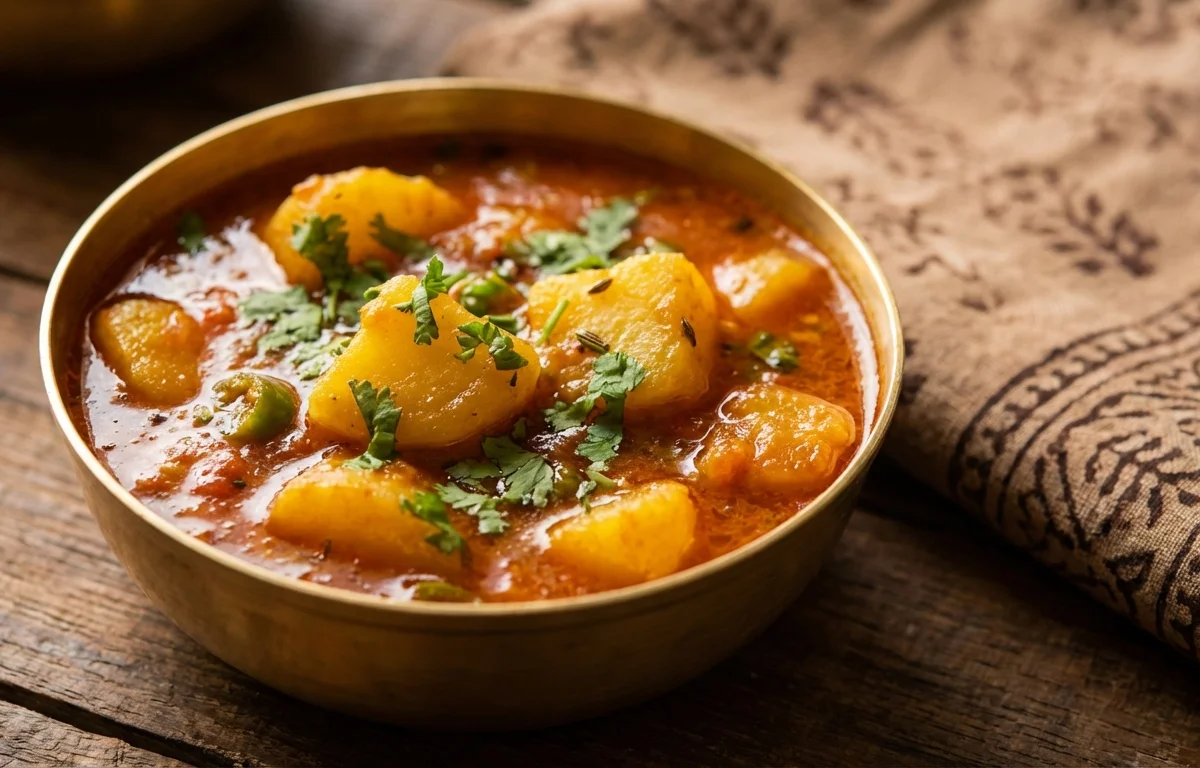
Aloo Ras
Aloo Ras is a thin, spiced potato curry from western India with a warming, peppery flavor and light gravy. It is simple, homestyle, and especially good with puri, bhakri, or soft phulka.
For 4 servings
- prep · ~15 min
Boil and crush the potatoes.
Boil the potatoes until tender, peel them, and lightly crush them by hand or with a masher. Keep a little texture so the ras gets body without turning pasty.
TIPDo not mash the potatoes smooth; uneven pieces make the gravy taste more homestyle. - temper · ~2 min
Make the tempering.
1.Heat oil in a pan over medium heat.2.Add mustard seeds and let them splutter.3.Add cumin seeds, asafoetida, and curry leaves.4.Add green chili and ginger, then cook for 30 seconds until fragrant. - saute · ~1 min
Add the dry spices.
Lower the heat and add turmeric powder, red chili powder, coriander powder, and crushed black pepper. Stir quickly for a few seconds so the spices bloom without burning.
TIPKeep the heat low at this stage because powdered spices burn very fast. - simmer · ~15 min
Cook the potatoes with water.
1.Add the crushed potatoes and mix well with the tempering.2.Pour in water and stir to loosen the potatoes into a thin gravy.3.Add salt and jaggery.4.Bring the ras to a gentle simmer and cook until slightly thickened. - garnish · ~1 min
Finish with lemon juice and coriander leaves.
Turn off the heat and stir in lemon juice. Add chopped coriander leaves and mix gently.
- serve
Serve hot.
Serve Aloo Ras hot in small bowls with puri, bhakri, thepla, or phulka.
What to keep in mind.
7 tips from the recipe — small details that make a real difference to the final dish.
- 1Lightly crush the boiled potatoes by hand so some bits dissolve and some stay chunky; that gives the ras its homestyle body.
- 2Let the mustard seeds fully splutter before adding cumin, or the tempering can taste raw and flat.
- 3After adding the powdered spices, keep the heat low and stir only a few seconds to avoid bitter, burnt masala.
- 4Use hot water when loosening the potatoes so the gravy comes together faster and stays smooth.
- 5The ideal texture is pourable and thin, not like a thick sabzi; it should coat puri lightly rather than sit heavily.
- 6Add lemon juice only after switching off the heat so its brightness stays fresh and doesn't turn dull.
- 7Aloo Ras tastes even better after a short rest of 10 to 15 minutes, when the pepper, ginger, and coriander settle into the gravy.
Adapt it for your goals.
Low-oil
Use a little less oil and a good heavy pan for the tempering; the dish stays light while keeping its thin, comforting texture.
spicierSpicier
Increase green chili and black pepper for a sharper, more warming ras that pairs especially well with puri on cooler days.
no jaggeryNo-jaggery
Skip the jaggery if you prefer a more savory, tangy profile with the lemon and pepper standing out more clearly.
garlicGarlic
Add a little finely chopped garlic with the ginger for a stronger, more robust everyday version of the curry.
Why this is on our healthy list.
Comforting Yet Light
Because the gravy is thinned with water rather than cream or coconut milk, this potato curry stays lighter while still feeling satisfying.
Digestive Spice Support
Ginger, cumin, asafoetida, and curry leaves are classic aromatics that add flavor and are often used in homestyle cooking for easier digestion.
Plant-Based Energy
Potatoes provide sustaining carbohydrates, making this a simple energy-giving dish that pairs well with everyday Indian breads.
Frequently asked questions
Yes. Make it a few hours ahead and reheat gently with a splash of water, since the potato starch can thicken the gravy as it sits.



.webp)
.webp)
.webp)