Alsande Gashi
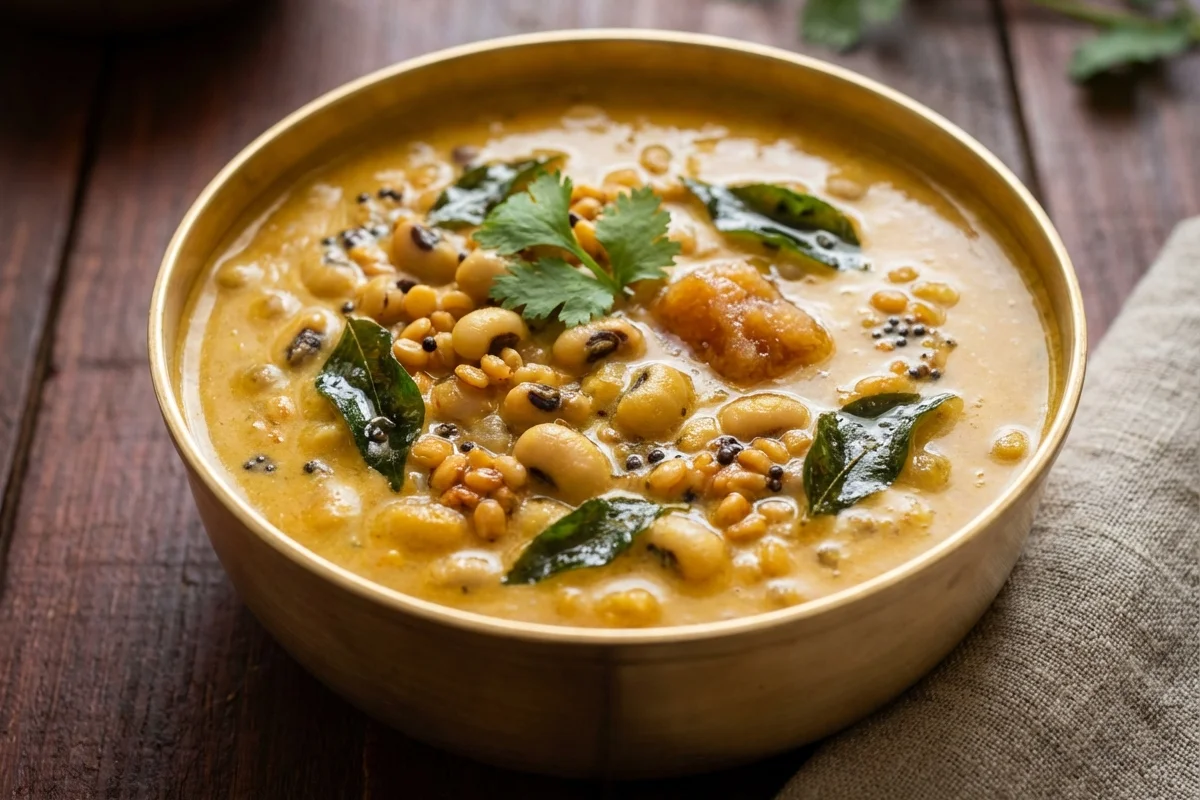
A creamy, mildly spiced coconut-based curry from the Konkan coast featuring tender black-eyed peas. Slow-simmered with roasted spices, tangy tamarind, and rich coconut paste, this dish pairs beautifully with steamed rice and a drizzle of raw coconut oil for an authentic touch.
For 4 servings
- pressure cook · ~15 min
Cook the black-eyed peas.
Drain soaked black-eyed peas and transfer to a pressure cooker. Add 2 cups of water and a pinch of salt. Cook on medium heat for 3 whistles or until tender but not mushy. Let pressure release naturally. Drain, reserving the cooking water.
TIPThe peas should hold their shape; avoid overcooking them into a mash. - roast · ~5 min
Roast the coconut and spices.
1.Heat a frying pan on low flame.2.Dry roast grated coconut for 2-3 minutes until it turns slightly golden and aromatic.3.Add dried red chilies, coriander seeds, cumin seeds, and fenugreek seeds. Roast for another 2 minutes, stirring constantly.4.Remove the pan from heat and let the mixture cool completely.TIPDo not brown the coconut; it should just dry out and release a nutty aroma. - mix · ~3 min
Grind the masala paste.
Transfer the cooled roasted coconut-spice mixture to a grinder. Squeeze the pulp from the soaked tamarind and add the extract to the grinder. Grind to a smooth, fine paste using a few tablespoons of the reserved lentil cooking water.
- temper · ~6 min
Make the tempering.
1.Heat 2 teaspoons of coconut oil in a heavy-bottomed pot over medium heat.2.Add mustard seeds and let them crackle.3.Toss in curry leaves and a pinch of asafoetida. Sauté for 10 seconds.4.Add chopped onions and crushed garlic. Sauté until onions turn translucent and soft.TIPLet the mustard seeds pop completely before adding the next ingredient. - simmer · ~10 min
Simmer the curry with the masala.
1.Pour the ground coconut masala paste into the pot.2.Add the reserved lentil cooking water and bring to a gentle simmer.3.Stir in the jaggery and remaining salt.4.Cook on low heat for 8-10 minutes, allowing the raw smell of the masala to disappear and the gravy to thicken slightly.TIPDo not let the curry boil rigorously; a gentle simmer keeps the coconut oils intact and the color vibrant. - mix · ~5 min
Fold in the cooked black-eyed peas.
Gently add the cooked black-eyed peas to the simmering gravy. Stir carefully to avoid breaking the beans. Cook for another 5 minutes on low heat to allow the flavors to meld. Adjust the consistency with extra water if too thick.
- garnish · ~2 min
Finish with raw coconut oil and serve.
Turn off the heat and drizzle a teaspoon of raw coconut oil over the top. Cover and let it rest for 2 minutes. Serve hot with steamed rice or roti.
TIPThe raw coconut oil on top is essential — it gives the dish its signature Konkani aroma.
What to keep in mind.
7 tips from the recipe — small details that make a real difference to the final dish.
- 1Soak the black-eyed peas for exactly 4 hours; over-soaking makes them mushy during cooking.
- 2Dry-roast the grated coconut only until it releases a nutty aroma, not until it browns.
- 3Use Byadgi or Kashmiri dried red chilies for a deep red color without excessive heat.
- 4Let the mustard seeds fully pop in the tempering before adding curry leaves for maximum flavor.
- 5Simmer the curry gently; a hard boil can make the coconut paste separate and turn grainy.
- 6Reserve the cooking water from the peas—it adds body and starchiness to the gravy.
- 7Drizzle the raw coconut oil just before serving and let it rest for 2 minutes to infuse the dish.
Adapt it for your goals.
Low-oil
Reduce the coconut oil in the tempering to 1 teaspoon and skip the final raw drizzle; the curry still works with a lighter mouthfeel for those watching oil intake.
high proteinHigh-protein
Add 200g of diced paneer or tofu along with the black-eyed peas for a protein boost without altering the core flavor profile.
veganVegan
This dish is naturally vegan since it uses coconut oil and no dairy; just ensure the jaggery is raw cane and not processed with bone char.
Why this is on our healthy list.
Rich in Plant Protein
Black-eyed peas provide a substantial dose of plant-based protein, supporting muscle repair and satiety.
High in Dietary Fiber
The combination of black-eyed peas and coconut offers soluble and insoluble fiber, promoting digestive health and steady blood sugar levels.
Good Source of Antioxidants
Coriander seeds, cumin, and curry leaves contain antioxidants that help reduce oxidative stress in the body.
Contains Anti-Inflammatory Spices
Fenugreek seeds and asafoetida are traditionally used for their anti-inflammatory properties, aiding digestion and joint health.
Frequently asked questions
Yes, use 1.5 cups of canned peas, rinsed and drained. Skip the pressure cooking step, and add them directly to the simmering masala.