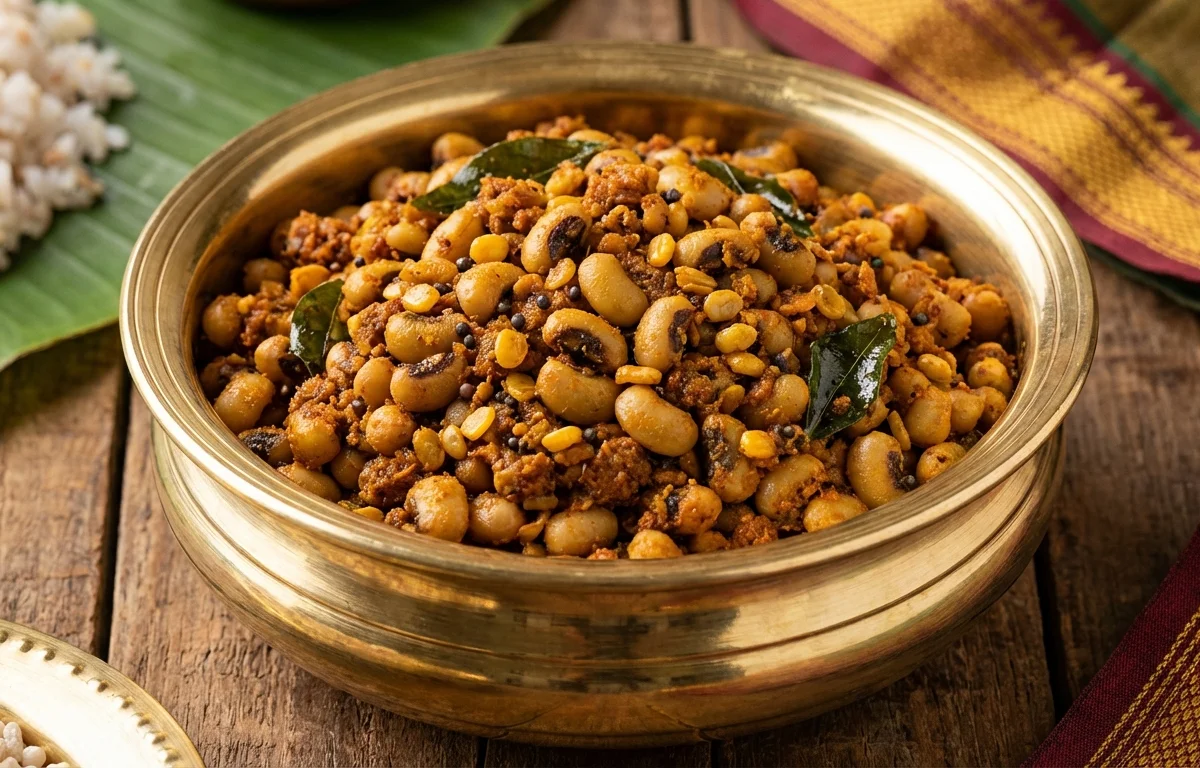
Alsande Sukke
Tender alsande cooked with onion, coconut, and a gentle coastal-style spice base until dry and fragrant. This homely Mangalorean side dish is full of earthy flavor and pairs beautifully with rice or chapati.
For 4 servings
- prep · ~1 min
Soak the alsande.
Rinse the alsande well and soak it in plenty of water overnight. Drain before cooking.
TIPA full soak helps the beans cook evenly and keeps the texture tender. - pressure cook · ~20 min
Pressure cook the alsande.
1.Add the soaked alsande to a pressure cooker with water and half of the salt.2.Cook on medium heat for 3 to 4 whistles until tender but not mushy.3.Let the pressure drop naturally.4.Open the cooker and keep any remaining cooking liquid aside. - saute · ~7 min
Cook the onion base.
1.Heat oil in a pan over medium heat.2.Add mustard seeds and let them splutter.3.Add curry leaves, chopped onion, green chili, and garlic.4.Cook until the onion turns soft and lightly golden.TIPDo not brown the garlic too much or it can turn bitter. - saute · ~1 min
Add the spices.
Add turmeric powder, red chili powder, and coriander powder. Stir for 20 to 30 seconds so the spices bloom in the oil without burning.
- simmer · ~5 min
Cook the alsande with the masala.
1.Add the cooked alsande to the pan and mix well.2.Add tamarind paste and the remaining salt.3.Pour in 2 to 3 tbsp of the reserved cooking liquid if the pan looks dry.4.Cook for 4 to 5 minutes so the flavors come together. - saute · ~4 min
Add the coconut and dry it out.
Add the grated coconut and mix well. Cook on low heat for 3 to 4 minutes, stirring often, until the dish turns dry, aromatic, and well coated.
TIPKeep the heat low after adding coconut so it stays sweet and fresh tasting. - serve
Serve the alsande sukke warm.
What to keep in mind.
7 tips from the recipe — small details that make a real difference to the final dish.
- 1Soak the alsande fully overnight; under-soaked beans can split unevenly or stay chalky at the center.
- 2Pressure cook only until tender but shape-holding, since the beans cook again in the masala and should not turn pasty.
- 3Reserve the bean cooking liquid and add just a few spoonfuls at a time to keep the sukke moist without making it gravy-like.
- 4Let the onions turn lightly golden before adding spice powders; that sweetness balances the tamarind and chili.
- 5After adding coconut, keep the flame low and stir often so it dries out fragrant instead of turning oily or scorched.
- 6Taste after the coconut goes in and adjust salt or tamarind then, because fresh coconut softens both heat and sourness.
- 7This dish tastes even better after a short rest of 10 to 15 minutes, when the coconut and spices settle into the beans.
Adapt it for your goals.
No-garlic
Skip the garlic for a lighter, satvik-style version; the curry leaves, onion, coconut, and tamarind still keep it flavorful.
spicierSpicier
Increase red chili powder or add an extra slit green chili if you want a hotter sukke to pair with plain rice.
less coconutLess-coconut
Use a smaller amount of grated coconut for a lighter finish while keeping the same coastal flavor profile.
with kokumWith-kokum
Replace tamarind with kokum for a slightly fruitier sourness that suits Goan and coastal bean preparations well.
Why this is on our healthy list.
Good Plant Protein Source
Alsande, or black-eyed peas, adds plant protein and makes this side dish more satisfying and hearty.
Rich in Fiber
The beans and coconut contribute fiber, which helps make the dish filling and pairs well with simple rice or chapati.
Includes Aromatic Spices
Garlic, turmeric, curry leaves, and chili bring flavor depth so the dish feels robust without relying on heavy sauces.
Frequently asked questions
Yes. Simmer the soaked alsande in a pot until tender, then continue with the tempering and coconut finish as written.