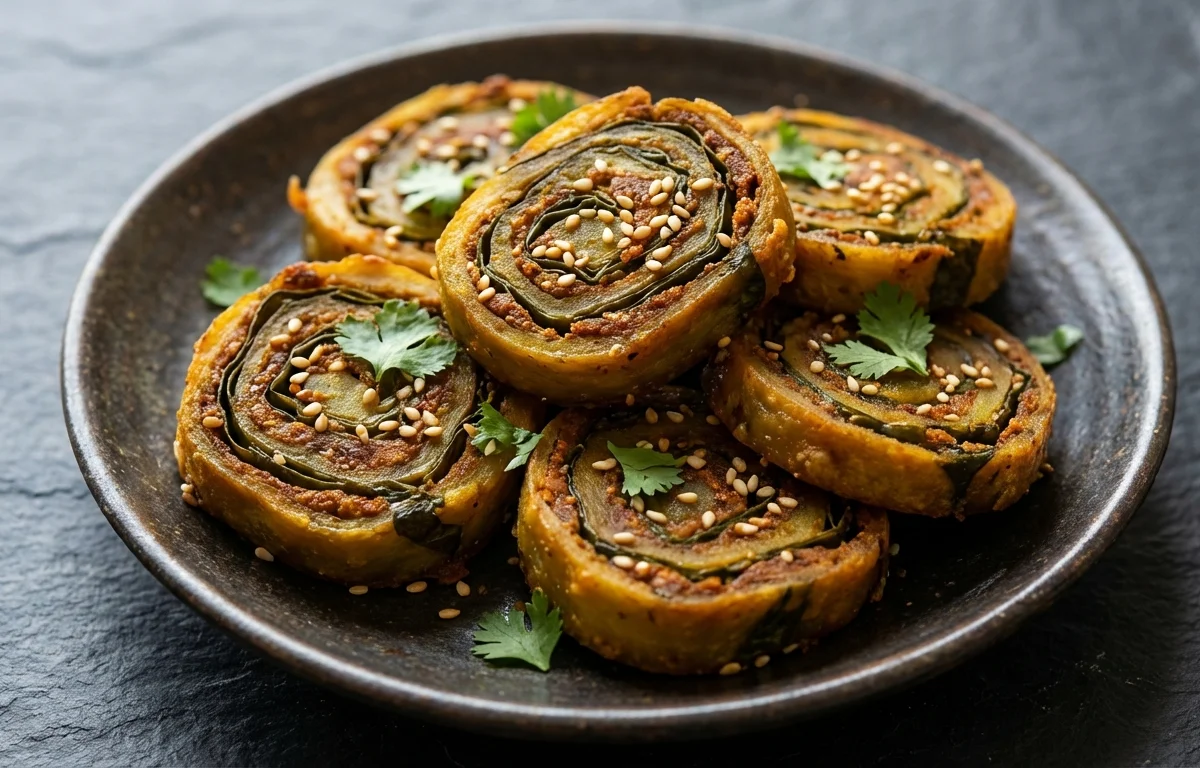
Alu Vadi
Tender colocasia leaves are layered with a spiced gram flour paste, rolled, steamed, sliced, and lightly pan-fried until the edges turn golden. This Maharashtrian favorite is earthy, tangy, and perfect as a snack or side.
For 12 servings
- prep · ~8 min
Prepare the leaves.
1.Wash the colocasia leaves well and pat them dry.2.Trim the thick stems.3.Lightly flatten the thick center veins with a knife so the leaves roll easily.TIPHandle the leaves gently so they do not tear while spreading the batter. - mix · ~5 min
Make the spiced gram flour paste.
1.Add chickpea flour, tamarind paste, jaggery, red chili powder, turmeric powder, coriander powder, cumin powder, asafoetida, and salt to a bowl.2.Pour in water little by little.3.Whisk until you get a smooth, thick, spreadable paste with no lumps. - assemble · ~10 min
Layer and roll the leaves.
1.Place one leaf shiny side down.2.Spread a thin layer of the gram flour paste over it.3.Place another leaf on top and spread more paste.4.Repeat to make 2 tight stacks of 4 leaves each.5.Fold in the sides of each stack and roll tightly from the base to make logs.TIPKeep the batter layer thin and even so the rolls cook through without becoming dense. - steam · ~20 min
Steam the rolls until firm.
Place the rolls in a steamer and steam over medium heat until firm and cooked through. Cool them slightly before slicing.
TIPA knife inserted into the center should come out mostly clean when the rolls are done. - prep · ~3 min
Slice the steamed rolls.
Cut each roll into 6 even slices once cool enough to handle.
- temper · ~2 min
Make the tempering.
1.Heat oil in a wide pan over medium heat.2.Add mustard seeds and let them splutter.3.Add sesame seeds and curry leaves and cook for a few seconds.TIPLower the heat before adding curry leaves so they do not splatter too much. - fry · ~8 min
Pan-fry the slices lightly.
Arrange the alu vadi slices in the pan and cook until the bottom turns light golden. Flip carefully and cook the other side the same way.
- garnish · ~1 min
Garnish with coconut and coriander leaves.
- serve · ~1 min
Serve warm.
What to keep in mind.
7 tips from the recipe — small details that make a real difference to the final dish.
- 1Flatten the thick center vein gently; if you cut through it, the leaf can tear while rolling.
- 2Keep the besan paste thick and spreadable, not runny, or the layers will slip and the rolls may unravel.
- 3Spread the paste all the way to the edges so the sliced vadi holds together neatly after steaming.
- 4Cool the steamed logs for a few minutes before slicing; hot rolls crumble more easily.
- 5Use a sharp knife and wipe it between cuts for cleaner, round slices.
- 6Pan-fry in a single layer over medium heat so the sesame tempering toasts without burning and the edges turn crisp.
- 7These can be steamed ahead, refrigerated, and pan-fried just before serving for the best texture.
Adapt it for your goals.
Low-oil
Steam as directed, then skip the pan-fry or brush lightly with oil and air-fry the slices for a lighter finish.
spicierSpicier
Increase red chili powder slightly or add a little green chili paste to the besan mixture for a hotter, sharper bite.
no jaggeryNo-jaggery
Reduce or omit the jaggery if you prefer a more savory, tangy alu vadi with less sweetness.
steamed onlySteamed-only
Serve the slices straight after steaming with the tempering poured on top if you want a softer, more traditional snack.
Why this is on our healthy list.
Plant-Based Protein
Chickpea flour adds plant protein and makes the snack more satisfying than a starch-heavy fried snack.
Fiber From Leaves and Besan
Taro leaves and gram flour both contribute fiber, which helps make this dish filling and hearty.
Moderate Cooking Method
The rolls are steamed first and only lightly pan-fried, so the dish uses less oil than deep-fried snacks.
Mineral-Rich Additions
Sesame seeds, coconut, and leafy greens bring a range of naturally occurring minerals and beneficial plant compounds.
Frequently asked questions
Usually the paste was too thin, the rolls were not packed tightly, or they were sliced while still too hot. Use a thick besan paste, roll firmly, steam until set, and cool slightly before cutting.



.webp)