
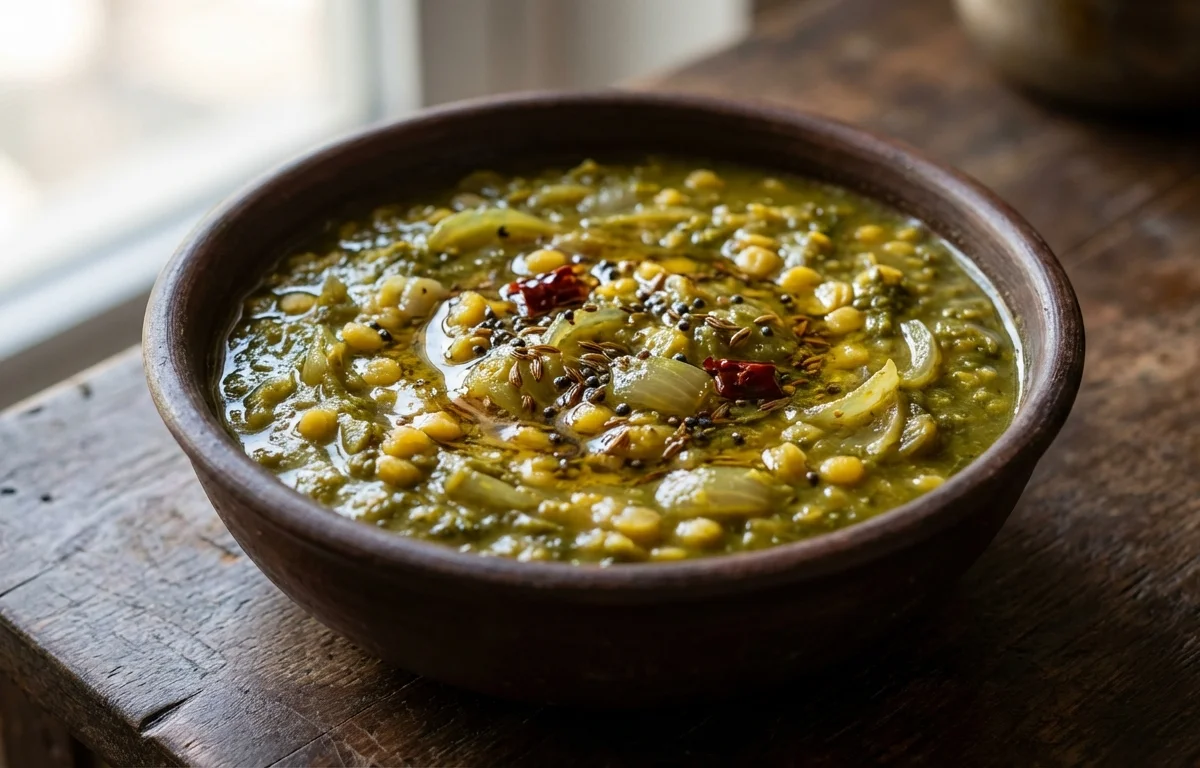
Ambaday Ki Bhaji
A tangy, rustic Indian curry made from fresh sorrel leaves slow-cooked with garlic, green chilies, and earthy spices. This Maharashtrian and North Karnataka favorite brings a pleasantly sour punch that pairs beautifully with jowar bhakri or steamed rice.
For 4 servings
- prep
Wash and chop the ambadi leaves.
Pick the sorrel leaves from their stems. Wash thoroughly in multiple changes of water to remove any grit. Drain well and chop finely.
TIPInclude the tender stems for extra texture; discard only the thick, fibrous stalks. - boil · ~12 min
Cook the leaves until soft.
Place the chopped leaves in a kadai or pan with water, turmeric powder, red chili powder, and salt. Cover and cook on medium heat for 10-12 minutes until the leaves wilt completely and soften. Mash lightly with the back of a spoon.
TIPSorrel releases its own moisture; add water sparingly to avoid a watery bhaji. - temper · ~6 min
Make the tempering.
1.Heat oil in a separate small pan over medium heat until shimmering.2.Add mustard seeds and let them splutter completely (30-40 seconds).3.Add cumin seeds and dried red chilies, sauté until fragrant (20 seconds).4.Add crushed garlic and slit green chilies, sauté until garlic turns light golden (1-2 minutes).5.Add chopped onion and cook until translucent (3-4 minutes).TIPDon't burn the garlic — keep the heat at medium once it goes in. - mix · ~7 min
Combine tempering with the cooked leaves.
Pour the entire tempering mixture over the cooked sorrel leaves. Stir well to combine evenly. Cook uncovered for another 5-7 minutes on low heat, stirring occasionally, until the bhaji thickens and oil starts to separate at the edges.
- mix · ~1 min
Add jaggery and adjust seasoning.
Sprinkle the grated jaggery over the bhaji and mix well. Let it cook for 1 more minute until the jaggery dissolves and blends in. Taste and adjust salt if needed. Turn off the heat.
TIPThe jaggery balances the sourness — add a tiny pinch if the leaves are intensely sour. - serve
Serve Ambaday Ki Bhaji warm.
Transfer to a serving bowl. Serve with jowar bhakri or steamed rice and a drizzle of raw oil or ghee on top if you like.
What to keep in mind.
8 tips from the recipe — small details that make a real difference to the final dish.
- 1Wash sorrel leaves in several changes of water to remove all grit and sand.
- 2Use only the tender stems; discard thick, fibrous stalks for best texture.
- 3Do not overcook the leaves—they can turn mushy if boiled too long.
- 4Keep heat at medium when sautéing garlic to avoid bitterness from burnt garlic.
- 5Cook the bhaji uncovered after adding tempering to let excess moisture evaporate.
- 6Adjust jaggery amount based on the natural sourness of your sorrel leaves.
- 7This bhaji thickens as it cools, so a slightly loose consistency is fine when hot.
- 8For deeper flavor, let the bhaji rest for 10 minutes before serving.
Adapt it for your goals.
Low-oil
Reduce oil to 1 tablespoon and dry-roast the mustard and cumin seeds in the pan before adding a splash of water for the tempering. This cuts fat while keeping the essential tempering flavor.
high proteinHigh-protein
Add 1/2 cup of cooked chana dal or masoor dal along with the cooked leaves for a heartier, protein-rich version that turns the bhaji into a complete one-pot meal.
veganVegan
Serve with a drizzle of coconut oil or raw peanut oil instead of ghee to keep the dish fully plant-based.
Why this is on our healthy list.
Rich in Vitamin C
Sorrel leaves are a natural source of vitamin C, supporting immune health when consumed fresh.
Low-Calorie Green
This bhaji is primarily made of leafy greens with minimal oil, making it a low-calorie side dish.
Digestive-Friendly Spices
Cumin, mustard seeds, and garlic are traditionally used in Indian cooking to aid digestion and reduce bloating.
Frequently asked questions
Fresh sorrel is best for texture and sourness, but frozen sorrel (thawed and drained) works in a pinch; dried sorrel will not have the same tender consistency.


