Amritsari Chutney
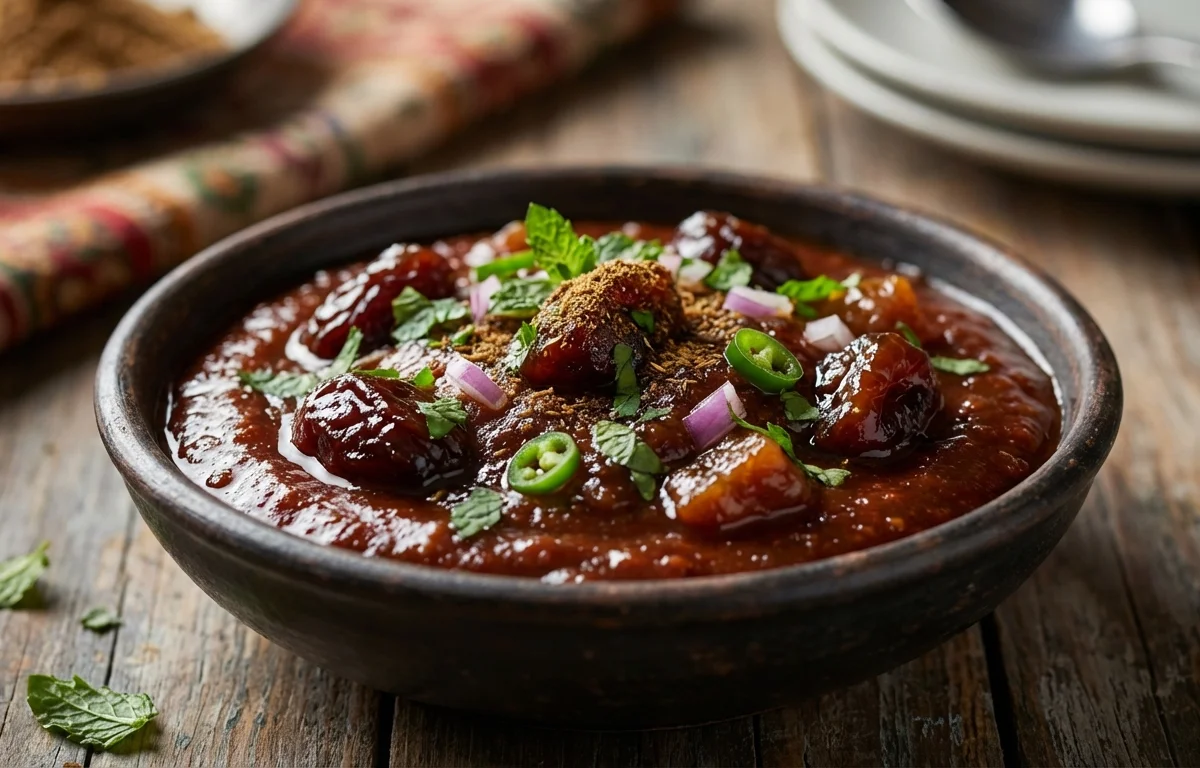
A bright, spicy Punjabi chutney made with fresh mint, coriander leaves, onion, green chili, and pomegranate seeds. It has a bold, tangy taste that pairs especially well with Amritsari kulcha, tikkas, and fried snacks.
For 8 servings
- prep · ~5 min
Prepare the chutney ingredients.
1.Pick the mint leaves and coriander leaves, then rinse them well.2.Roughly chop the onion, green chili, and ginger.3.Keep the pomegranate seeds and lemon juice ready. - mix · ~3 min
Grind the chutney.
1.Add mint, coriander leaves, onion, green chili, ginger, and pomegranate seeds to a mixer jar.2.Add lemon juice, cumin powder, black salt, and salt.3.Blend to a smooth but slightly thick chutney, adding a little water only if needed.TIPKeep the water minimal so the chutney stays bold and spoonable, not runny. - rest · ~5 min
Rest the chutney for 5 minutes.
- serve
Serve with kulcha, tikka, or pakora.
What to keep in mind.
6 tips from the recipe — small details that make a real difference to the final dish.
- 1Dry the mint and coriander well after washing so the chutney stays thick, not watery.
- 2Use only a splash of water while grinding; onion releases moisture on its own.
- 3Resting for 5 minutes helps the black salt, lemon, and herbs meld into a rounder flavor.
- 4If the chutney tastes sharp from onion, add a few extra pomegranate seeds and blend again.
- 5For a brighter green color, blend in short pulses instead of running the mixer too long.
- 6Store chilled in an airtight jar and stir before serving, as some natural separation is normal.
Adapt it for your goals.
No-onion
Skip the onion for a cleaner, sharper green chutney that keeps slightly longer and pairs especially well with grilled tikka.
extra spicyExtra-spicy
Add 1-2 more green chilies for a fiercer Punjabi-style heat that cuts through buttery kulcha and fried pakora.
sweet tangySweet-tangy
Increase the pomegranate seeds for a fruitier, softer tang that balances the bite of mint, ginger, and chili.
thick dipThick-dip
Use no added water and blend to a dense paste if you want a spreadable chutney for sandwiches, wraps, or chaat.
Why this is on our healthy list.
Herb-Rich Freshness
Mint and coriander bring fresh plant compounds and a light, cooling character without needing heavy fats.
Digestive Spice Support
Ginger, cumin, and black salt are traditionally used in Indian cooking to add warmth and digestive depth to condiments.
Vitamin-Rich Ingredients
Fresh herbs, lemon juice, green chili, and pomegranate seeds add naturally vibrant produce to the meal.
Frequently asked questions
Usually too much water was added while grinding, or the herbs were still wet after washing. Dry the leaves well and add water only by the spoonful.



.webp)