
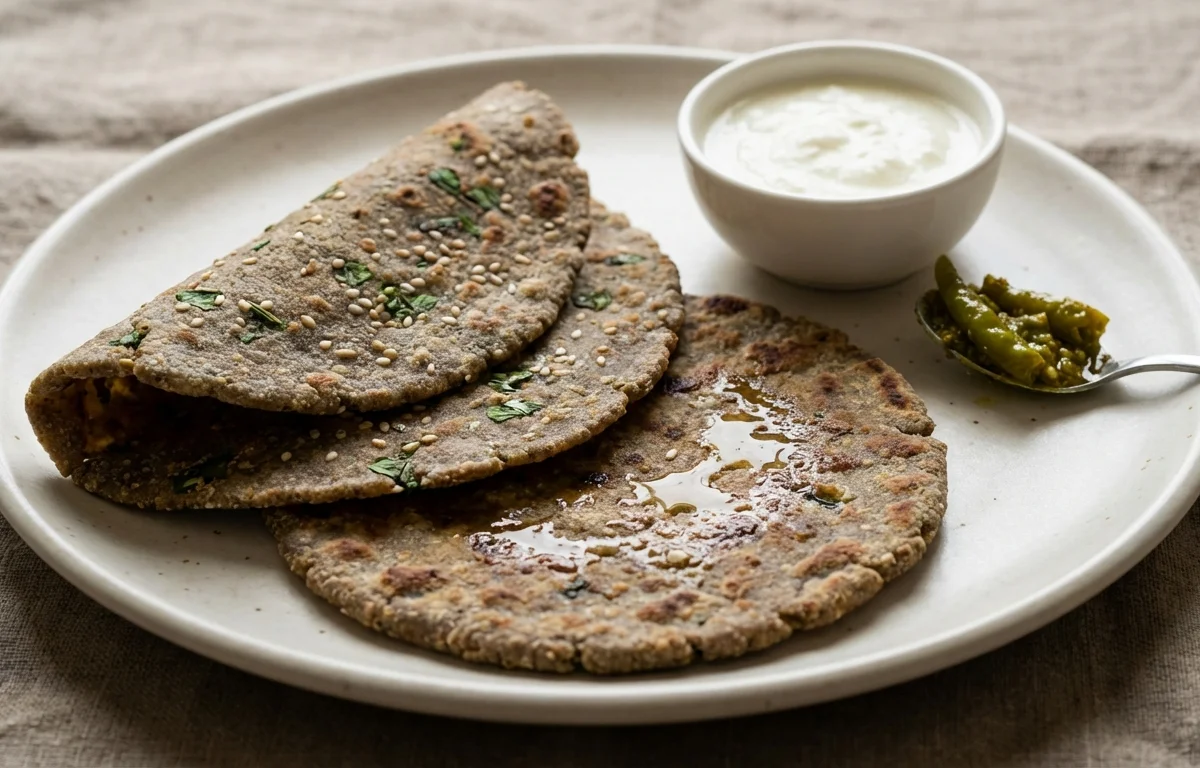
Bajra Dhebra
These rustic Gujarati flatbreads are made with bajra flour, methi, and a few everyday spices. They cook up soft in the center with lightly crisp edges and are especially good with yogurt, pickle, or masala chai.
For 8 servings
- prep
Prep the methi, chili, and ginger.
Finely chop the fenugreek leaves and green chili. Grate the ginger so everything mixes evenly into the dough.
- mix · ~2 min
Mix the dry ingredients.
1.Add bajra flour and whole wheat flour to a wide bowl.2.Add turmeric powder, red chili powder, cumin seeds, sesame seeds, and salt.3.Mix well so the spices are evenly distributed. - knead · ~8 min
Make a soft dough.
1.Add chopped fenugreek leaves, green chili, grated ginger, yogurt, and 1 tbsp oil to the bowl.2.Mix with your fingers until the flour looks moist and crumbly.3.Add water little by little and knead into a soft, smooth dough.4.Divide the dough into 8 equal portions.TIPBajra flour cracks easily, so keep the dough softer than roti dough. - rest · ~10 min
Rest the dough.
Cover the dough portions and let them rest for 10 minutes. This helps the flour hydrate and makes shaping easier.
- assemble · ~7 min
Shape the dhebras.
1.Take one dough portion and flatten it gently between your palms.2.Pat it into a small disc about 4 to 5 inches wide using your fingers.3.Repeat with the remaining dough portions.TIPIf the dough sticks, lightly grease your palms instead of adding extra flour. - fry · ~15 min
Cook the dhebras on a hot tawa.
1.Heat a tawa over medium heat.2.Place one dhebra on the hot tawa and cook until light spots appear on the bottom.3.Flip, drizzle a little oil around the edges, and cook the second side until golden spots appear.4.Flip once more and cook both sides until the dhebra is cooked through and lightly crisp in places.5.Cook the remaining dhebras the same way.TIPKeep the heat medium so the center cooks before the outside gets too dark. - serve
Serve warm.
What to keep in mind.
6 tips from the recipe — small details that make a real difference to the final dish.
- 1Keep the dough slightly softer than regular roti dough so the bajra does not crack while patting.
- 2Resting the dough for 10 minutes is important; bajra and methi absorb moisture and the discs become easier to shape.
- 3Grease your palms or use a lightly oiled plastic sheet to pat the dhebra instead of dusting with extra flour.
- 4Cook on medium heat only; high heat browns the outside before the thicker center cooks through.
- 5Look for light golden spots and a few crisp edges as the doneness cue, while the middle should stay soft.
- 6If making ahead, cool completely and store stacked in a cloth-lined box so they stay soft, then reheat on a tawa.
Adapt it for your goals.
Vegan
Replace the yogurt with a thick plant-based curd or a little extra water plus a squeeze of lemon for a dairy-free version.
jainJain
Skip the ginger and green chili if needed, then use crushed black pepper or extra cumin for warmth without root vegetables.
spicierSpicier
Increase green chili and red chili powder for a bolder, tea-time style dhebra with more heat.
low oilLow-oil
Use only a light brushing of oil on the tawa and cook a little longer on medium heat for a lighter everyday version.
Why this is on our healthy list.
Fiber-Rich Millet Base
Bajra and whole wheat together make these flatbreads more filling and hearty than breads made only with refined flour.
Greens in Every Bite
Fresh methi adds leafy greens, along with its distinctive savory bitterness and aroma, directly into the dough.
Fermented Dairy Support
Yogurt adds moisture, gentle tang, and some protein while helping create a softer texture in the dough.
Seed and Spice Boost
Sesame and cumin contribute extra flavor complexity, and the seeds add a little richness and texture.
Frequently asked questions
The dough is likely too dry. Add a little water or yogurt, keep it soft, and pat with lightly oiled palms instead of using dry flour.


