
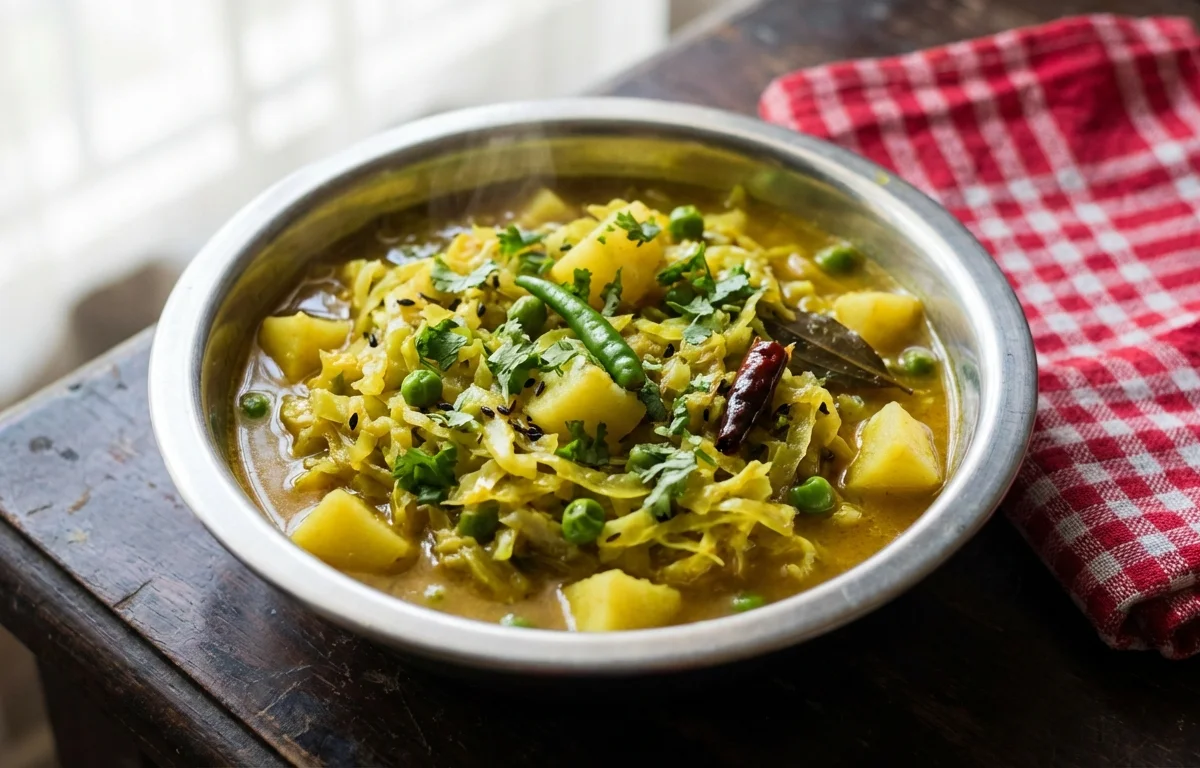
Bandhakopir Torkari
This homestyle Bengali cabbage curry is lightly spiced, a little sweet, and full of soft cabbage, potato, peas, and warm whole spices. It cooks into a comforting semi-dry torkari that goes beautifully with roti, luchi, or plain rice.
For 4 servings
- prep · ~15 min
Prepare the vegetables.
1.Shred the cabbage finely.2.Peel and cube the potatoes into small pieces.3.Chop the tomato, grate the ginger, and slit the green chilies. - temper · ~1 min
Heat the oil and crackle the whole spices.
Heat the oil in a kadai over medium heat. Add the bay leaf and cumin seeds, and let them sizzle until fragrant.
TIPKeep the heat medium so the cumin blooms without burning. - saute · ~4 min
Cook the potatoes, ginger, and chilies.
Add the potatoes, ginger, and green chilies. Stir for 3 to 4 minutes until the potatoes are lightly coated in oil and the ginger smells aromatic.
- saute · ~5 min
Add the tomato and ground spices.
Add the tomato, turmeric powder, red chili powder, cumin powder, coriander powder, sugar, and salt. Cook until the tomato softens and turns pulpy.
- saute · ~5 min
Mix in the cabbage and peas.
Add the shredded cabbage and green peas. Mix well so the spices coat everything evenly, then cook for 4 to 5 minutes as the cabbage starts to wilt.
TIPStir often during the first few minutes so the cabbage cooks evenly and does not catch at the bottom. - simmer · ~12 min
Cover and cook until tender.
Pour in the water, mix, and cover the pan. Cook on low heat until the potatoes are tender and the cabbage is soft, with just a little moisture left in the pan.
- garnish · ~1 min
Finish with garam masala and ghee.
Sprinkle in the garam masala and drizzle the ghee over the torkari. Give it a final mix and cook uncovered for 1 minute.
- serve
Serve hot.
Serve Bandhakopir Torkari hot with roti, luchi, or plain rice.
What to keep in mind.
6 tips from the recipe — small details that make a real difference to the final dish.
- 1Shred the cabbage finely and evenly so it softens into the classic semi-dry Bengali texture instead of staying stringy.
- 2Cut the potatoes small; they should finish cooking in the same time the cabbage turns tender.
- 3Let the tomato cook fully to a pulpy masala before adding cabbage, or the curry can taste raw and watery.
- 4Keep the pan covered on low heat after adding water; high heat can scorch the bottom before the potatoes soften.
- 5If the cabbage releases too much moisture, cook uncovered for the last few minutes to dry it to a proper torkari consistency.
- 6Add the final ghee and garam masala only at the end so their aroma stays bright and distinct.
Adapt it for your goals.
Vegan
Skip the finishing ghee or replace it with a little mustard oil for a fully plant-based version with a sharper Bengali edge.
jainJain
Omit potato and ginger, and use more peas or cabbage instead; this keeps the dish simple while fitting Jain preferences.
niramishNiramish
Use ghee for cooking instead of oil and add a few whole cumin-heavy spices for a richer festive vegetarian Bengali style.
no onion no garlicNo-onion-no-garlic
This recipe already fits that style, making it ideal for light homestyle meals and puja-friendly cooking.
Why this is on our healthy list.
Fiber-Rich Vegetables
Cabbage, peas, tomato, and potato together make this curry filling and supportive of comfortable digestion.
Plant-Based Nutrients
The mix of cabbage, peas, ginger, and tomato provides a range of vitamins, minerals, and protective plant compounds.
Lightly Oiled Comfort Food
With a small amount of oil and just a little ghee for finishing, this torkari stays lighter than richer gravied curries.
Frequently asked questions
Yes, you can skip the peas. The dish will still taste good, though the peas add sweetness and a bit more texture.


