Bhajani Vade
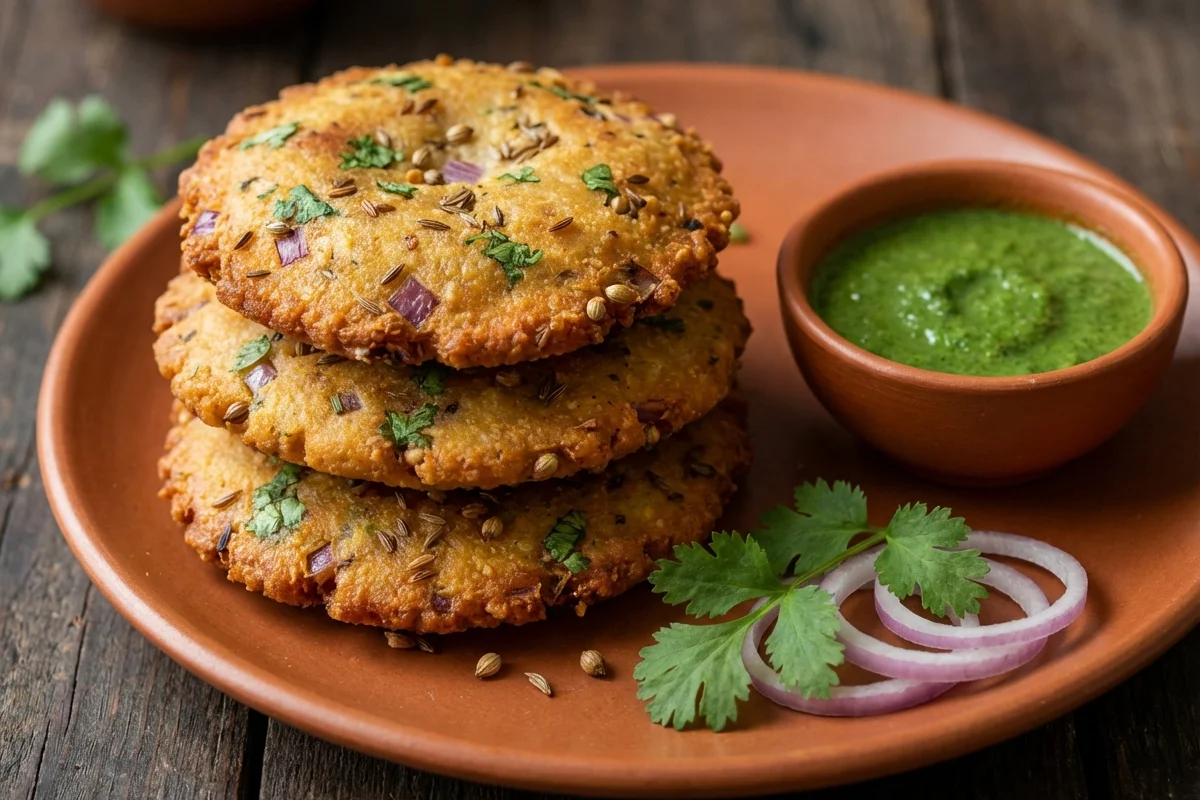
Crisp, savory Maharashtrian vade made with spiced bhajani flour, onion, sesame, and coriander. They fry up beautifully golden with a nutty flavor and are especially good with yogurt, chutney, or a simple meal plate.
For 8 servings
- prep
Chop the onion, coriander, and green chili.
Keep everything finely chopped so the dough holds together well and the vade shape easily.
- mix · ~15 min
Make the bhajani dough.
1.Add bhajani flour, onion, coriander leaves, green chili, sesame seeds, cumin seeds, red chili powder, turmeric powder, asafoetida, and salt to a wide bowl.2.Drizzle in 1 tbsp oil and rub it into the flour mixture with your fingers.3.Add warm water little by little and mix into a firm but pliable dough.4.Cover and let the dough sit for 10 minutes.TIPThe dough should be firm enough to pat by hand. If it feels sticky, add 1 to 2 tbsp more bhajani flour. - rest · ~10 min
Rest the dough for 10 minutes.
- prep · ~7 min
Shape the vade.
1.Divide the dough into 8 equal portions.2.Wet your fingers lightly with water.3.Flatten each portion into a small disc about 3 inches wide.4.Make a small hole in the center of each disc.TIPThe center hole helps the vade cook evenly and stay crisp. - fry · ~15 min
Deep fry the bhajani vade.
1.Heat oil for deep frying in a kadai over medium heat.2.Slide in 2 to 3 vade at a time without crowding the pan.3.Fry until golden and crisp on both sides, turning once or twice.4.Lift them out and drain well before frying the next batch.TIPKeep the oil on medium heat. Very hot oil browns the outside too fast while the center stays undercooked. - serve
Serve the bhajani vade hot.
Serve them fresh while crisp, with yogurt, chutney, or alongside a Maharashtrian meal.
What to keep in mind.
7 tips from the recipe — small details that make a real difference to the final dish.
- 1Add the warm water gradually; bhajani flour absorbs differently, so a too-wet dough will crack less but drink more oil while frying.
- 2Let the onion sit in the dough during the 10-minute rest so it releases moisture and helps the vade hold together better.
- 3Shape each vada on a lightly greased plastic sheet or banana leaf if hand-patting feels difficult.
- 4Keep the center hole open and not too tiny; it helps the thick bhajani dough cook through evenly.
- 5Fry on medium heat only, so the outside turns deep golden just as the inside becomes crisp instead of doughy.
- 6If a batch softens after cooling, refry for 30 to 40 seconds on medium heat to bring back the crunch.
- 7These taste best fresh, but you can refrigerate the dough briefly and fry within a few hours for easier prep.
Adapt it for your goals.
Low-oil
Pat smaller, thinner vade and shallow-fry them on a tawa with a little oil if you want a lighter everyday version.
no onionNo-onion
Skip onion for a fasting-style or simpler variation; add a little extra warm water since the dough will be less moist.
spicierSpicier
Increase green chili or red chili powder for a hotter vada that pairs especially well with plain yogurt.
herb forwardHerb-forward
Add extra coriander leaves for a fresher, greener flavor that balances the roasted flour and fried richness.
Why this is on our healthy list.
Multigrain Goodness
Bhajani flour is typically made from roasted grains and pulses, giving this dish a more diverse grain profile than plain flour snacks.
Flavor from Spices and Herbs
Coriander, cumin, chili, turmeric, and asafoetida add strong flavor, so the vade taste satisfying without relying only on salt.
Sesame Seed Benefits
Sesame seeds contribute nuttiness along with beneficial fats and minerals, making the vade more nourishing and filling.
Frequently asked questions
The dough is likely too dry or the onion pieces are too large. Add a little warm water, knead again, and keep all chopped ingredients very fine.



.webp)