Bhein Basar
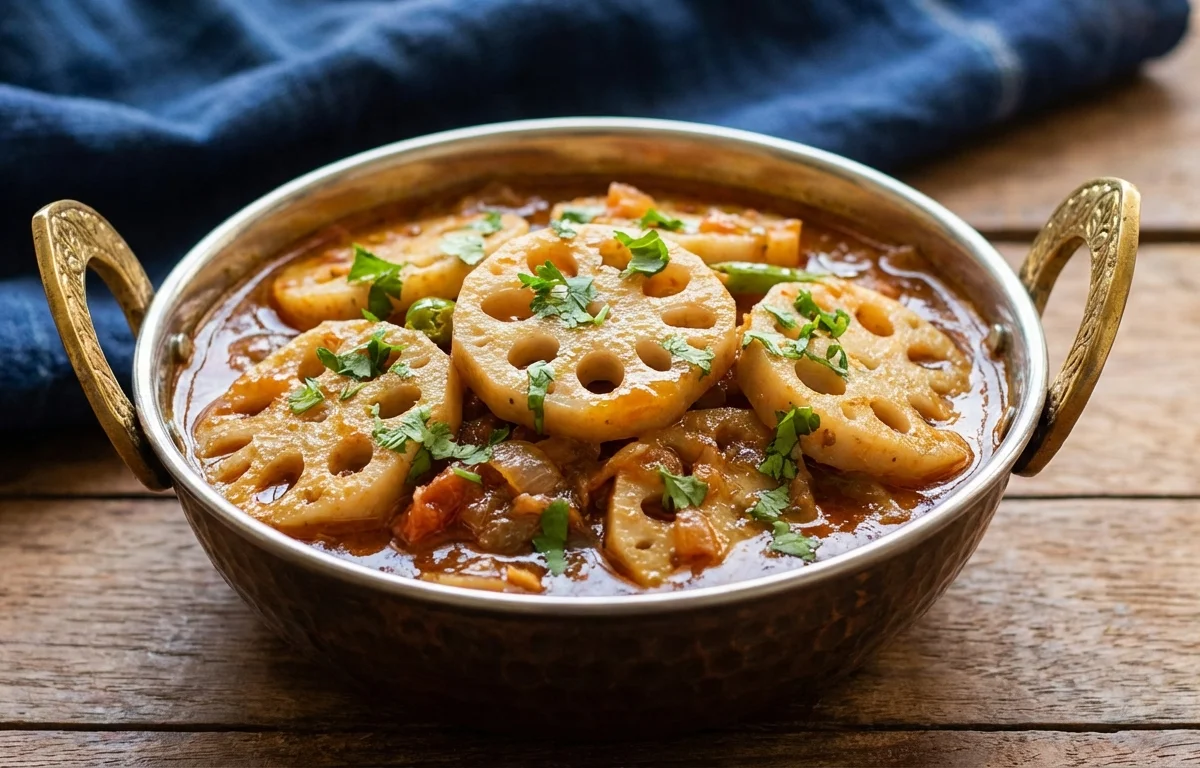
A homestyle Odia curry built around tender lotus stem simmered in a mustard-based gravy. It has a sharp, earthy flavor, light heat, and a comforting texture that goes especially well with plain rice.
For 4 servings
- prep
Clean and slice the lotus stem.
Peel the lotus stem, rinse it very well to remove any trapped mud, and slice into medium rounds. If the slices are thick, cut them into half-moons for even cooking.
- boil · ~15 min
Boil the lotus stem until just tender.
Bring 2 cups water to a boil, add the lotus stem, and cook until tender but not mushy. Drain if there is excess water and keep the cooked lotus stem aside.
TIPCook only until a knife slips in easily; overcooking makes the slices break in the gravy. - mix · ~5 min
Grind the mustard paste.
1.Drain the soaked mustard seeds.2.Add mustard seeds, garlic, and green chili to a grinder.3.Pour in 2 cups water gradually and grind to a smooth paste.4.Add turmeric powder, red chili powder, and salt to the paste and mix.TIPGrind the mustard just until smooth; long grinding can make it bitter. - saute
Heat the mustard oil.
Heat mustard oil in a pan over medium heat until it reaches the smoking point, then lower the heat slightly.
- simmer · ~10 min
Cook the mustard gravy with the lotus stem.
1.Add the mustard paste to the hot oil carefully.2.Stir well and cook for 2 to 3 minutes over low heat.3.Add the boiled lotus stem and mix gently so the pieces stay whole.4.Simmer until the gravy thickens lightly and the raw mustard smell goes away.TIPKeep the heat low after adding the mustard paste so it cooks through without splitting or turning harsh. - serve
Serve hot with plain rice.
What to keep in mind.
7 tips from the recipe — small details that make a real difference to the final dish.
- 1Rinse lotus stem slices through their holes until the water runs clear; mud often hides inside.
- 2Parboil the lotus stem only until a knife slides in with slight resistance, so it stays intact in the gravy.
- 3Use cold or room-temperature water while grinding the soaked mustard to keep the paste from turning bitter.
- 4After smoking the mustard oil, lower the heat before adding the paste to prevent spluttering and harshness.
- 5Simmer the mustard gravy gently, not at a rolling boil, or the sauce can split and taste sharp.
- 6This curry tastes even better after a short rest, once the lotus stem absorbs the mustard-garlic flavour.
- 7If the gravy tastes too pungent, cook it 1 to 2 minutes longer on low heat to mellow the raw mustard edge.
Adapt it for your goals.
Jain
Skip the garlic and rely on mustard and green chili for pungency; useful if you want a no-garlic version that still feels traditional.
low oilLow-oil
Use less mustard oil and add a splash of hot water while cooking the paste; the curry stays light but keeps its mustard-forward taste.
spicierSpicier
Increase green chili or red chili powder slightly for a hotter basar that stands up especially well to plain steamed rice.
mixed vegetableMixed-vegetable
Add boiled potato or raw banana along with lotus stem for a heartier Odia-style mustard curry with more body.
Why this is on our healthy list.
Fiber-Rich Lotus Stem
Lotus stem adds dietary fiber and a satisfying texture, making the curry filling while still feeling light with rice.
Mustard-Based, Not Cream-Based
The gravy gets its body and punch from mustard paste rather than cream or heavy coconut, keeping the dish robust without richness.
Garlic and Chili Depth
Garlic and green chili bring strong savory flavor, so the curry tastes vivid even with a short ingredient list and modest oil.
Frequently asked questions
It usually happens if the mustard is over-ground, overheated, or cooked too aggressively. Grind just until smooth and simmer the paste gently on low heat.