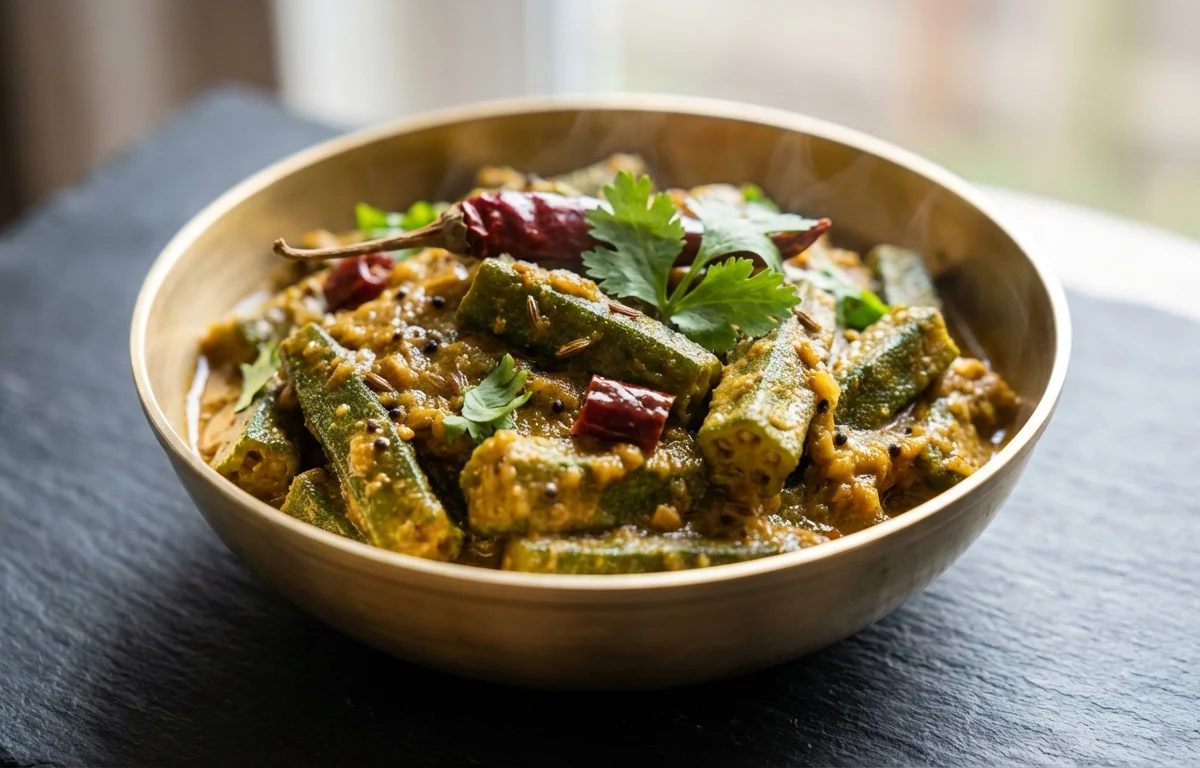
Bhendi Besara
Tender okra simmered in a lightly spiced mustard-coconut gravy, this Odia home-style dish is earthy, tangy, and comforting. It pairs beautifully with plain steamed rice and keeps the flavors simple and balanced.
For 4 servings
- prep · ~5 min
Prepare the mustard paste.
1.Drain the soaked mustard seeds.2.Add mustard seeds, grated coconut, garlic, 1 green chili, and turmeric powder to a grinder.3.Add a little water and grind to a smooth paste.TIPGrind the mustard just until smooth. Over-grinding can make the paste taste bitter. - saute · ~7 min
Cook the okra.
1.Heat mustard oil in a pan over medium heat.2.Add the okra and sauté for 5 to 6 minutes until lightly blistered and less slimy.3.Remove the okra to a plate.TIPMake sure the okra is completely dry before cooking so it stays less sticky. - temper · ~1 min
Make the tempering.
1.In the same pan, add panch phoron.2.Let it crackle for a few seconds.3.Add the remaining green chili. - simmer · ~5 min
Cook the besara gravy.
1.Lower the heat and add the mustard-coconut paste.2.Cook for 1 to 2 minutes, stirring often.3.Add salt and 1.5 cups water, then mix well.4.Bring it to a gentle simmer.TIPKeep the heat low after adding the mustard paste so the gravy stays smooth and does not split. - simmer · ~9 min
Finish the bhendi besara.
1.Return the sautéed okra to the pan.2.Simmer for 5 to 7 minutes until the okra is tender and the gravy lightly coats it.3.Turn off the heat and rest for 2 minutes. - serve
Serve hot with plain rice.
What to keep in mind.
7 tips from the recipe — small details that make a real difference to the final dish.
- 1Dry the okra thoroughly after washing; even a little surface moisture will make the gravy slimier.
- 2Sauté the okra only until lightly blistered before simmering, so it stays intact in the mustard gravy.
- 3Use just enough water while grinding the mustard-coconut paste; a thick paste gives a smoother, fuller-bodied besara.
- 4Keep the flame low once the mustard paste goes in, or the gravy can turn sharp and slightly bitter.
- 5If your mustard seeds are very pungent, rinse them once after soaking for a gentler, more balanced flavor.
- 6Let the dish rest for a couple of minutes before serving so the mustard, coconut, and okra flavors settle together.
- 7Bhendi Besara tastes best with plain steamed rice, which lets the mustard-coconut gravy remain the focus.
Adapt it for your goals.
No-garlic
Skip the garlic for a more traditional satvik-style version that keeps the mustard and coconut flavors cleaner and sharper.
more gravyMore-gravy
Add a little extra water and simmer briefly for a looser besara that mixes especially well with hot rice.
mixed vegetableMixed-vegetable
Cook the same mustard-coconut gravy with potato, pumpkin, or brinjal along with okra for a heartier Odia-style vegetable besara.
spicierSpicier
Increase the green chilies or grind one whole chili into the paste for a hotter, brighter finish.
Why this is on our healthy list.
Fiber-Rich Okra
Okra brings dietary fiber and a satisfying texture, making this rice pairing more filling and vegetable-forward.
Plant-Based Goodness
This dish is built from okra, mustard, coconut, and spices, offering a wholesome plant-based side with layered flavor.
Beneficial Seed and Spice Mix
Mustard seeds, garlic, turmeric, and panch phoron add antioxidants and aromatic compounds beyond just heat and aroma.
Frequently asked questions
Mustard paste can turn bitter if over-ground or cooked on high heat. Grind just until smooth and simmer it gently.