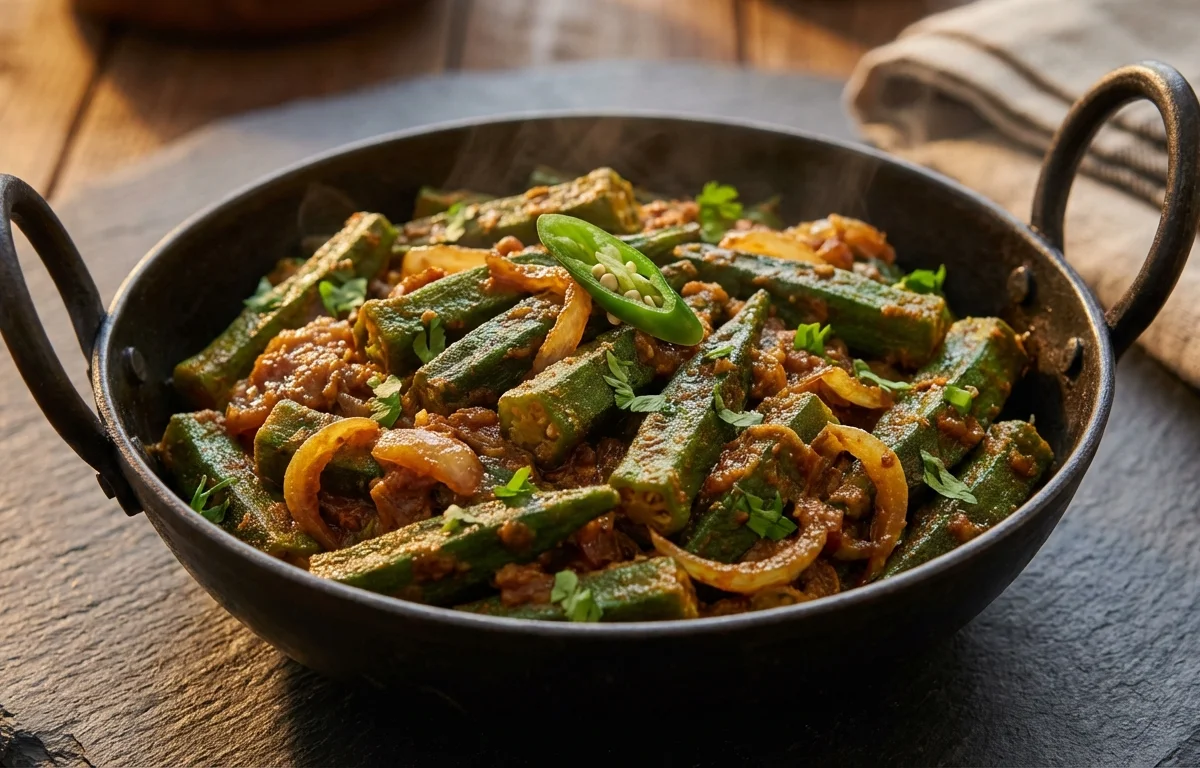
Bhindi Do Pyaza
Tender okra cooked with a double layer of onions, warm spices, and just enough tang from tomatoes. This North Indian dry sabzi stays full of flavor without getting soggy and goes beautifully with roti or dal.
For 4 servings
- prep · ~15 min
Prep the bhindi and onions.
1.Wipe the bhindi completely dry after washing so it does not turn slimy.2.Trim the ends and cut the bhindi into 1 inch pieces.3.Slice 2 onions into thick petals and finely chop the remaining onion.4.Chop the tomatoes, slit the green chili, and chop the ginger.TIPDry bhindi well before cutting. Any moisture in the pan makes it sticky. - saute · ~10 min
Cook the bhindi first.
Heat 1 tbsp oil in a wide pan over medium heat. Add the bhindi and cook, stirring gently, until lightly browned and less sticky, 8 to 10 minutes. Transfer to a plate.
TIPUse a wide pan and avoid covering it while the bhindi cooks. - saute · ~10 min
Build the onion masala.
1.Heat the remaining 1 tbsp oil in the same pan.2.Add cumin seeds and let them sizzle for 30 seconds.3.Add the chopped onion, green chili, and ginger, then cook until the onion turns light golden, 4 to 5 minutes.4.Add tomatoes, turmeric powder, red chili powder, coriander powder, and salt.5.Cook until the tomatoes soften and the masala looks thick, 4 to 5 minutes. - saute · ~4 min
Add the second onion layer and finish the sabzi.
Add the onion petals and cook for 2 minutes so they stay slightly crisp. Return the bhindi to the pan, sprinkle in garam masala and dry mango powder, and toss gently until everything is well coated and heated through.
TIPThe onion petals should soften but still keep their shape for the classic do pyaza texture. - garnish
Garnish with coriander leaves.
- serve
Serve hot with roti or paratha.
What to keep in mind.
7 tips from the recipe — small details that make a real difference to the final dish.
- 1Pat the okra fully dry and air it out for a few minutes before cutting to reduce slime in the pan.
- 2Cook the bhindi in a wide pan in a single layer if possible, so it browns instead of steaming.
- 3Do not add salt while sautéing the okra first; add it with the tomato masala to help keep the bhindi firmer.
- 4Let the tomato masala turn thick and jammy before returning the bhindi, or the sabzi can turn soggy.
- 5Add the onion petals near the end and cook just briefly so you get the classic do pyaza contrast of sweet, crisp-tender onion.
- 6Toss gently after adding the bhindi back so the pieces stay intact and the seeds do not spill out too much.
- 7This sabzi reheats best in an open pan over low heat, not the microwave, which can soften the okra.
Adapt it for your goals.
Low-oil
Use a well-seasoned nonstick pan and reduce the oil slightly; the bhindi still cooks well if spread out and stirred gently.
no tomatoNo-tomato
Skip the tomatoes for a drier, more onion-forward version and rely on extra amchur for tang.
spicierSpicier
Add an extra green chili or a little more red chili powder if you want a sharper heat with the sweet onions.
jainJain
Omit both onions and ginger, then increase tomatoes and use a pinch more amchur for balance; the dish becomes less traditional but suitable for Jain cooking.
Why this is on our healthy list.
Fiber-Rich Vegetables
Okra, onions, and tomatoes add dietary fiber, which helps make this dry sabzi satisfying and balanced with flatbreads or dal.
Packed with Plant Compounds
Okra, tomatoes, ginger, green chili, and spices contribute a variety of natural antioxidants and flavorful phytonutrients.
Moderate Oil Cooking
The recipe uses a modest amount of oil for the full pan, keeping the sabzi lighter than many heavily fried vegetable dishes.
Frequently asked questions
Dry the okra very well, cook it first in a wide pan without covering, and only mix it into the tomato masala after it has browned lightly.



.webp)