Brinjal Chutney
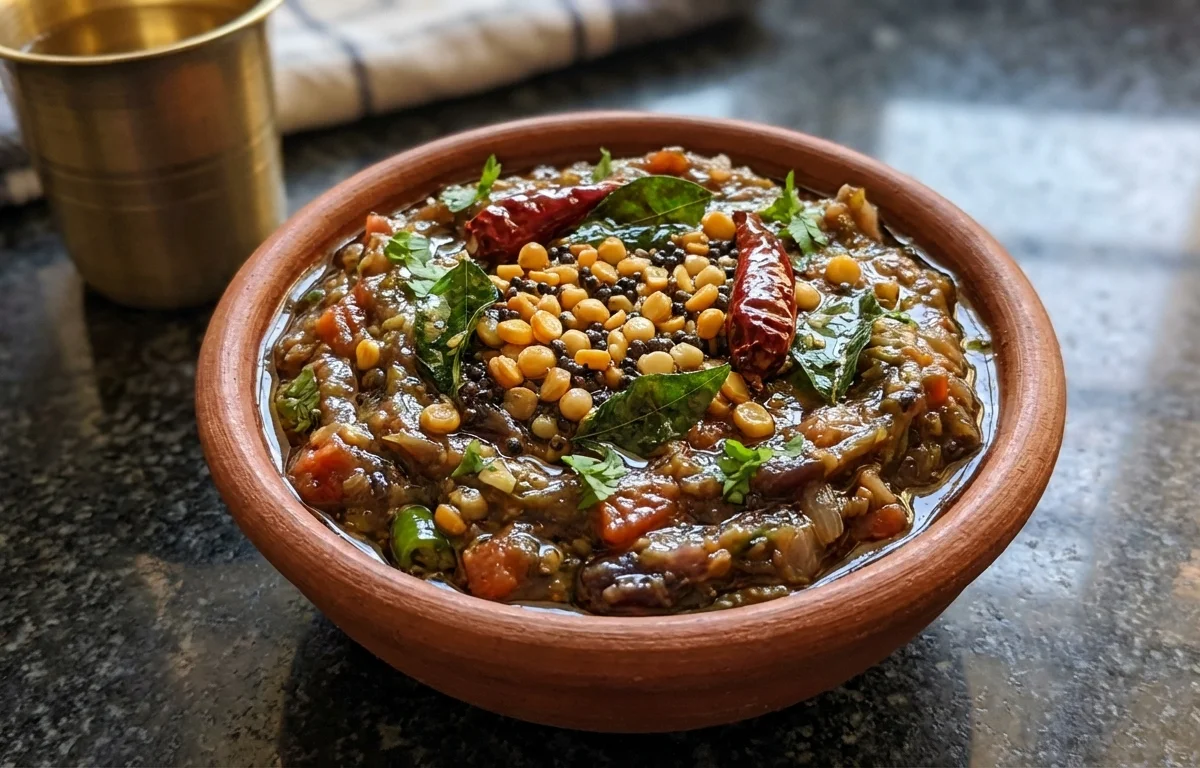
A smoky, tangy South Indian chutney made by roasting brinjals directly on the flame until the skin chars and the flesh turns soft and buttery. Blended with green chilies, tamarind, and a crackling tempering of mustard seeds and curry leaves, this rustic chutney is perfect with hot rice or as a spread for dosas and rotis.
For 16 servings
- roast · ~10 min
Roast the brinjals directly on the flame.
1.Wash and pat dry the brinjals. Make a few shallow slits on each with a knife.2.Place the brinjals directly on a medium flame using tongs.3.Roast for 8-10 minutes, turning frequently, until the skin is completely charred and the flesh feels soft when pressed.4.Remove from flame and let them cool for 5 minutes.TIPUse medium heat and rotate often — this cooks the flesh evenly and prevents burning through too quickly. - prep · ~5 min
Peel the brinjals and prepare the chutney base.
1.Once cool, peel off and discard the charred skin completely.2.Place the soft flesh in a mixing bowl along with green chilies, garlic cloves, tamarind, and salt.3.Mash everything together with a fork or your fingers until well combined and slightly chunky.TIPDon't use a blender — mashing by hand gives the chutney its characteristic rustic texture. - temper · ~2 min
Make the tempering.
1.Heat oil in a small tempering pan over medium heat until shimmering.2.Add mustard seeds and let them splutter (30 sec).3.Add cumin seeds, urad dal, and dried red chilies. Sauté until dal turns golden (30 sec).4.Add curry leaves and asafoetida. Stir for 10 seconds until fragrant.5.Pour the hot tempering over the mashed brinjal mixture.TIPThe urad dal should be golden, not brown — brown dal tastes bitter. - mix · ~1 min
Mix the chutney and serve.
Stir the tempering into the brinjal mixture until evenly combined. Taste and adjust salt if needed. Serve at room temperature.
What to keep in mind.
7 tips from the recipe — small details that make a real difference to the final dish.
- 1Choose firm, glossy brinjals without blemishes for the best texture and flavor.
- 2Slit the brinjals before roasting to allow steam to escape and prevent bursting.
- 3Cool the roasted brinjals completely before peeling — the flesh releases easily when cool.
- 4Do not wash the peeled flesh; washing dilutes the smoky flavor and makes the chutney watery.
- 5For extra smokiness, let one or two bits of charred skin remain in the chutney before mashing.
- 6Use thick-bottomed pan for tempering to avoid burning the urad dal and spices.
- 7Store leftover chutney in an airtight container in the fridge for up to 3 days.
Adapt it for your goals.
Nutty twist
Add 1 tablespoon of roasted peanuts or sesame seeds while mashing for a creamy, nutty depth that complements the smoky brinjal.
veganVegan
This chutney is already vegan; just ensure the oil used is plant-based, which it is by default.
pungent garlicPungent garlic
Increase garlic to 6-8 cloves for a sharper, more pungent flavor that stands up to stronger dishes like biryani.
sweet and sourSweet and sour
Add a small pinch of jaggery or sugar along with the tamarind for a balanced sweet-sour contrast.
Why this is on our healthy list.
Rich in Dietary Fiber
Brinjals (eggplants) are an excellent source of dietary fiber, which aids digestion and promotes gut health.
Low in Calories
This chutney is naturally low in calories and fat, making it a guilt-free accompaniment to meals.
Antioxidant Properties
Brinjals contain nasunin, an antioxidant that helps protect cells from oxidative stress and supports heart health.
Frequently asked questions
Yes, broil them on a lined baking sheet 4 inches from the heat, turning every 5 minutes until charred and soft (about 20 minutes).