
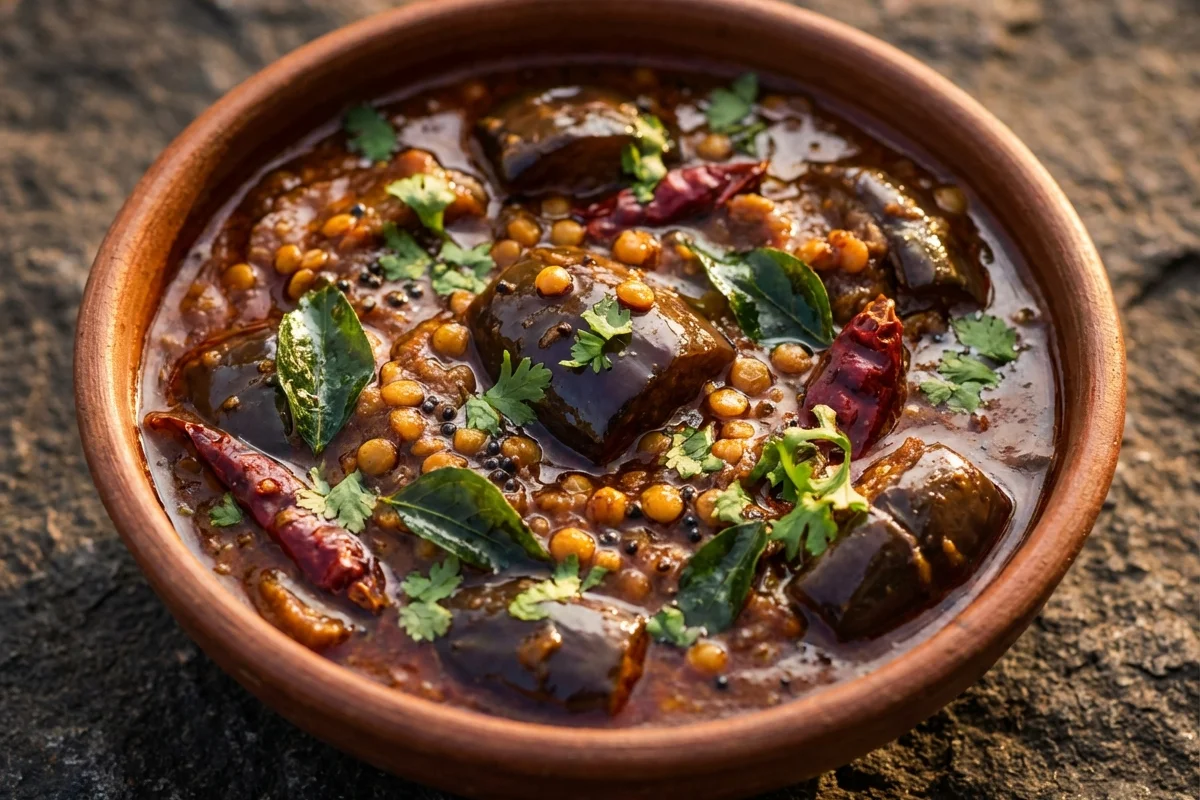
Brinjal Gojju
Smoky brinjal cooked down with tamarind, jaggery, and a simple tempering makes this South Indian gojju deeply savory, lightly tangy, and perfect alongside rice, dosa, or curd rice.
For 4 servings
- prep · ~10 min
Soak the tamarind and prep the brinjal.
1.Soak the tamarind in 150 ml warm water for 10 minutes.2.Wash the brinjal and keep the stems if tender.3.Slit each brinjal into quarters from the base, keeping the top intact, or quarter them fully if larger.TIPKeep the pieces fairly large so they turn soft without breaking up too quickly. - roast · ~12 min
Roast the brinjal until soft.
1.Heat 1 tbsp oil in a wide pan over medium heat.2.Add the brinjal and cook, turning gently, until the skin blisters in spots and the flesh softens.3.Cook for 10 to 12 minutes until tender but still holding shape.TIPCook on medium heat so the brinjal softens through without burning on the outside. - prep · ~2 min
Extract the tamarind pulp.
Squeeze the soaked tamarind well and strain out a smooth pulp. Discard the fibers and seeds.
- temper · ~2 min
Make the tempering.
1.Heat the remaining 1 tbsp oil in the same pan.2.Add mustard seeds and let them splutter.3.Add urad dal and chana dal and cook until lightly golden.4.Add dried red chili, curry leaves, asafoetida, and turmeric powder and stir for a few seconds.TIPLower the heat before adding asafoetida and curry leaves so the spices do not scorch. - simmer · ~10 min
Cook the gojju together.
1.Add the tamarind pulp to the pan carefully and stir.2.Add salt, red chili powder, and jaggery.3.Return the roasted brinjal to the pan and coat it gently in the sauce.4.Simmer for 8 to 10 minutes until the tamarind smell mellows and the sauce thickens slightly. - rest · ~5 min
Let the gojju rest for 5 minutes.
TIPA short rest helps the brinjal absorb the tangy, spiced sauce better. - serve
Serve with rice, dosa, or curd rice.
What to keep in mind.
7 tips from the recipe — small details that make a real difference to the final dish.
- 1Choose small purple brinjals with tender stems; they cook evenly and hold their shape better in gojju.
- 2Roast the brinjal in a wide pan without crowding so the skin blisters instead of steaming.
- 3Do not over-stir after the brinjal softens, or the pieces can collapse into the sauce.
- 4Simmer until the raw tamarind smell disappears; that is the best cue that the gojju is balanced and ready.
- 5If the sauce thickens too much after resting, loosen it with a spoon or two of hot water before serving.
- 6This tastes even better after 30 minutes, when the brinjal absorbs the tamarind-jaggery tempering.
- 7Refrigerate leftovers in a clean container for up to 2 days and reheat gently to keep the brinjal intact.
Adapt it for your goals.
Roasted-smoky
Char the brinjals directly over flame or in the oven before adding to the gojju for a more pronounced smoky flavor.
low oilLow-oil
Use less oil and roast the brinjal in a covered pan with occasional sprinkling of water; the dish stays tangy and lighter.
spicierSpicier
Add one extra dried red chili in the tempering or a little more chili powder if you want a sharper, hotter gojju.
jainJain
Skip asafoetida if needed and keep the same tamarind-jaggery balance for a Jain-friendly adaptation.
Why this is on our healthy list.
Vegetable-Forward Side Dish
Brinjal makes this gojju a satisfying plant-based accompaniment with a soft, filling texture and relatively light cooking.
Digestive Spice Tempering
Mustard seeds, curry leaves, asafoetida, urad dal, and chana dal add aroma and traditional digestive support to the dish.
Balanced Sweet-Tangy Profile
Tamarind and a small amount of jaggery create depth of flavor, helping the dish feel full-bodied without heavy ingredients.
Frequently asked questions
Yes. Cut large eggplants into thick wedges or big cubes so they soften well but do not disintegrate while simmering.


