
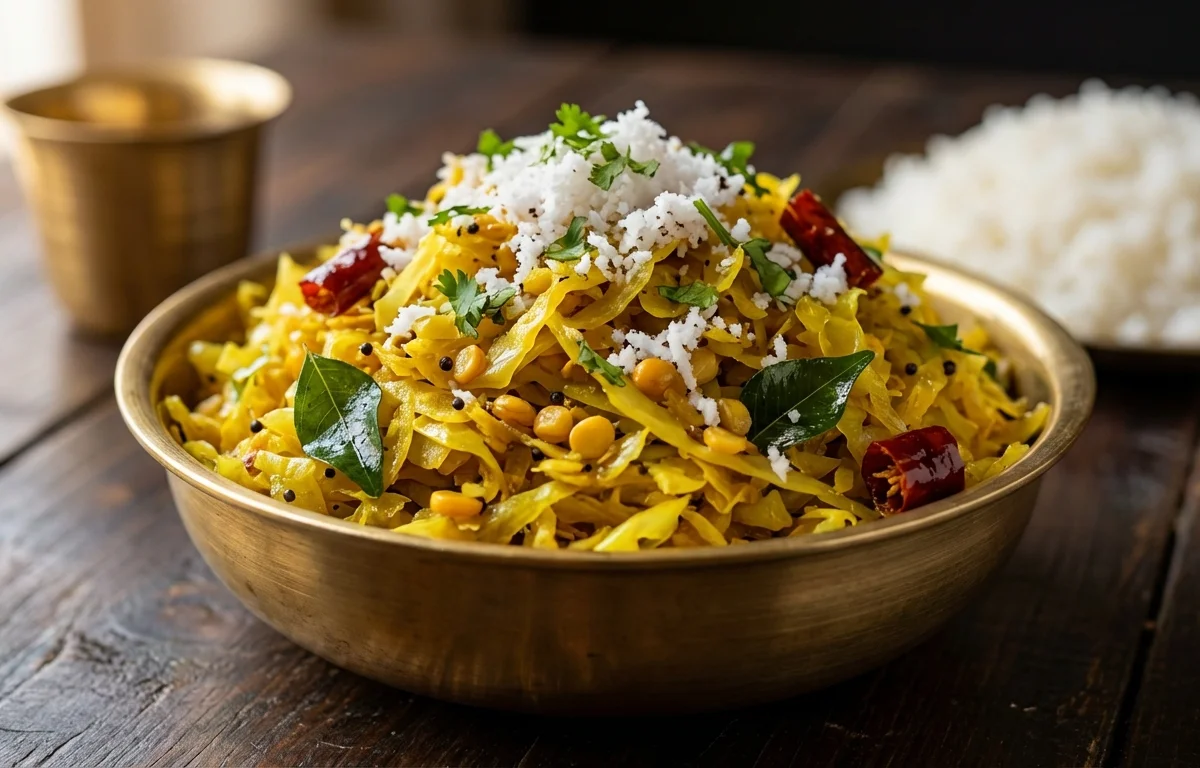
Cabbage Sukka
Thinly shredded cabbage tossed with grated coconut, aromatic spices, and a gentle tempering of mustard seeds and curry leaves. This Mangalorean-style dry sabzi comes together in under 20 minutes and pairs beautifully with steamed rice and dal, or can be tucked into a warm chapati.
For 4 servings
- prep
Shred the cabbage.
Remove the wilted outer leaves. Cut the cabbage into quarters, remove the hard core, and slice into very thin, long shreds. Rinse in a colander and let the water drain completely.
TIPDry cabbage is key — any excess water will steam the vegetable instead of letting it fry. Shake the colander well and leave it to drain while you prep the other ingredients. - temper · ~2 min
Make the tempering.
1.Heat oil in a kadai over medium heat until shimmering.2.Add mustard seeds and let them splutter (30 sec).3.Add cumin seeds, urad dal, and dried red chili — sauté until dal turns golden (30-40 sec).4.Add hing, curry leaves, green chili, and chopped ginger. Saute until fragrant (20 sec).TIPWatch the urad dal closely — it goes from golden to burnt in seconds. The moment it turns a light golden brown, immediately add the next ingredients. - saute · ~4 min
Saute the onion.
1.Add the chopped onion to the tempering.2.Sprinkle a pinch of salt to help the onion release moisture faster.3.Saute until the onion turns translucent and soft (3-4 min). - saute · ~6 min
Add cabbage and spices.
1.Add the shredded cabbage and turmeric powder to the kadai.2.Sprinkle the salt evenly over the cabbage.3.Toss everything well so the cabbage is coated with the tempering and turmeric.4.Reduce heat to low, cover with a lid, and let it cook in its own steam for 5-6 minutes. Stir once halfway through.TIPDo not add any water — cabbage releases enough moisture on its own. Covering the pan traps the steam and cooks the cabbage evenly without making it soggy. - saute · ~3 min
Finish with coconut and dry it out.
1.Remove the lid. The cabbage should be tender but still have a slight bite.2.Add the grated coconut and stir well.3.Increase heat to medium and saute uncovered for 2-3 minutes to evaporate any remaining moisture.4.Turn off the heat and squeeze lemon juice over the top. Toss once.TIPThe coconut should warm through and release its aroma but not brown. Keep it moving in the pan during those final 2 minutes. - garnish
Garnish with fresh coriander and serve hot.
Transfer to a serving bowl, scatter chopped coriander leaves on top, and serve immediately.
What to keep in mind.
7 tips from the recipe — small details that make a real difference to the final dish.
- 1Shred cabbage as thinly as possible for even cooking and a tender-yet-crunchy texture.
- 2Always drain shredded cabbage thoroughly; excess moisture will steam it instead of sautéing.
- 3Add a pinch of salt to the onions to help them soften and release moisture faster.
- 4Do not add any water while cooking; the cabbage releases enough steam to cook perfectly.
- 5Toast the grated coconut in the final step just until warm—overcooking can make it greasy.
- 6For the best flavor, use freshly grated coconut instead of dried or packaged coconut.
- 7This sukka tastes even better the next day; store in the fridge and reheat gently.
Adapt it for your goals.
Low-oil
Use only 1 tsp oil and steam the cabbage with a splash of water instead of the extra sauté to reduce fat without sacrificing flavor.
high proteinHigh-protein
Add 1/2 cup of cooked chana dal or crumbled paneer along with the coconut for a more filling, protein-packed side dish.
jainJain
Omit onion, garlic, and hing (asafoetida) and replace with a pinch of cumin and asafoetida-free hing for a Jain-friendly version.
veganVegan
This dish is already vegan as written; ensure the coconut is fresh and no ghee is substituted for oil.
Why this is on our healthy list.
Rich in Fiber
Cabbage is an excellent source of dietary fiber, aiding digestion and promoting gut health.
Low in Calories
With minimal oil and calorie-dense ingredients, this dish is light yet satisfying.
Source of Healthy Fats
Fresh grated coconut provides medium-chain triglycerides (MCTs) that may support metabolism.
Anti-Inflammatory Spices
Turmeric and ginger in this recipe are known for their anti-inflammatory and antioxidant properties.
Frequently asked questions
Yes, but ensure it's very finely shredded and pat it dry thoroughly to avoid excess moisture.


