Chamadumpa Vepudu
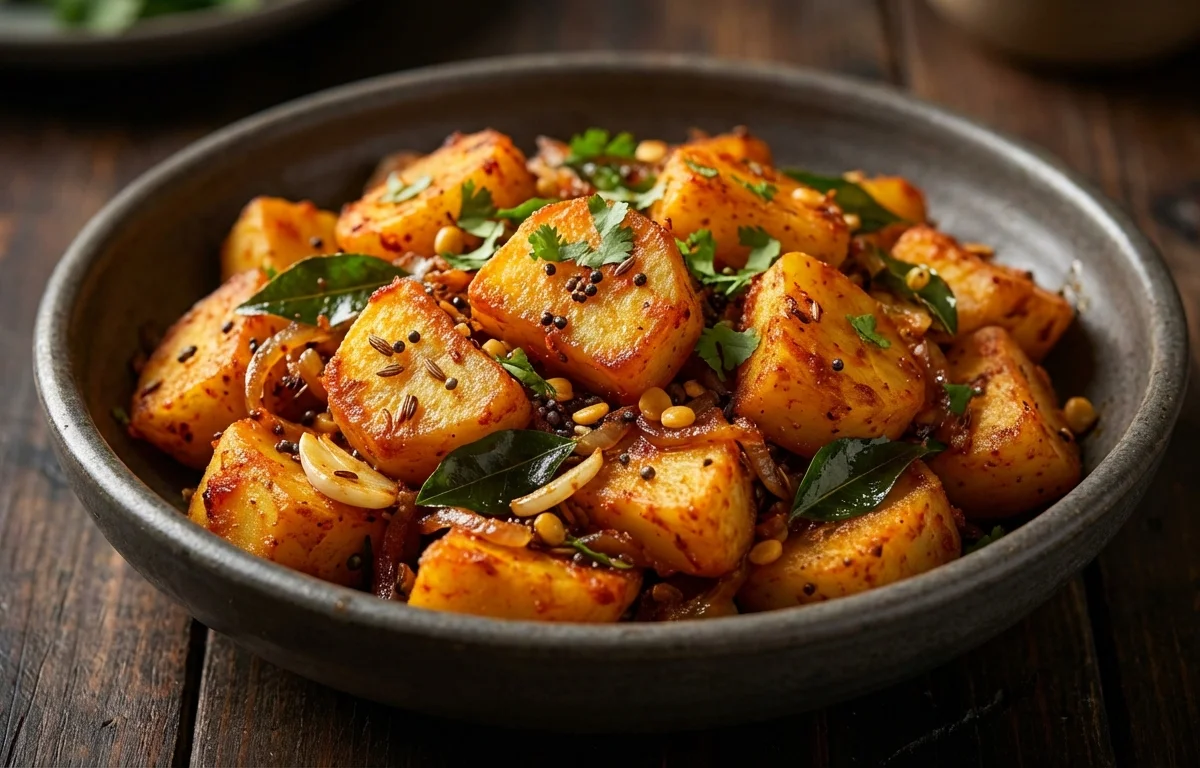
This Andhra-style arbi fry turns colocasia root into a crisp, spicy side with a soft center. A quick tempering, chili, and curry leaves give it bold flavor that pairs beautifully with dal rice or rasam.
For 4 servings
- prep · ~15 min
Clean and prepare the colocasia root.
1.Wash the colocasia root well to remove any mud.2.Place it in a pressure cooker with water.3.Cook until just tender but not mushy.4.Cool slightly, peel, and slice into medium rounds.TIPDo not overcook the root or it will break while frying. - pressure cook · ~12 min
Pressure cook the colocasia root.
Pressure cook for 2 whistles on medium heat, then let the pressure release naturally. The slices should hold their shape after peeling.
- temper · ~3 min
Make the tempering.
1.Heat oil in a wide pan over medium heat.2.Add mustard seeds and let them splutter.3.Add cumin seeds and urad dal and cook until the dal turns light golden.4.Add curry leaves, green chili, and garlic and sauté briefly until fragrant. - saute · ~1 min
Season the pan.
Add turmeric powder, red chili powder, coriander powder, and salt. Stir quickly for a few seconds so the spices bloom without burning.
TIPKeep the heat medium-low once the powders go in so they stay bright and aromatic. - fry · ~15 min
Fry the colocasia slices.
1.Add the sliced colocasia root to the pan in a single layer as much as possible.2.Toss gently to coat the slices with the spices.3.Cook on medium heat, turning every few minutes, until the edges crisp up well.4.Continue frying until the slices are golden in spots and slightly crisp outside.TIPUse a wide pan and avoid stirring too often to help the slices crisp instead of turning soft. - serve
Serve hot with rice and dal.
What to keep in mind.
7 tips from the recipe — small details that make a real difference to the final dish.
- 1Pressure-cook the chamadumpa only until just tender; overcooked pieces will crumble and turn gummy in the pan.
- 2After peeling and slicing, let the rounds air-dry for a few minutes so they fry up crisper.
- 3Use a wide, heavy pan and keep the slices mostly in one layer to get browned edges instead of steaming.
- 4Once the spice powders go in, stir only briefly before adding the taro so the chili and coriander do not burn.
- 5Turn the slices gently with a flat spatula every few minutes; frequent stirring will break the soft centers.
- 6If making ahead, half-fry the slices first and re-crisp them in the pan just before serving.
- 7Leftovers reheat best in a tawa or skillet, not the microwave, which softens the crisp exterior.
Adapt it for your goals.
Low-oil
Roast the boiled, spiced slices on a tawa or in an air fryer with less oil for a lighter version that still gets crisp edges.
extra spicyExtra-spicy
Add more green chilies and a pinch of extra red chili powder for a fierier Andhra-style side that pairs especially well with plain rice.
no garlicNo-garlic
Skip the garlic for a simpler temple-style variation while keeping the curry leaves, mustard, and cumin for aroma.
onion vadiyalu styleOnion-vadiyalu style
Add a few thin onion slices or crushed fryums toward the end for extra sweetness or crunch alongside the soft taro.
Why this is on our healthy list.
Root Vegetable Energy
Colocasia root provides complex carbohydrates that make this fry a satisfying side with dal rice or rasam.
Digestive Spice Support
Cumin, coriander, garlic, and curry leaves bring traditional digestive spices that add flavor while making the dish feel balanced.
Plant-Based Side Dish
This recipe is naturally vegan and built from vegetables, spices, and a small tempering, making it easy to fit into everyday meals.
Frequently asked questions
Do not overcook it in the pressure cooker. The slices should be just tender, then fried in a wide pan with minimal stirring so they can firm up and crisp.



.webp)