Chawli ki Sabzi
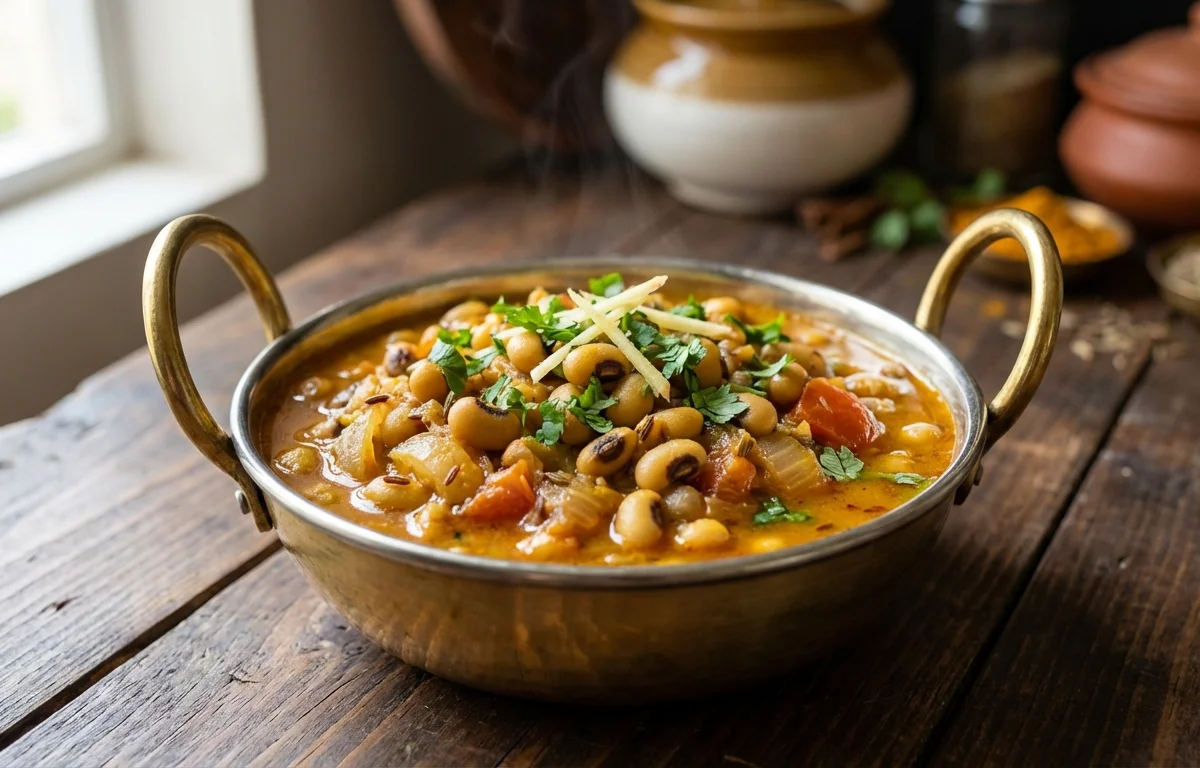
Tender black-eyed peas simmered in a spiced onion-tomato gravy with a gentle kick from green chilies and tang from amchur. This homestyle North Indian sabzi pairs beautifully with roti or steamed rice for a comforting everyday meal.
For 4 servings
- prep
Soak the black-eyed peas.
Rinse 1 cup dried chawli thoroughly. Soak in enough water to cover by 2 inches for 4-6 hours or overnight. Drain before cooking.
TIPSoaking reduces cooking time and makes the legumes easier to digest. - pressure cook · ~20 min
Pressure cook the chawli.
1.Add soaked and drained chawli to a pressure cooker with 3 cups water.2.Close the lid and cook on medium heat for 3-4 whistles.3.Let the pressure release naturally. The beans should be tender but hold their shape.TIPDon't overcook — you want the beans whole, not mushy, for the sabzi. - temper · ~9 min
Make the tempering base.
1.Heat 2 tsp oil in a heavy-bottomed pan or kadai over medium heat.2.Add cumin seeds and let them crackle until fragrant (30 seconds).3.Add finely chopped onions and sauté until deeply golden (7-8 minutes).TIPThe deep golden color of the onions is what gives the gravy its rich taste. Don't rush this step. - saute · ~9 min
Build the aromatic masala.
1.Add grated ginger, minced garlic, and slit green chilies. Sauté until the raw smell disappears (1 minute).2.Add chopped tomatoes and cook until soft and mushy (4-5 minutes).3.Add turmeric powder, red chili powder, coriander powder, and salt. Stir and cook until oil separates from the masala (2-3 minutes).TIPCook the tomatoes completely until they lose their raw tang — the masala should look glossy with oil specks on the surface. - simmer · ~12 min
Simmer the chawli in the gravy.
1.Add the pressure-cooked chawli along with its cooking water to the masala.2.Add 0.5 cup additional water. Stir well and bring to a gentle simmer.3.Cover and simmer on low heat for 10-12 minutes, stirring occasionally, until the gravy thickens slightly.TIPMash a few beans against the side of the pan with the back of the spoon — this thickens the gravy naturally. - mix · ~2 min
Finish with garam masala and amchur.
1.Turn off the heat. Sprinkle garam masala and dry mango powder over the sabzi.2.Stir gently to combine. Let it rest for 2 minutes.TIPAdding garam masala and amchur off the heat preserves their fresh, bright flavor. - garnish
Garnish with fresh coriander leaves and serve hot.
Transfer to a serving bowl, scatter chopped cilantro on top, and serve with roti, paratha, or steamed rice.
What to keep in mind.
6 tips from the recipe — small details that make a real difference to the final dish.
- 1Soak the black-eyed peas overnight to ensure even cooking and creamy texture.
- 2Sauté onions until deeply golden—this builds the rich flavor base of the gravy.
- 3Cook the tomato masala until oil separates on the surface for a non-raw taste.
- 4Mash a few cooked beans against the pan to naturally thicken the gravy.
- 5Add garam masala and amchur only after turning off the heat to preserve their aroma.
- 6Let the sabzi rest for 5 minutes before serving so the flavors meld together.
Adapt it for your goals.
Vegan
This recipe is already vegan—just use a neutral oil like sunflower or coconut instead of ghee. It's naturally dairy-free and plant-based.
Low OilLow-Oil
Reduce the oil to 1 teaspoon and dry-roast the cumin seeds first before adding onions. You can also skip the oil for the gravy by using a non-stick pan and adding a splash of water when needed.
High ProteinHigh-Protein
Add 1/2 cup of cubed paneer (or extra-firm tofu for vegan option) along with the cooked chawli for an extra protein boost. Paneer soaks up the gravy beautifully.
JainJain
For a Jain version, omit garlic and onion. Use asafoetida (hing) in the tempering and increase ginger and green chilies for flavor. You can also add finely chopped raw banana or bottle gourd for body.
Punjabi StylePunjabi-Style
Give the sabzi a richer, more rustic texture by adding 2 tablespoons of fresh cream or cashew paste along with the water in the simmering step. This adds a subtle sweetness and creamy mouthfeel.
Why this is on our healthy list.
High in Plant Protein
Black-eyed peas are an excellent source of plant-based protein, making this sabzi a hearty and satisfying main dish.
Rich in Dietary Fiber
The high fiber content in black-eyed peas supports healthy digestion and helps maintain stable blood sugar levels.
Packed with Folate
These legumes are rich in folate, a B-vitamin essential for cell growth and red blood cell formation, especially important for pregnant women.
Low in Fat and Cholesterol-Free
With minimal oil and no animal products, this dish is naturally low in saturated fat and completely cholesterol-free.
Anti-Inflammatory Spices
Turmeric, ginger, and cumin in the masala offer anti-inflammatory and antioxidant properties, adding a health boost beyond basic nutrition.
Frequently asked questions
Yes. Drain and rinse one 15-ounce can of black-eyed peas. Skip the pressure cooking step and add them directly to the masala. Simmer only 5-8 minutes, as they are already cooked.



.webp)