
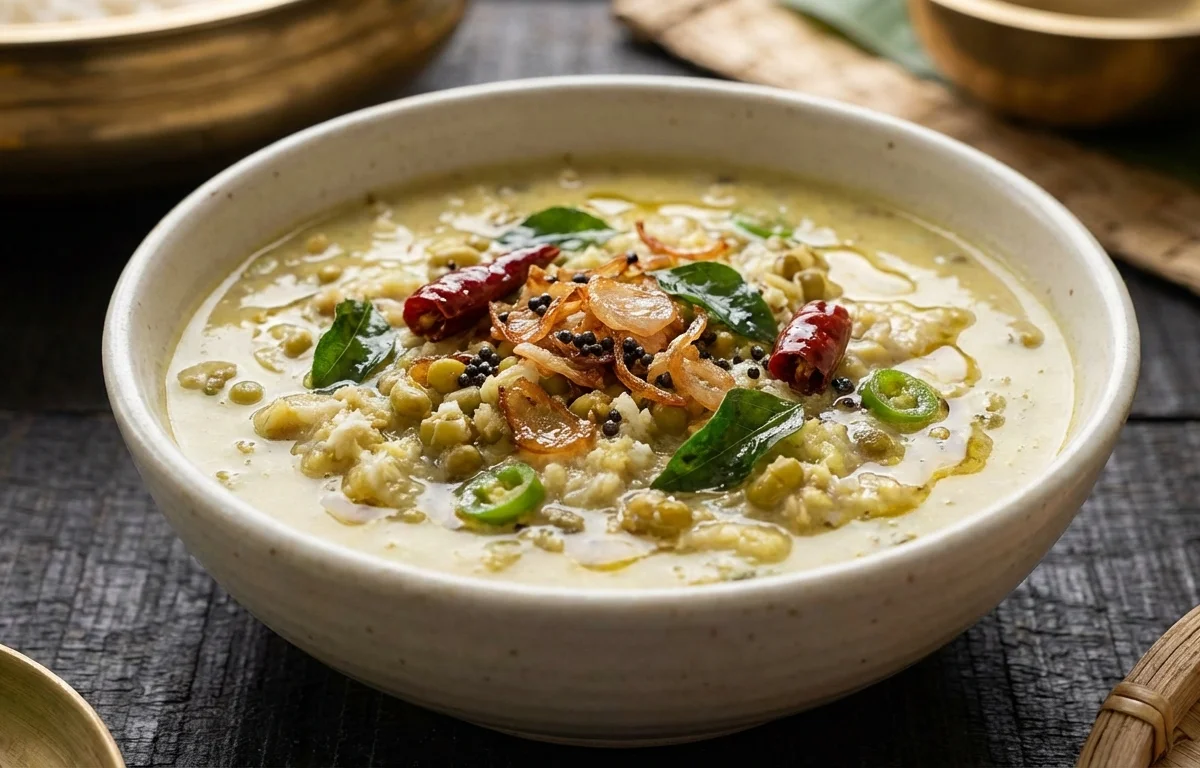
Cherupayar Curry
A simple, comforting Kerala-style curry made with tender whole green gram beans simmered in a fragrant coconut-cumin paste. Lightly spiced with green chili and finished with a crackling coconut oil tempering of mustard seeds, curry leaves, and shallots. This wholesome dish pairs beautifully with steamed rice and a side of pickle.
For 4 servings
- pressure cook · ~15 min
Pressure cook the green gram.
1.Add washed whole green gram, turmeric powder, red chili powder, salt, slit green chilies, and 2 cups of water to a pressure cooker.2.Close the lid and cook on medium-high heat until the first whistle.3.Lower the heat and cook for 3 more whistles, then turn off the heat.4.Let the pressure release naturally. The gram should be soft but still hold its shape. - mix · ~2 min
Prepare the coconut-cumin paste.
1.In a small mixer jar, add grated fresh coconut, cumin seeds, and garlic cloves.2.Add 2-3 tablespoons of water and grind to a smooth, thick paste. - simmer · ~7 min
Simmer the curry base.
1.Open the pressure cooker and check the consistency of the cooked gram. Add the remaining 1 cup of water if a thinner gravy is preferred.2.Stir in the ground coconut-cumin-garlic paste until well combined.3.Bring the curry to a gentle simmer on low heat and cook for 5-7 minutes, stirring occasionally. Do not let it boil vigorously after adding the coconut paste.TIPAvoid a hard boil after adding coconut paste — it can split the gravy. - temper · ~5 min
Make the coconut oil tempering.
1.Heat coconut oil in a small tempering pan over medium heat.2.Add mustard seeds and let them splutter for 30 seconds.3.Add sliced shallots, dried red chilies, and fresh curry leaves.4.Sauté until the shallots turn golden brown and crisp, about 3-4 minutes. - mix · ~1 min
Pour the tempering over the curry.
1.Immediately pour the hot tempering over the simmering curry. You should hear a satisfying sizzle.2.Stir gently to mix the aromatic oil through the gravy.TIPFor the best aroma, serve immediately after adding the tadka. - serve · ~2 min
Rest briefly and serve hot.
Turn off the heat and let the curry rest for 2 minutes. Serve hot with steamed rice and a side of pickle.
What to keep in mind.
6 tips from the recipe — small details that make a real difference to the final dish.
- 1Soak the whole green gram for 2–3 hours to reduce cooking time and improve digestibility.
- 2Use fresh coconut for the paste; frozen or dried will not yield the same creamy texture.
- 3Let the pressure release naturally so the beans stay intact and creamy.
- 4Do not skip the tadka — the sizzle of coconut oil, mustard seeds, and curry leaves defines the dish.
- 5For extra body, reserve 2 tablespoons of cooked gram before adding the coconut paste, mash, and stir back in.
- 6Serve within 30 minutes; the coconut paste can thicken upon standing — add a splash of hot water to adjust.
Adapt it for your goals.
Low-oil
Reduce coconut oil to 1 teaspoon and skip the tempering step — simply garnish with fresh curry leaves and a squeeze of lemon for a lighter version.
high proteinHigh-protein
Add 1/2 cup of cooked, shredded chicken or paneer cubes along with the coconut paste to boost protein without altering the flavor profile.
jainJain
Omit garlic and shallots; replace with a pinch of asafoetida in the tempering and use finely chopped green zucchini for texture.
veganVegan
This recipe is already vegan; ensure the curry leaves are fresh and no ghee is substituted for coconut oil.
Why this is on our healthy list.
Rich in Plant-Based Protein
Whole green gram provides a solid source of plant protein, making this curry a satisfying meatless meal option.
High in Dietary Fiber
The whole green gram (with skin) is packed with fiber, which aids digestion and helps maintain steady blood sugar levels.
Good Source of Iron
Green gram is naturally rich in iron, and the addition of turmeric enhances iron absorption.
Low in Saturated Fat
Coconut oil is used sparingly, and the dish contains no dairy, keeping saturated fat content moderate.
Frequently asked questions
Yes, but split gram cooks much faster and will yield a thicker, porridge-like consistency; reduce pressure cooking to 2 whistles and adjust water as needed.



.webp)
.webp)