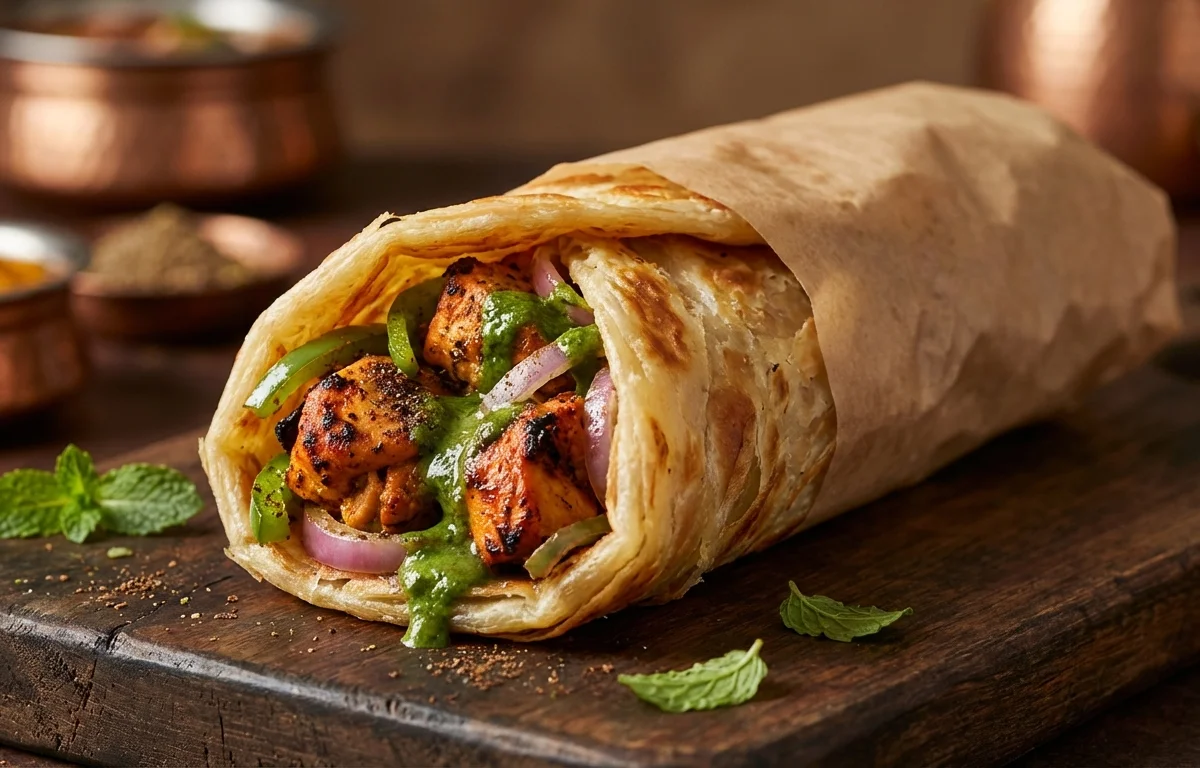
Chicken Tikka Kathi Roll
Tender pieces of chicken tikka wrapped in flaky parathas with onions, coriander leaves, and a squeeze of lemon. This street-style roll is satisfying, packed with bold flavor, and easy to make at home for lunch or dinner.
For 4 servings
- knead · ~15 min
Knead the dough.
Mix whole wheat flour, salt, and oil in a bowl. Add water little by little and knead into a soft dough. Cover and let it rest while you prepare the filling.
TIPA soft dough makes the parathas easier to roll and keeps the roll from feeling dry. - mix · ~15 min
Marinate the chicken.
1.Add yogurt, ginger-garlic paste, red chili powder, turmeric powder, cumin powder, coriander powder, garam masala, lemon juice, mustard oil, and salt to a bowl.2.Mix well to make a thick marinade.3.Add chicken strips and coat them evenly.4.Set aside for 15 minutes. - mix · ~5 min
Prepare the onion filling.
Mix sliced onion, coriander leaves, green chili, lemon juice, and a pinch of salt in a bowl. Toss well and keep aside so the onions soften slightly.
- grill · ~12 min
Cook the chicken tikka.
1.Heat 1 tbsp oil in a heavy pan over medium-high heat.2.Add the marinated chicken in a single layer and cook until lightly charred in spots.3.Stir and cook until the chicken is fully done and reaches 165°F or 74°C inside.4.Add bell pepper and cook 2 minutes more until just tender.TIPCook the chicken on fairly high heat so it browns instead of releasing too much water. - knead · ~7 min
Divide and roll the parathas.
1.Divide the rested dough into 4 equal balls.2.Dust lightly with flour if needed.3.Roll each ball into a thin round paratha. - fry · ~10 min
Cook the parathas.
1.Heat a tawa or skillet over medium heat.2.Cook one rolled paratha until light bubbles appear.3.Flip, brush with a little oil, and cook both sides until golden spots appear.4.Repeat with the remaining parathas. - assemble · ~4 min
Assemble the rolls.
1.Place one warm paratha on a plate.2.Add a portion of the chicken tikka down the center.3.Top with some onion filling.4.Roll tightly into a wrap. - serve
Serve the chicken tikka kathi rolls hot.
What to keep in mind.
7 tips from the recipe — small details that make a real difference to the final dish.
- 1Use thick yogurt for the marinade so it clings to the chicken instead of turning watery in the pan.
- 2Pat the chicken strips dry before marinating to help them char rather than steam.
- 3Cook the chicken in a single layer; overcrowding the pan will make the tikka release moisture.
- 4Let the onion-lemon mixture sit briefly, but not too long, so it softens without turning limp.
- 5Keep the parathas warm under a cloth while cooking the rest so they stay flexible for rolling.
- 6Do not overfill the wrap; a narrow line of filling makes a tighter, neater kathi roll.
- 7If packing for later, cool the chicken slightly before assembling so the paratha does not get soggy.
Adapt it for your goals.
Egg-kathi-roll
Crack and spread a beaten egg onto each paratha as it cooks, then place the paratha egg-side in for a classic Kolkata-style layer.
paneerPaneer
Swap the chicken for paneer strips and use the same marinade for a vegetarian version with similar tikka flavor.
spicierSpicier
Increase red chili powder and add extra chopped green chili to the onion filling for a hotter street-food style roll.
low oilLow-oil
Use a well-seasoned skillet, cook the parathas with minimal oil, and grill the marinated chicken instead of pan-frying.
Why this is on our healthy list.
Protein-Rich Filling
Chicken breast and yogurt make the filling satisfying and support a balanced, hearty meal.
Whole Wheat Paratha
Using whole wheat flour adds more fiber and a steadier, more filling base than refined flour wraps.
Herbs and Aromatics
Coriander leaves, ginger, garlic, onion, and spices add flavor complexity without needing heavy sauces.
Frequently asked questions
Yes. You can marinate it for a few hours in the refrigerator for deeper flavor, but keep it covered and cook it straight from chilled or let it lose some chill first.