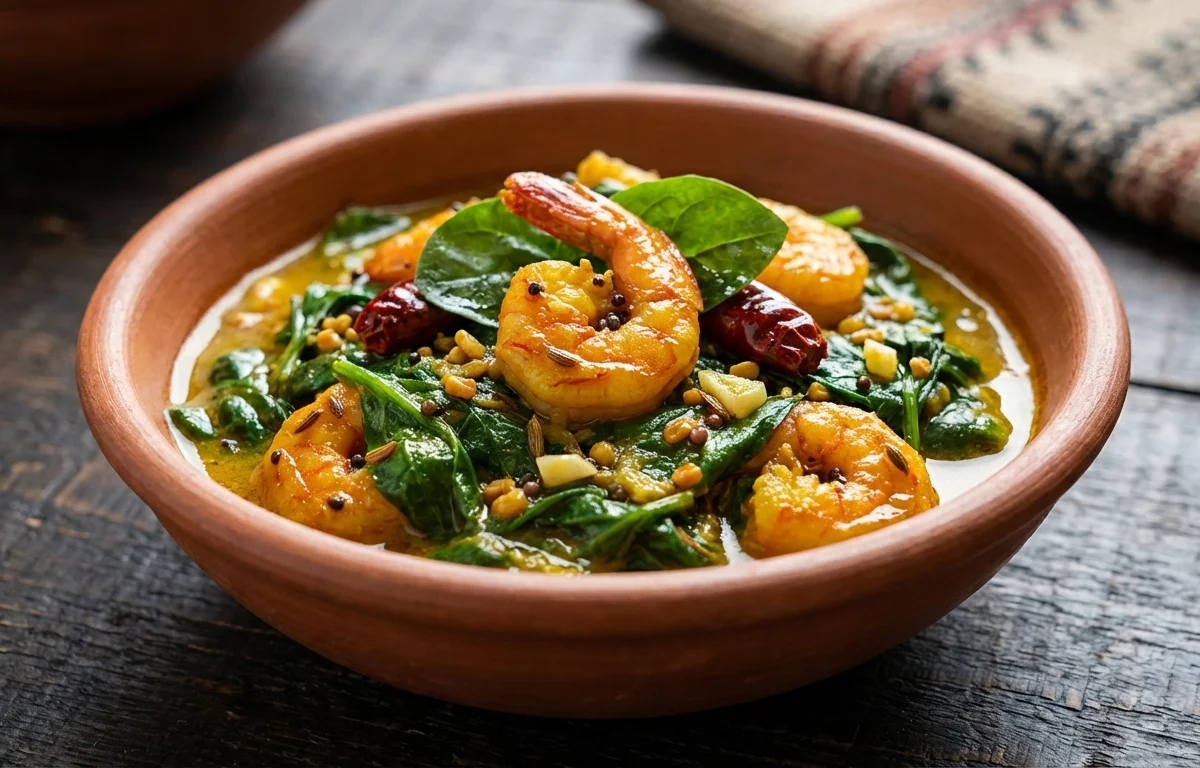
Chingudi Saga Tarkari
Plump, juicy prawns simmered in a fragrant, creamy spinach gravy with a gentle kick of green chili. This classic Odia dish balances the ocean's sweetness with earthy greens and warm spices for a comforting curry that pairs beautifully with steamed rice.
For 4 servings
- prep · ~5 min
Blanch the spinach.
1.Bring a pot of water to a rolling boil.2.Add the chopped spinach and let it cook for 2 minutes until wilted.3.Drain immediately and transfer to a bowl of ice-cold water.4.Once cooled, drain again and blend into a smooth puree. Set aside.TIPShocking spinach in ice water locks in the bright green color for a vibrant gravy. - saute · ~3 min
Marinate and sear the prawns.
1.In a bowl, toss the prawns with a pinch of turmeric powder and a pinch of salt.2.Heat 1 tablespoon mustard oil in a pan over medium heat until smoking lightly.3.Add the prawns and sear for about 1 minute per side until pink. Remove and set aside.TIPDo not overcook the prawns at this stage; they will finish cooking in the gravy and remain juicy. - saute · ~7 min
Build the aromatic base.
1.In the same pan, add the remaining 1 tablespoon mustard oil.2.Add the finely chopped onions and sauté until translucent (3-4 minutes).3.Add the minced garlic and grated ginger; sauté for 1 minute until the raw smell fades.4.Toss in the slit green chilies and cook for another minute. - saute · ~7 min
Cook the tomato-spice masala.
1.Add the chopped tomatoes, red chili powder, cumin powder, and the remaining turmeric powder.2.Stir and cook until the tomatoes soften and the oil begins to separate from the mixture (5-7 minutes).3.Sprinkle in the remaining salt and mix well.TIPCook the tomatoes thoroughly until they are mushy; this ensures the raw tang disappears and the gravy tastes mellow. - simmer · ~6 min
Simmer the spinach gravy.
1.Pour the spinach puree into the pan and stir to combine with the masala.2.Add 1 cup of water to reach a smooth, flowing consistency.3.Bring the gravy to a gentle simmer and let it cook uncovered for 5-6 minutes, stirring occasionally. - simmer · ~4 min
Add the prawns and finish cooking.
1.Gently place the seared prawns into the simmering spinach gravy.2.Let them cook for 3-4 minutes until they are perfectly tender and soak up the flavors.3.Sprinkle a pinch of garam masala over the top and stir gently. - temper · ~1 min
Finish with a ghee tempering.
1.In a small separate pan, heat 1 teaspoon of ghee.2.Add 1 teaspoon cumin seeds and let them crackle for a few seconds until fragrant and golden.3.Pour this sizzling tempering immediately over the curry.TIPThe hot cumin-infused ghee adds a final layer of nutty aroma that defines this dish. - garnish
Garnish with fresh coriander leaves and serve hot with steamed rice.
What to keep in mind.
7 tips from the recipe — small details that make a real difference to the final dish.
- 1Use fresh or frozen prawns; thaw them completely before marinating.
- 2Do not skip the ice-water bath after blanching spinach; it preserves the vibrant green color.
- 3Cook the tomato mixture until the oil separates; this ensures a well-integrated, mellow gravy.
- 4Add the prawns only at the final simmer to prevent them from turning rubbery.
- 5Let the tempering sizzle for just a few seconds; burnt cumin seeds will taste bitter.
- 6For a thicker gravy, reduce the water to ¾ cup and simmer longer.
- 7Make the spinach puree a day ahead and refrigerate; it saves time on the day of cooking.
Adapt it for your goals.
Vegetarian
Replace the prawns with 200g of paneer cubes or boiled potatoes; the creamy spinach gravy works beautifully with these swaps, making it ideal for meat-free days.
dairy freeDairy-free
Skip the ghee tempering and use a neutral oil (like coconut or sunflower) for the final tadka; the dish remains rich without dairy.
low oilLow-oil
Reduce mustard oil to 1 tablespoon total and omit the final tempering; the dish stays tasty but lighter for anyone watching their oil intake.
Why this is on our healthy list.
Rich in Iron and Folate
Spinach provides a hearty dose of plant-based iron and folate, supporting healthy blood and energy levels.
Lean Protein Source
Prawns offer high-quality, low-fat protein that helps build and repair tissues without excess calories.
Packed with Antioxidants
Turmeric, cumin, and spinach are loaded with antioxidants that help fight inflammation and oxidative stress.
Good for Digestion
Ginger and garlic in the base stimulate digestion and aid nutrient absorption, making this curry both flavorful and gut-friendly.
Frequently asked questions
Yes, but thaw and squeeze out excess water before blending; fresh spinach yields a brighter, more vibrant color.