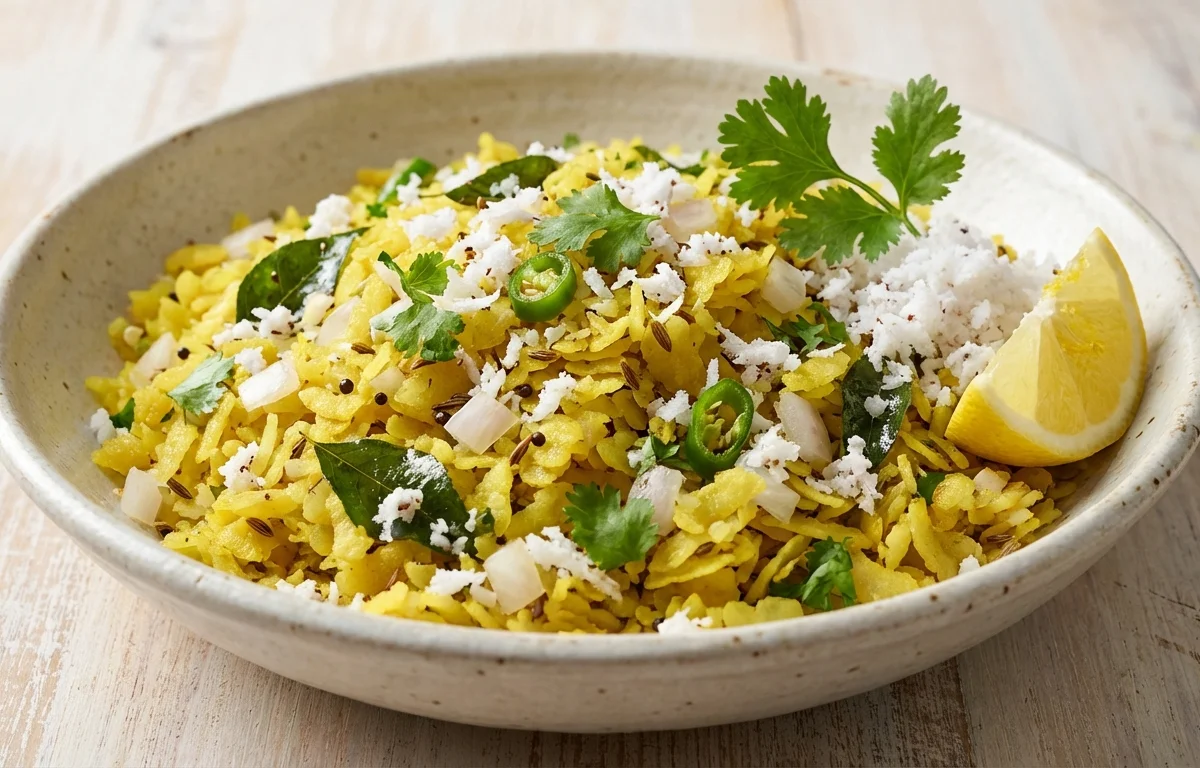
Dadpe Pohe
Dadpe Pohe is a quick Maharashtrian no-cook poha dish where flattened rice is softened with onion, fresh coconut, green chili, lemon juice, and a warm tempering. It tastes fresh, lightly spicy, and perfect for a light breakfast or snack.
For 4 servings
- prep · ~10 min
Rinse the poha and let it soften.
Place the poha in a colander, rinse it quickly under running water, and drain well. Set it aside for 8 to 10 minutes so the flakes soften without turning mushy.
TIPRinse quickly instead of soaking. Too much water makes Dadpe Pohe heavy and sticky. - mix · ~3 min
Mix the fresh ingredients.
1.Add the softened poha to a wide bowl.2.Mix in onion, coconut, green chili, cilantro, sugar, salt, and lemon juice.3.Toss gently with your fingers or a spoon until everything is evenly combined. - temper · ~1 min
Make the tempering.
1.Heat oil in a small pan over medium heat.2.Add mustard seeds and let them splutter.3.Add cumin seeds and curry leaves, and cook for a few seconds until fragrant.TIPKeep the heat medium so the spices bloom without burning. - assemble · ~1 min
Pour the tempering over the poha.
Pour the hot tempering over the poha mixture and mix well so the oil and spices coat everything evenly.
- rest · ~5 min
Cover and rest the poha.
Cover the bowl and let the Dadpe Pohe rest for 5 minutes so the flavors settle and the poha absorbs the moisture from the onion, lemon juice, and coconut.
- serve
Serve the Dadpe Pohe.
Fluff lightly and serve fresh. Enjoy it as a light breakfast, evening snack, or side with hot tea.
What to keep in mind.
7 tips from the recipe — small details that make a real difference to the final dish.
- 1Use thick poha only; thin poha turns pasty after rinsing and resting.
- 2Rinse very briefly, then drain fully before mixing so the flakes stay separate.
- 3After adding lemon and salt, rest the poha covered for 5 minutes to let it soften evenly.
- 4Pour the tempering while still hot so the mustard, cumin, and curry leaf aroma gets absorbed.
- 5Finely chop the onion and green chili so every bite tastes balanced, not harsh.
- 6If the poha feels dry after resting, sprinkle 1-2 teaspoons water and toss gently.
- 7Dadpe Pohe is best eaten fresh; if holding it, add the coconut just before serving.
Adapt it for your goals.
Low-oil
Use less oil for the tempering and toss very well; you still get the fragrance of mustard, cumin, and curry leaves with a lighter finish.
peanut crunchPeanut-crunch
Add roasted peanuts for extra crunch and a nuttier bite, which pairs especially well with the soft poha and fresh coconut.
jainJain
Skip the onion and add a little extra coconut and cilantro for freshness while keeping the lemony, tempered flavor profile.
milderMilder
Reduce the green chili or slit it into the tempering instead of chopping, for gentler heat that still perfumes the dish.
Why this is on our healthy list.
Light and Easy Breakfast
Flattened rice softens quickly and makes this dish feel light, making it suitable for a simple breakfast or snack.
Fresh Herb and Citrus Boost
Cilantro, green chili, curry leaves, and lemon juice add freshness and antioxidants along with bright flavor.
Good Fats from Coconut
Fresh coconut adds richness, texture, and satisfying fat that makes the poha more filling.
Frequently asked questions
It is not ideal. Thin poha softens too fast and can become mushy once mixed with onion, lemon juice, and the hot tempering.



.webp)