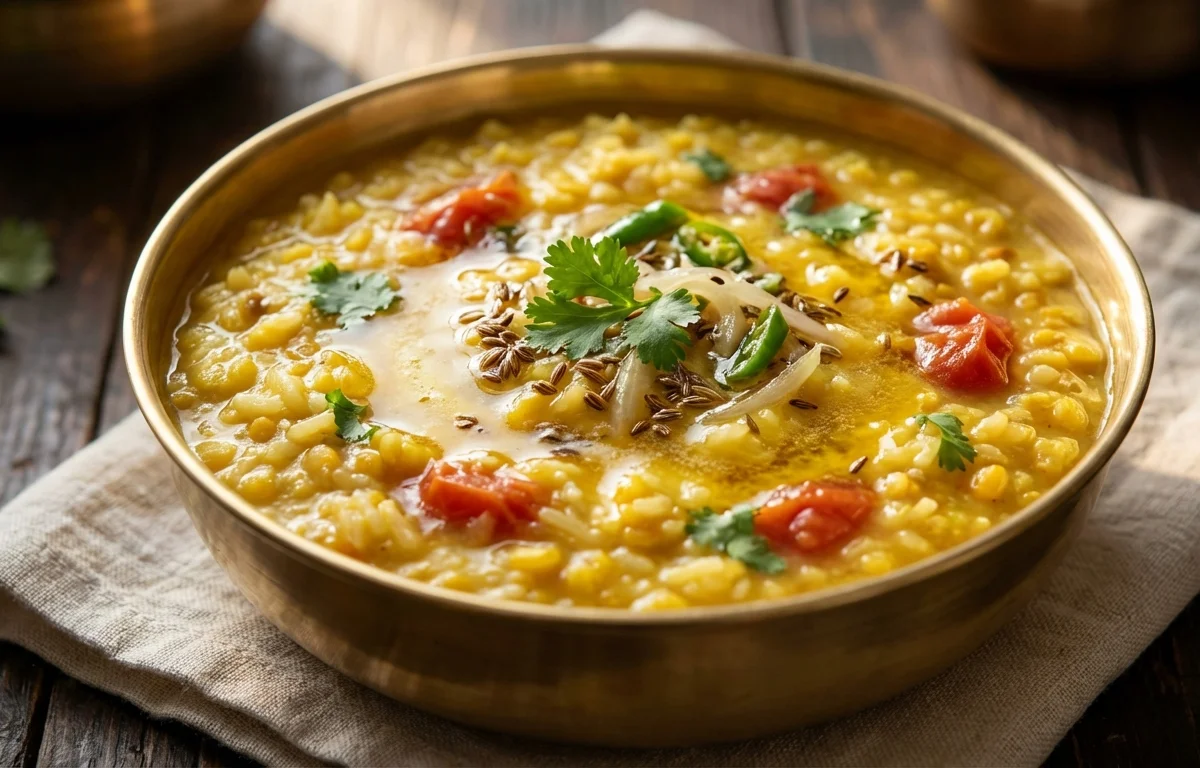
Dal Khichdi
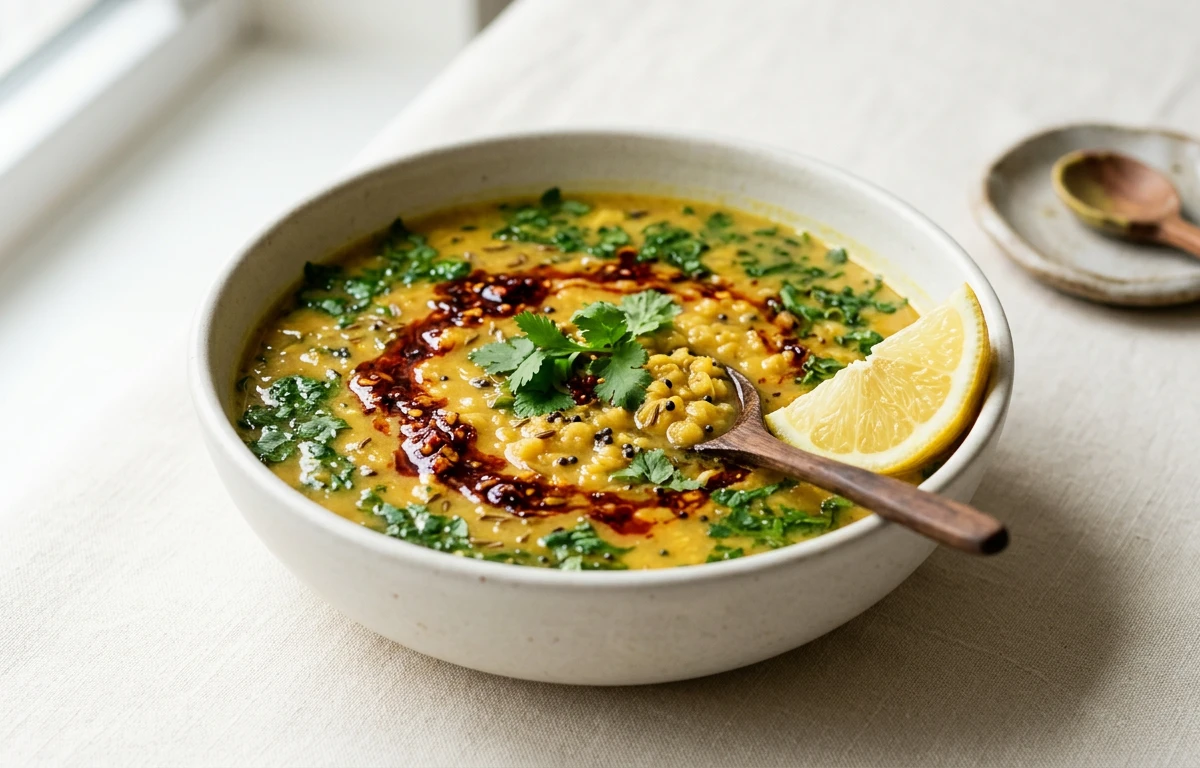
A comforting, one-pot meal of rice and moong dal slow-cooked into a soft, porridge-like consistency. Lightly spiced with cumin and turmeric, this gentle dish is a staple across Indian homes, perfect for rainy days, recovery meals, or whenever you need something warm and soothing.
For 4 servings
- prep
Soak the rice and dal.
1.Rinse rice and moong dal together under running water until water runs clear.2.Soak in enough water to cover for 20-30 minutes, then drain.TIPDry roast the moong dal in a pan for 2-3 minutes before rinsing for a nuttier aroma. - temper · ~2 min
Make the tempering.
1.Heat a pressure cooker over medium heat and add ghee.2.Once hot, add cumin seeds and let them crackle for 20 seconds.3.Add a pinch of hing and stir until fragrant. - mix · ~1 min
Add rice, dal, and water.
1.Add drained rice and moong dal to the pressure cooker.2.Add turmeric powder and salt. Stir gently to combine.3.Pour in water and mix. - pressure cook · ~15 min
Pressure cook the khichdi.
1.Close the pressure cooker lid and cook on medium heat.2.After 2 whistles, reduce heat to low and cook for 10 minutes.3.Turn off heat and let pressure release naturally.TIPFor a softer khichdi, give it 3 whistles and cook slightly longer on low. - mix · ~1 min
Mash the khichdi to desired consistency.
1.Open the lid once all pressure has released.2.Mash the khichdi with the back of a ladle, adding hot water if needed to adjust consistency.3.Taste and adjust salt if necessary.TIPKhichdi thickens on standing; keep it slightly loose when mashing. - garnish
Garnish with coriander and serve hot.
Ladle into bowls, top with fresh coriander leaves, and drizzle a little extra ghee on top if you like.
What to keep in mind.
6 tips from the recipe — small details that make a real difference to the final dish.
- 1Dry roast the moong dal until fragrant for a nuttier, deeper flavor before rinsing.
- 2Let the pressure release naturally to avoid splattering and ensure a creamy texture.
- 3Adjust the water quantity: add extra hot water while mashing for a soupier khichdi.
- 4Stir in a spoonful of ghee just before serving for a rich, glossy finish.
- 5For a smoother consistency, use a whisk to mash the khichdi after pressure cooking.
- 6Make ahead: khichdi thickens as it sits; loosen it with hot water when reheating.
Adapt it for your goals.
Khichdi with vegetables
Add 1/2 cup of mixed vegetables (carrots, peas, beans) along with the rice and dal for a more nutritious, one-pot meal.
no onion no garlic variationNo-onion no-garlic variation
Omit the hing (or keep it) and use only cumin and turmeric—this version follows sattvic cooking principles, ideal for fasting days or simple detox meals.
high protein versionHigh-protein version
Replace 1/4 cup of rice with an equal amount of quinoa or add a tablespoon of peanuts while tempering; this boosts protein without changing the comforting texture.
south indian touchSouth-indian touch
Temper with mustard seeds, curry leaves, and dried red chilies in coconut oil instead of ghee, and serve with a dollop of coconut chutney on the side.
jain versionJain version
Use oil instead of ghee, skip hing if it contains wheat, and add a pinch of black pepper. This keeps it plant-based and suitable for Jain dietary restrictions.
Why this is on our healthy list.
Easy to Digest
Moong dal and rice are both low in fiber and cook into a soft porridge that is gentle on the stomach, making this ideal for convalescence or days when digestion needs a break.
High in Plant Protein
The combination of rice and moong dal provides a complete protein profile, delivering all essential amino acids without relying on animal products.
Naturally Gluten-Free
All ingredients in this dish are free from gluten, making it a safe and comforting option for those with celiac disease or gluten sensitivity.
Rich in Turmeric's Curcumin
A pinch of turmeric imparts anti-inflammatory properties; cooking it in ghee (fat) enhances absorption of curcumin into the body.
Low Fat, High Energy
With only a tablespoon of ghee per serving, this meal provides sustained energy from complex carbohydrates and lentils without being heavy on fat.
Frequently asked questions
Khichdi absorbs water as it sits. Start with the given water ratio, then adjust by adding hot water while mashing until it's slightly looser than desired—it will thicken upon standing.