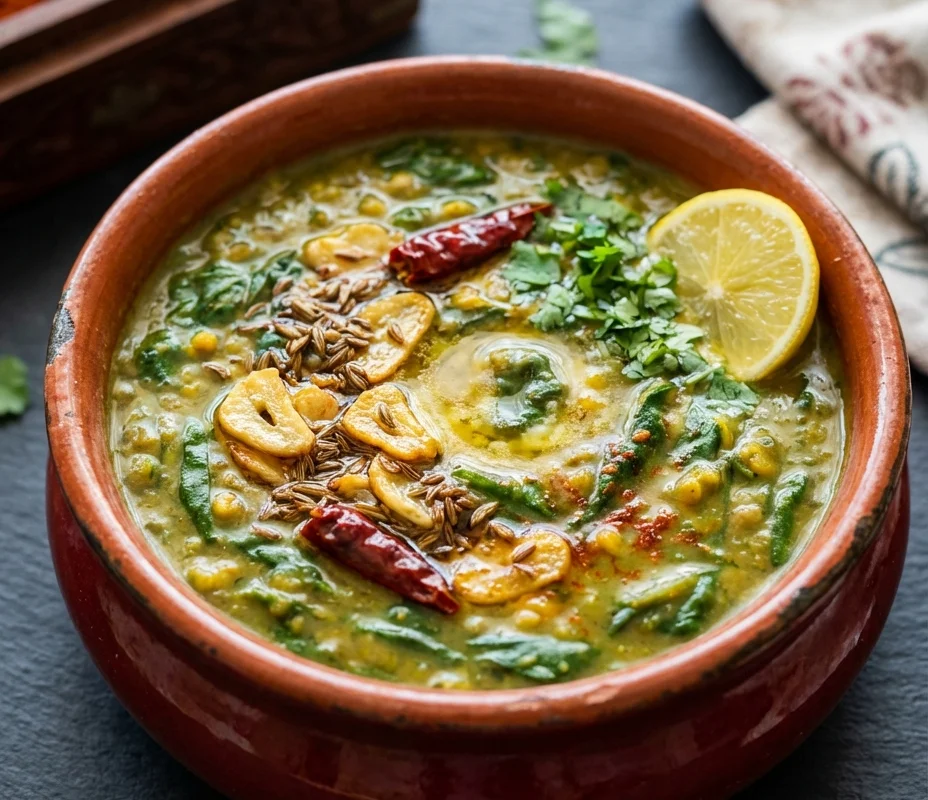
Dal Palak
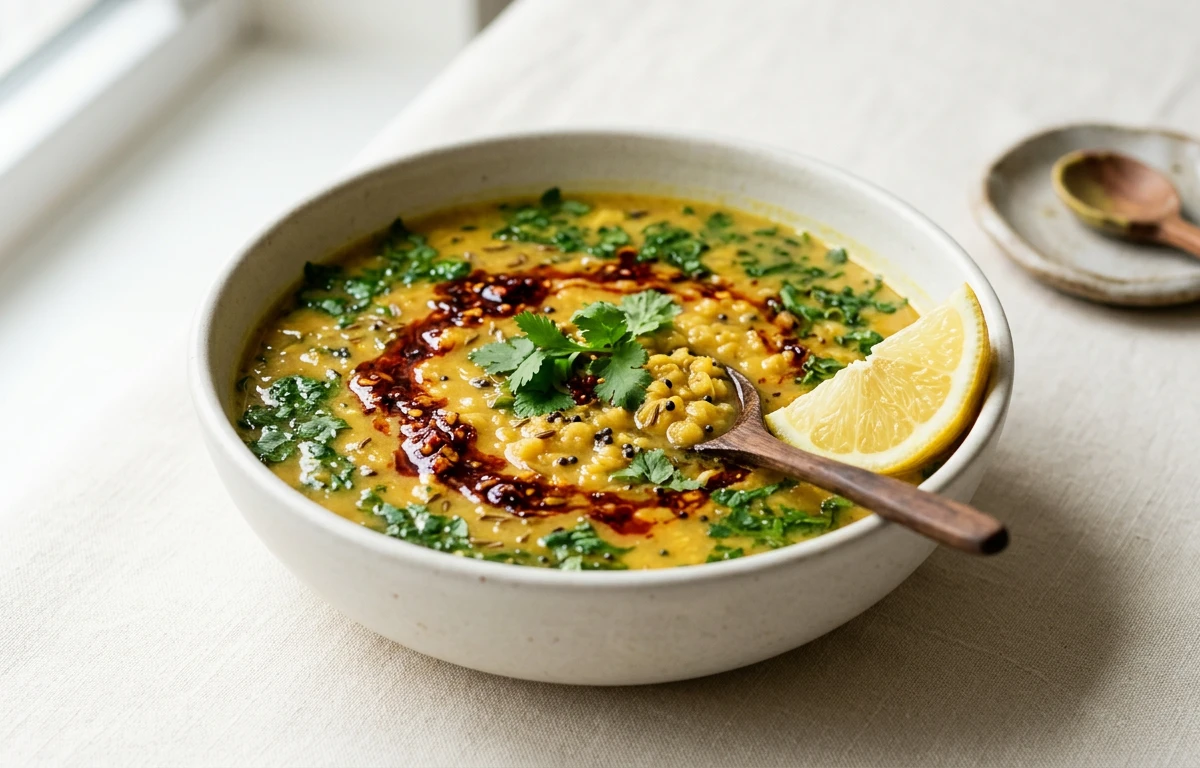
Comforting lentils cooked with spinach, onion, tomato, and simple spices make this a homestyle Indian favorite. It turns creamy as it simmers and pairs easily with rice or roti for a balanced everyday meal.
For 4 servings
- prep · ~10 min
Prep the dal and vegetables.
1.Rinse the toor dal in a few changes of water until the water runs mostly clear.2.Chop the spinach, onion, and tomatoes.3.Slit the green chilies, grate the ginger, and mince the garlic. - pressure cook · ~15 min
Pressure cook the dal until soft.
Add the toor dal, 2.5 cups water, turmeric powder, and 0.25 tsp salt to a pressure cooker. Cook for 3 whistles, then let the pressure release naturally and mash the dal lightly.
TIPMash the dal only lightly so the finished dish stays creamy with a little texture. - temper · ~3 min
Make the tempering.
1.Heat oil in a pan over medium heat.2.Add cumin seeds and let them crackle for 20 to 30 seconds.3.Add asafoetida, green chilies, ginger, and garlic.4.Cook for about 30 seconds until fragrant.TIPKeep the heat medium so the garlic and spices do not burn. - saute · ~9 min
Cook the onion and tomato base.
1.Add the chopped onion and cook until soft and lightly golden, 4 to 5 minutes.2.Add the tomatoes and cook until they break down, 4 minutes.3.Stir in the red chili powder, garam masala, and remaining 0.25 tsp salt. - saute · ~3 min
Wilt the spinach.
Add the chopped spinach to the pan and cook for 2 to 3 minutes until wilted and reduced in volume.
- simmer · ~7 min
Combine and simmer the dal palak.
Add the cooked dal and remaining 0.5 cup water to the pan. Mix well and simmer for 6 to 8 minutes until the flavors come together and the dal reaches a medium pouring consistency.
TIPAdd a splash of water if the dal thickens too much as it simmers. - garnish
Finish with lemon juice and coriander leaves.
- serve
Serve hot with rice or roti.
What to keep in mind.
7 tips from the recipe — small details that make a real difference to the final dish.
- 1Mash the pressure-cooked toor dal lightly, not fully smooth, so the dal palak stays creamy with some body.
- 2Let the cumin crackle fully before adding garlic and ginger; this blooms the tempering and perfumes the whole dish.
- 3Cook the tomatoes until they turn pulpy and lose their raw smell, or the finished dal can taste sharp.
- 4Add spinach only after the onion-tomato masala is cooked, so it wilts quickly and keeps a fresher green flavor.
- 5Finish the lemon juice off the heat to keep its brightness and prevent any slight bitterness.
- 6If the dal thickens after resting, loosen it with hot water rather than cold so the texture stays smooth.
- 7Dal palak tastes even better after 15 to 20 minutes of resting, when the spinach and masala settle into the lentils.
Adapt it for your goals.
Vegan
This recipe is already vegan if your asafoetida is gluten-free and contains no wheat-based fillers; great for a fully plant-based Indian meal.
low oilLow-oil
Reduce the oil slightly and use a splash of water while sautéing onions and tomatoes for a lighter everyday version.
moong dalMoong-dal
Swap toor dal with yellow moong dal for a softer, quicker-cooking dal palak with a lighter, gentler taste.
garlic freeGarlic-free
Skip the garlic and increase ginger and cumin a little for a simpler, cleaner flavor that still feels homestyle.
Why this is on our healthy list.
Plant Protein from Lentils
Toor dal adds satisfying plant protein and makes the dish filling enough to serve as a main with rice or roti.
Leafy Green Goodness
Spinach brings leafy green nutrients and color, adding more depth and nourishment than plain dal alone.
Fiber-Rich Meal Base
The combination of lentils, spinach, onion, and tomato contributes fiber that supports a hearty, balanced meal.
Light but Comforting
With only a small amount of oil and a broth-like consistency, this dish feels comforting without being overly heavy.
Frequently asked questions
Yes. Simmer the rinsed toor dal in a pot with water and turmeric until very soft, then mash lightly before combining with the spinach masala.