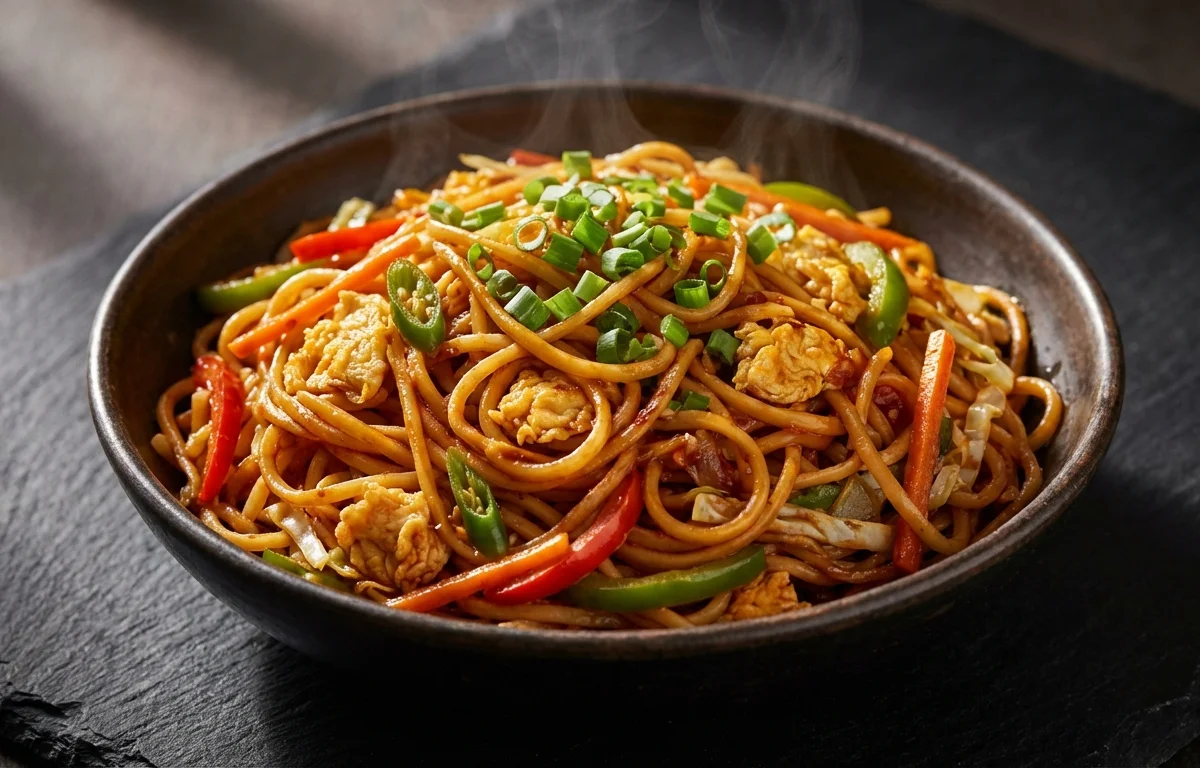
Egg Szechuan Noodles
A fiery, addictive plate of noodles tossed with soft scrambled eggs, crunchy vegetables, garlic, and a bold Szechuan sauce. A beloved Indo-Chinese street food classic that comes together in under 20 minutes — ideal for a quick weeknight dinner or when you're craving something spicy and satisfying.
For 4 servings
- boil · ~5 min
Boil the noodles.
Bring 6 cups of water to a rolling boil. Add salt, then the egg noodles. Cook until just al dente (about 4-5 minutes). Drain in a colander, rinse under cold water to stop the cooking, and toss with a few drops of oil to prevent sticking. Set aside.
- saute · ~2 min
Scramble the eggs.
Heat 1 tablespoon of oil in a wok over high heat. Crack the eggs directly into the wok and scramble vigorously until just set but still soft. Remove and set aside on a plate.
TIPDon't overcook the eggs here — they'll finish cooking when tossed with the hot noodles later. - saute · ~3 min
Stir-fry the aromatics.
1.Heat the remaining 1 tablespoon oil in the same wok over high heat until shimmering.2.Add chopped garlic, ginger, and slit green chilies. Stir-fry for 30 seconds until fragrant.3.Add sliced onion and cook until translucent (2 minutes). - saute · ~3 min
Cook the vegetables.
1.Add sliced bell pepper, julienned carrot, and shredded cabbage to the wok.2.Toss on high heat for 2-3 minutes. The vegetables should remain crunchy — do not overcook.TIPHigh heat and quick tossing keeps the vegetables crunchy — this is key to the Indo-Chinese texture. - mix · ~2 min
Toss everything together.
1.Add the boiled noodles, Szechuan sauce, soy sauce, vinegar, and black pepper to the wok.2.Use two spatulas or tongs to toss everything until the noodles are evenly coated with the sauces.3.Add the scrambled eggs back in and toss gently to combine. Cook for 1-2 minutes until everything is heated through. - garnish
Garnish with spring onion greens and serve hot.
What to keep in mind.
7 tips from the recipe — small details that make a real difference to the final dish.
- 1Rinse the boiled noodles under cold water to stop cooking and remove excess starch, preventing clumps.
- 2Use a wok and high heat for stir-frying to achieve the characteristic smoky 'wok hei' flavor.
- 3Keep the vegetables crunchy by stir-frying them quickly over high heat, not steaming them.
- 4Scramble the eggs until just set but still soft, as they will finish cooking when tossed with the hot noodles.
- 5Toss the noodles with a few drops of oil after draining to prevent them from sticking together.
- 6Adjust the heat when adding the Szechuan sauce to prevent it from burning and turning bitter.
- 7For make-ahead, prep all vegetables and sauces in advance; stir-fry just before serving for best texture.
Adapt it for your goals.
Protein-boost
Add 200g of sliced chicken, shrimp, or tofu: stir-fry the protein first until cooked, then set aside and follow the recipe, adding it back with the eggs for a heartier meal.
low oilLow-oil
Use a non-stick pan and only 1 tablespoon of oil total for the entire dish: reduce oil in the scramble step and use a splash of water when stir-frying vegetables to keep them from sticking.
vegetarianVegetarian
The recipe is already vegetarian; to make it vegan, omit the eggs and replace with extra firm tofu cubes (pan-fried until golden) or add more vegetables like mushrooms and baby corn.
jainJain
Omit garlic, ginger, and onion. Use asafoetida (hing) for the garlic-onion flavor, and replace green chili with black pepper or a pinch of chili powder. The dish remains flavorful with the Szechuan and soy sauces.
Why this is on our healthy list.
Rich in Protein from Eggs
Three eggs provide high-quality protein, essential for muscle repair and satiety, making this noodles dish more balanced and filling.
Packed with Crunchy Vegetables
Bell pepper, carrot, and cabbage add dietary fiber, vitamins A and C, and natural crunch, supporting digestion and immunity.
Low in Added Sugar
This savory dish relies on soy sauce, vinegar, and Szechuan sauce for flavor, with minimal added sugar, suitable for low-sugar diets.
Ginger and Garlic for Digestion
Fresh ginger and garlic aid digestion and add anti-inflammatory properties, common in Indo-Chinese cooking.
Frequently asked questions
Yes, use any medium-thick wheat noodle like ramen noodles, chow mein noodles, or even spaghetti — just cook to al dente and rinse well.