
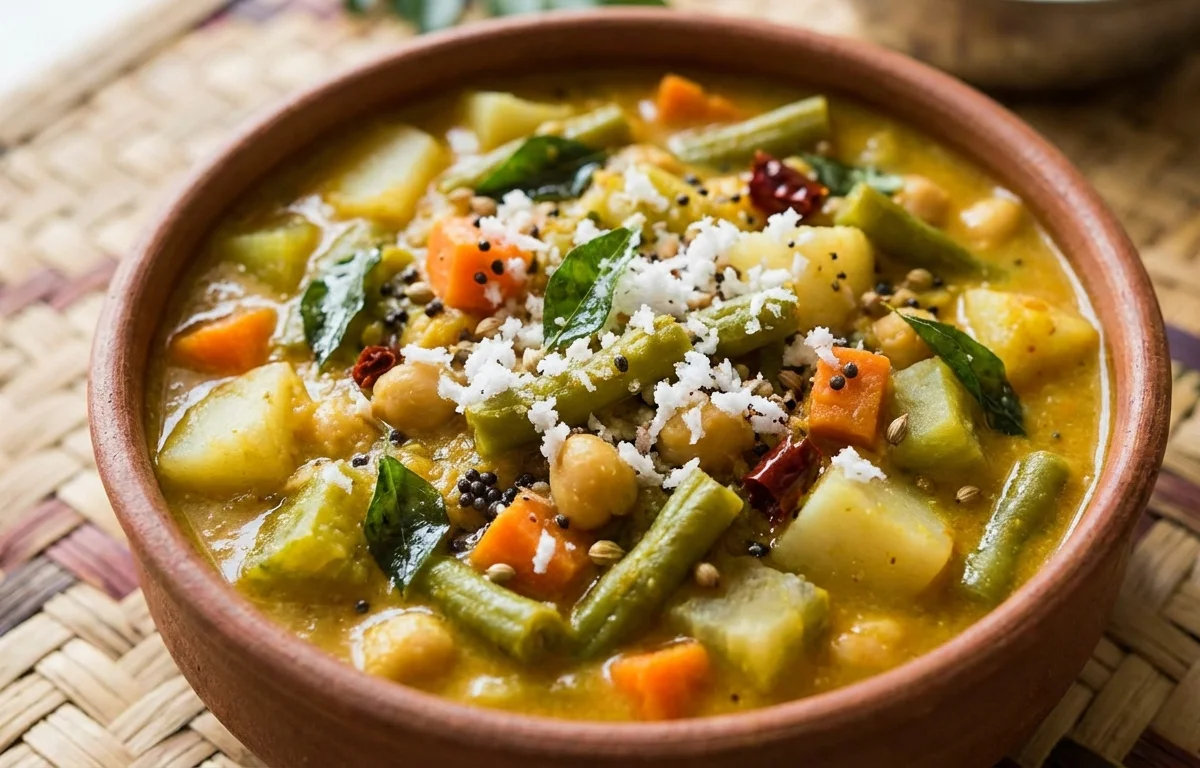
Gajbaje
A vibrant Konkani mixed vegetable curry where fresh vegetables are simmered in a fragrant coconut-based masala. Gajbaje brings together seasonal produce, roasted spices, and creamy coconut for a comforting dish that pairs beautifully with steamed rice.
For 4 servings
- prep · ~10 min
Prep the vegetables.
1.Peel and cube potato and yam into bite-sized pieces.2.Peel and dice carrot. Trim green beans and cut into 1-inch lengths.3.Peel, deseed and cube the yellow cucumber.4.Soak tamarind in 2 tbsp warm water for 10 minutes.TIPCut all vegetables roughly the same size so they cook evenly. - roast · ~7 min
Dry roast coconut and spices for the masala.
1.Heat a pan over medium-low heat. Add grated coconut and stir continuously until golden brown (3-4 min).2.Add coriander seeds and cumin seeds, roast until fragrant (1-2 min).3.Add dried red chilies and roast for another 30 seconds.4.Remove from heat and let cool completely.TIPDo not leave the coconut unattended — it can burn in seconds. Keep stirring. - mix · ~3 min
Grind the coconut masala paste.
1.Transfer the cooled roasted mixture to a grinder.2.Squeeze the soaked tamarind to extract pulp, discard the fiber, and add pulp to the grinder.3.Add about ½ cup water and grind to a smooth, thick paste.4.Add more water if needed to get a spreadable consistency. - boil · ~10 min
Boil the vegetables.
1.Place potato, yam, carrot, and green beans in a saucepan.2.Add enough water to cover the vegetables and a pinch of salt.3.Bring to a boil and cook until vegetables are fork-tender (8-10 min).4.Add yellow cucumber in the last 3 minutes of cooking.5.Drain, reserving the cooking water.TIPYellow cucumber cooks faster — adding it late keeps it from turning mushy. - simmer · ~10 min
Simmer the vegetables in coconut masala.
1.Transfer the ground masala paste to a deep cooking pot.2.Add 1 cup of the reserved vegetable cooking water and stir well.3.Add the boiled vegetables and salt. Mix gently.4.Bring to a gentle simmer and cook for 8-10 minutes, stirring occasionally.5.Adjust consistency with more water if needed — it should be a thick gravy.TIPUse a light hand when stirring so the vegetables stay intact. - temper · ~2 min
Make the tempering.
1.Heat coconut oil in a small pan over medium heat.2.Add mustard seeds and wait until they splutter (30 sec).3.Add curry leaves and let them crackle (15 sec).4.Pour the tempering over the simmering curry immediately. - simmer · ~2 min
Finish the curry.
1.Stir the tempering into the curry gently.2.Simmer for 2 more minutes so the flavours meld.3.Turn off the heat and let it rest for 5 minutes before serving.TIPResting allows the coconut oil aroma to infuse through the curry. - serve
Serve hot with steamed rice.
What to keep in mind.
7 tips from the recipe — small details that make a real difference to the final dish.
- 1Cut all vegetables uniformly so they cook at the same rate and the curry looks tidy.
- 2Dry-roast the coconut on medium-low heat and stir constantly — it burns very quickly.
- 3Add the yellow cucumber only in the last 3 minutes of boiling to keep its shape and texture.
- 4Reserve the vegetable cooking water to thin the gravy — it adds subtle sweetness and nutrients.
- 5Let the curry rest for 5 minutes after tempering so the coconut oil aroma infuses every bite.
- 6Use a light hand when stirring the final curry to avoid breaking the tender vegetables.
- 7For a thicker gravy, crush a few boiled potato cubes into the masala before simmering.
Adapt it for your goals.
Low-oil
Skip the tempering step or reduce coconut oil to 1 teaspoon; simply garnish with fresh curry leaves instead. Ideal for those watching their fat intake.
high proteinHigh-protein
Add 100 g of paneer cubes or cooked chickpeas along with the boiled vegetables. Makes the curry more substantial and perfect as a one-dish meal.
jainJain
Omit potato, yam, and carrot; use only yellow cucumber, raw banana, and bottle gourd. Avoid onion-garlic as this recipe already is Jain-friendly — just ensure tamarind is used instead of any root-derived souring agent.
veganVegan
This recipe is already fully vegan — no dairy or animal products used. Serve with brown rice for a whole-food plant-based meal.
pumpkin twistPumpkin twist
Replace yellow cucumber with an equal amount of peeled, cubed pumpkin. It adds a subtle sweetness and a beautiful golden hue to the curry.
Why this is on our healthy list.
Rich in Dietary Fiber
The mix of potato, yam, carrots, beans, and cucumber provides a good amount of fiber, supporting digestion and keeping you full longer.
Healthy Fats from Coconut
Fresh coconut and coconut oil supply medium-chain triglycerides (MCTs), which are a quick source of energy and may support metabolism.
Source of Antioxidants
Coriander seeds, cumin, curry leaves, and tamarind are rich in antioxidant compounds that help combat oxidative stress.
Low Glycemic Load Vegetables
Yam and beans have a lower glycemic impact than refined grains, making this curry a good option for managing blood sugar levels.
Frequently asked questions
Yellow cucumber (also called 'mangalorean cucumber' or 'sambar cucumber') is a pale yellow, thick-skinned variety common in South Indian cooking. Substitute with zucchini or regular cucumber if unavailable, but reduce cooking time as they cook faster.





-curry.webp)
.webp)