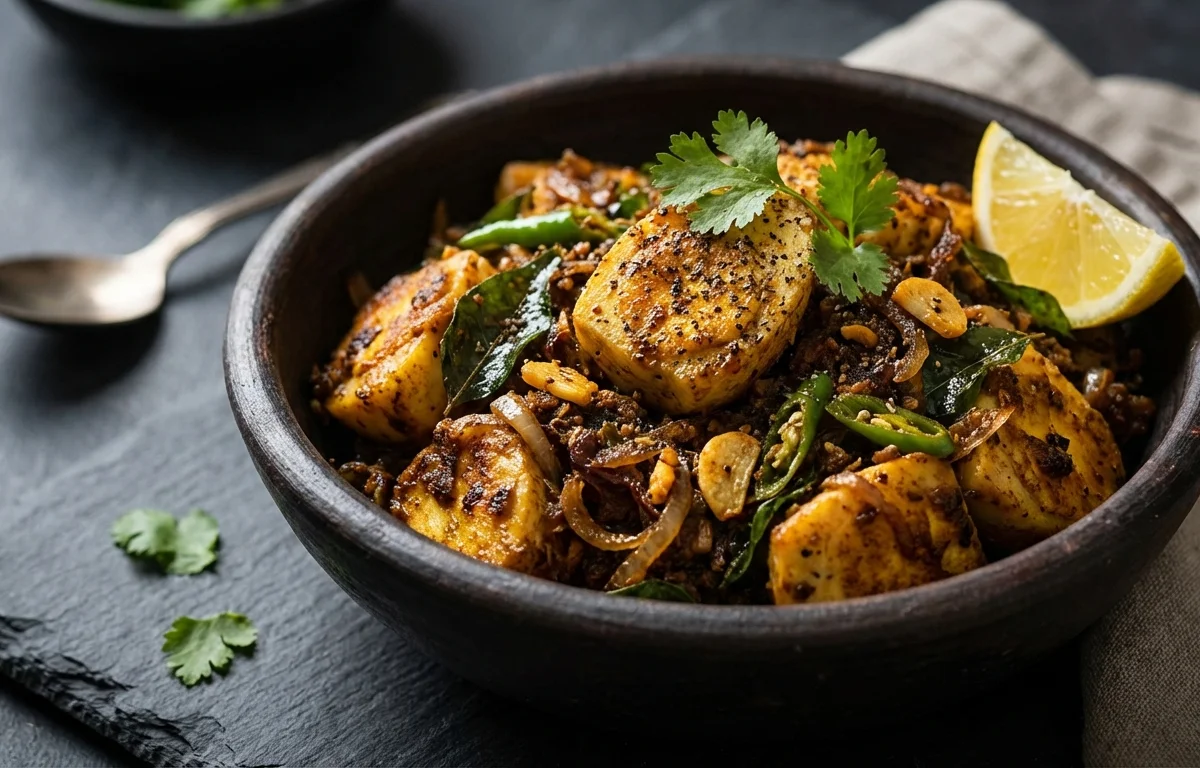
Garlic Pepper Egg Dry
Soft scrambled eggs loaded with the bold heat of black pepper and earthy, sauteed garlic. This quick Indian-style egg dry dish comes together in minutes and pairs perfectly with roti or rice. A protein-packed favourite for busy mornings or a light lunch.
For 4 servings
- prep · ~2 min
Crack and beat the eggs.
Crack all 6 eggs into a bowl. Add the salt and beat well with a fork or whisk until the yolks and whites are fully combined and slightly frothy.
- saute · ~5 min
Sauté garlic and onions.
1.Heat oil in a kadai or non-stick pan over medium heat.2.Add the finely chopped garlic and sauté until golden and fragrant (1-2 minutes).3.Add the chopped onions and slit green chilies. Sauté until the onions turn soft and translucent (3-4 minutes).TIPDon't burn the garlic. Keep the flame at medium and stir constantly once it starts changing color. - saute · ~1 min
Bloom the spices.
1.Lower the heat to low.2.Add the black pepper powder and a pinch of turmeric powder.3.Sauté for 20 seconds until the spices release their aroma.TIPAdd a small splash of water if the spices start to burn. - saute · ~3 min
Scramble the eggs.
Pour the beaten eggs into the pan. Let them sit undisturbed for 20 seconds, then start scrambling gently with a spatula. Push the eggs from the edges to the center until they form soft, curd-like lumps but are fully cooked.
TIPDon't over-stir. Letting the eggs sit briefly before scrambling gives you bigger, juicier curds. - garnish
Garnish and serve hot.
Turn off the heat immediately once the eggs are cooked but still moist. Sprinkle generously with freshly chopped coriander leaves and serve directly from the pan.
TIPThe residual heat will continue cooking the eggs, so take them off the flame while they're still slightly softer than you prefer.
What to keep in mind.
6 tips from the recipe — small details that make a real difference to the final dish.
- 1Use freshly ground black pepper for a bolder, more aromatic heat than pre-ground powder.
- 2Beat the eggs until slightly frothy; this incorporates air for fluffier, softer curds.
- 3Sauté garlic on medium heat and stir constantly once it colors to avoid a bitter burnt taste.
- 4Let the eggs rest for 20 seconds before stirring to form larger, juicier curds.
- 5Remove the pan from heat while eggs are still slightly underdone — residual heat finishes cooking without drying them out.
- 6For a non-stick guarantee, use a well-seasoned iron kadai or a quality non-stick pan.
Adapt it for your goals.
High-protein
Add 2 tablespoons of finely chopped paneer or crumbled tofu along with the onions for extra protein and a creamy texture — ideal for post-workout meals.
low oilLow-oil
Use a non-stick pan and 1 teaspoon of oil for the garlic, then replace the remaining oil with a splash of water when sautéing onions — cuts fat without losing flavor.
jainJain
Skip the onions and green chilies; add extra garlic and a pinch of asafoetida (hing) for a Jain-friendly version that still delivers bold, savory taste.
vegetable loadedVegetable-loaded
Stir in 1/4 cup finely chopped bell peppers and tomatoes with the onions for added crunch, color, and a slight tang — perfect for a more substantial side.
cheesyCheesy
Fold in 1/4 cup grated cheddar or mozzarella just before the eggs finish cooking for a gooey, Indo-western fusion twist that kids love.
Why this is on our healthy list.
High-Quality Protein
Eggs provide complete protein with all essential amino acids, supporting muscle repair and satiety.
Rich in Selenium
Eggs are a natural source of selenium, an antioxidant that supports thyroid health and immune function.
Garlic for Immunity
Garlic contains allicin, a compound known for its antimicrobial and immune-boosting properties.
Anti-Inflammatory Spices
Turmeric and black pepper work together — piperine in pepper enhances curcumin absorption, offering anti-inflammatory benefits.
Low Carb & Keto-Friendly
This dish is naturally low in carbohydrates and high in fat and protein, making it suitable for ketogenic and low-carb diets.
Frequently asked questions
You likely cooked them too long or on too high heat. Remove from heat while still slightly moist — the residual heat finishes cooking without drying the curds.