

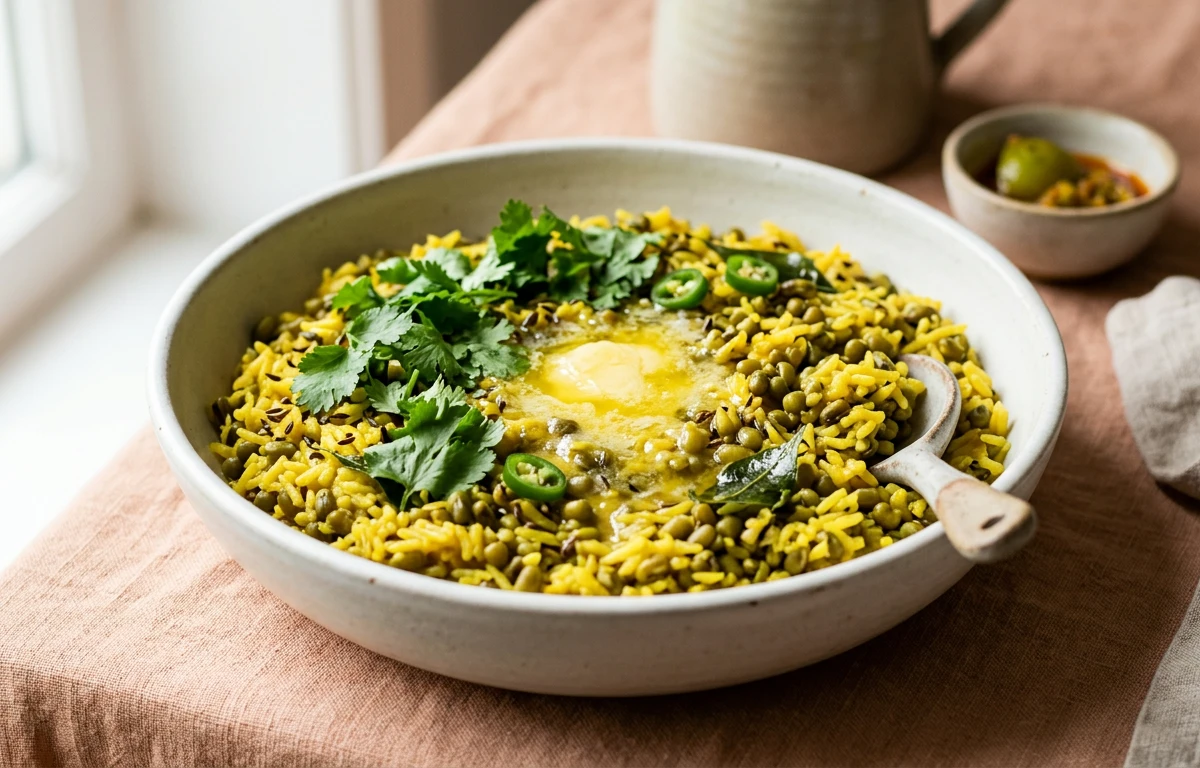
Gatte ki Khichdi
A comforting Rajasthani one-pot dish where soft besan gatte are simmered with rice and moong dal until lightly creamy. Warm spices, yogurt, and a gentle tempering give it rich flavor without making it too heavy.
For 4 servings
- prep · ~20 min
Soak the rice and moong dal.
Wash the rice and moong dal well, then soak them together in water for 20 minutes. Drain before cooking.
TIPA short soak helps the khichdi cook evenly and keeps the grains soft without turning gluey. - knead · ~8 min
Make the gatte dough.
1.Add chickpea flour, yogurt, ghee, carom seeds, turmeric powder, red chili powder, and salt to a bowl.2.Sprinkle in a little water at a time and knead into a firm but smooth dough.3.Divide the dough into 4 equal portions and roll each into a long log about finger-thick. - boil · ~10 min
Boil the gatte logs.
1.Bring 4 cups water to a boil in a wide pan.2.Slide in the gatte logs and cook until they rise and feel firm, about 8 to 10 minutes.3.Lift them out and let them cool slightly.4.Reserve the cooking liquid for the khichdi.TIPDo not discard the gatte water. It carries flavor and helps the khichdi taste fuller. - prep · ~3 min
Slice the boiled gatte.
Cut the boiled gatte logs into small round pieces once cool enough to handle.
- temper · ~2 min
Make the tempering.
1.Heat ghee in a pressure cooker over medium heat.2.Add cumin seeds and let them crackle.3.Add asafoetida, green chili, and ginger, then cook for 30 seconds until fragrant.TIPKeep the heat medium so the spices bloom without burning. - saute · ~3 min
Add the spices and yogurt.
1.Add turmeric powder, red chili powder, and coriander powder to the cooker.2.Stir quickly for a few seconds.3.Lower the heat and add the whisked yogurt.4.Cook, stirring, until the yogurt looks smooth and lightly glossy. - pressure cook · ~10 min
Cook the khichdi.
1.Add the drained rice and moong dal to the cooker and mix well.2.Add the sliced gatte, reserved gatte cooking liquid, and salt.3.If needed, add a little extra water so the mixture looks loose but not watery.4.Close the cooker and pressure cook for 2 whistles on medium heat. - rest · ~10 min
Let the pressure settle naturally.
TIPNatural release keeps the rice grains intact and gives the gatte time to soften in the pot. - mix · ~2 min
Open and adjust the texture.
Open the cooker and gently stir the khichdi. Add a splash of hot water if it has thickened too much, then simmer briefly to bring it together.
- garnish
Garnish with coriander leaves.
- serve
Serve hot.
What to keep in mind.
6 tips from the recipe — small details that make a real difference to the final dish.
- 1Keep the gatte dough firm; a soft dough can break apart while boiling.
- 2Roll the gatte logs evenly so all the slices cook and soften at the same rate.
- 3Whisk the yogurt well and lower the heat before adding it to prevent curdling.
- 4Use the reserved gatte cooking water in the cooker for a deeper besan-rich flavor.
- 5After pressure cooking, stir gently so the rice stays soft but not mashed.
- 6This khichdi thickens on standing, so loosen leftovers with hot water before reheating.
Adapt it for your goals.
Low-oil
Reduce the ghee slightly in the tempering and dough for a lighter everyday version while keeping the same one-pot comfort.
spicierSpicier
Add an extra green chili or a little more red chili powder if you prefer a sharper, warming finish.
no onion no garlicNo-onion-no-garlic
This recipe is already suitable for cooks avoiding onion and garlic, while still tasting full from hing, cumin, ginger, and yogurt.
milletMillet
Replace the rice with little millet or barnyard millet for a nuttier khichdi with a different texture.
Why this is on our healthy list.
Good Plant Protein Mix
Besan gatte and moong dal together make the dish more sustaining and protein-rich than plain rice khichdi.
Comforting Yet Balanced
Rice, moong dal, yogurt, and mild spices create a filling one-pot meal that feels rich without being overly heavy.
Digestive Spice Support
Ajwain, cumin, ginger, and hing are classic additions that help make a legume-based dish feel easier to digest.
Frequently asked questions
The dough was likely too stiff, overworked, or the gatte were overboiled. Knead just until smooth and boil only until they rise and feel firm.



.webp)
.webp)
.webp)