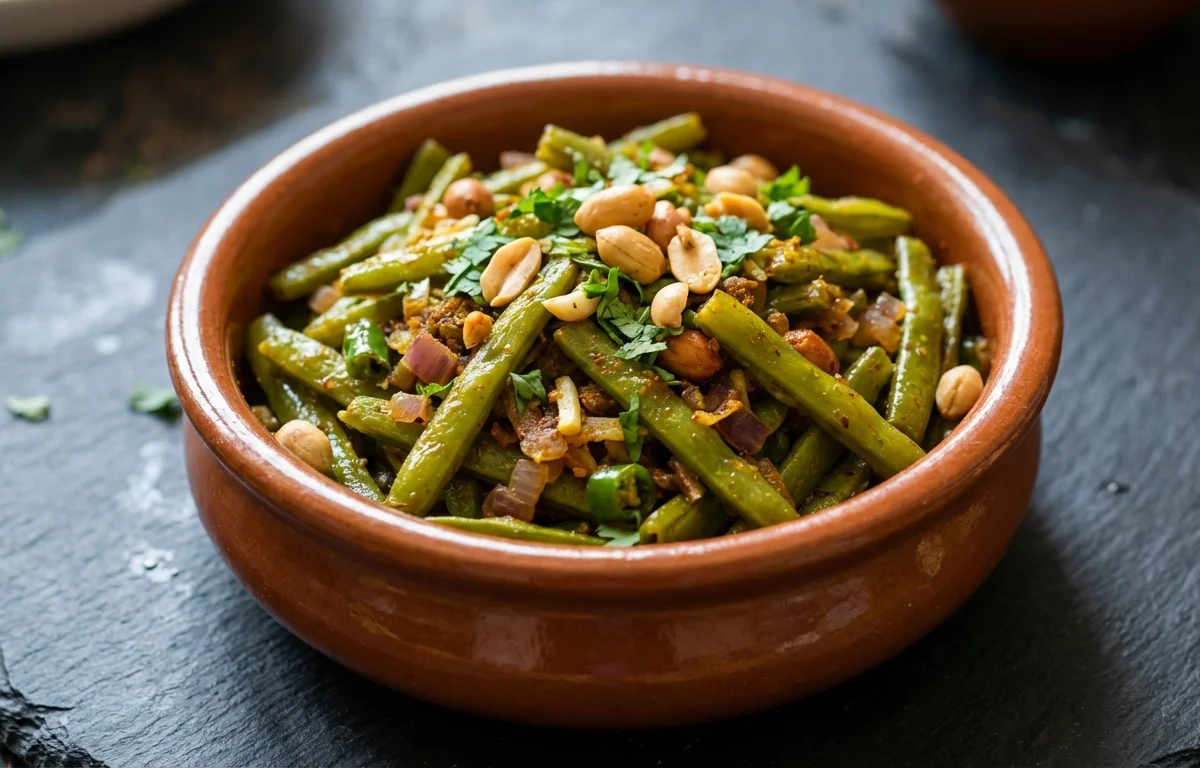
Gavar Phalli Sabzi
A simple dry sabzi made with cluster beans, onions, and everyday spices. The beans turn tender while keeping a slight bite, and the gentle masala gives this homestyle dish a warm, earthy flavor that goes very well with roti or dal-rice.
For 4 servings
- prep · ~8 min
Prepare the gavar phalli.
1.Wash the gavar phalli well and drain.2.Trim both ends and pull away any tough strings.3.Chop the beans into small even pieces so they cook evenly.TIPIf the beans are mature, remove the side strings carefully or the sabzi can taste fibrous. - temper · ~1 min
Heat the oil and crackle the cumin.
Heat oil in a kadai over medium heat. Add cumin seeds and let them sizzle, then add asafoetida for a few seconds.
- saute · ~5 min
Cook the onion, chili, and ginger.
1.Add onion and cook until soft and lightly golden.2.Add green chili and ginger.3.Sauté until the raw smell of ginger fades. - saute · ~4 min
Add tomato and dry spices.
Add tomato, turmeric powder, red chili powder, coriander powder, and salt. Cook until the tomato softens and the masala looks well mixed.
- simmer · ~15 min
Cook the gavar phalli until tender.
1.Add the chopped gavar phalli and mix well with the masala.2.Pour in water and stir once.3.Cover and cook on low heat until the beans are tender but not mushy, stirring once or twice.TIPKeep the heat low and use only a little water so the sabzi stays semi-dry and the beans do not turn soggy. - saute · ~3 min
Dry out any extra moisture.
Remove the lid and cook for a few minutes, stirring gently, until any extra moisture evaporates and the sabzi looks semi-dry.
- garnish
Garnish with coriander leaves.
- serve
Serve hot with roti or dal-rice.
What to keep in mind.
7 tips from the recipe — small details that make a real difference to the final dish.
- 1Cut the cluster beans into small, even pieces so they soften at the same time without leaving tough bits.
- 2If your gavar phalli is mature, peel away the side strings well or the sabzi can taste fibrous.
- 3Cook the onion only to light golden; deeply browned onion can overpower the mild, earthy bean flavor.
- 4Let the tomato soften fully before adding the beans so the masala coats them instead of tasting separate.
- 5Use only the listed little water and keep the pan covered on low heat to preserve the semi-dry texture.
- 6Check doneness by pressing a piece between fingers or with a spoon; it should be tender with a slight bite, not mushy.
- 7After uncovering, stir gently while drying the sabzi so the beans stay intact and don't break apart.
Adapt it for your goals.
No-onion-no-garlic
Skip the onion and add a little extra tomato and ginger for a simpler satvik-style version that still tastes balanced.
peanutPeanut
Add a spoonful of coarse roasted peanut powder near the end for a nuttier, slightly richer Maharashtrian-style finish.
potatoPotato
Cook small diced potato with the beans for a heartier sabzi that pairs especially well with roti.
jaggery tangyJaggery-tangy
Add a tiny pinch of jaggery and a few drops of lemon at the end to balance cluster beans' slight bitterness.
Why this is on our healthy list.
Fiber-Rich Vegetable Dish
Cluster beans and onion make this sabzi a filling, everyday side with plenty of natural roughage.
Moderate Oil Homestyle Cooking
The recipe uses a small amount of oil and relies on steaming and sautéing rather than heavy frying.
Phytonutrients from Spices
Ginger, cumin, coriander, turmeric, and chilies add aromatic compounds along with depth of flavor.
Frequently asked questions
Cluster beans naturally have a mild bitterness. Trim and de-string them well, cook the onion and tomato properly, and avoid undercooking the beans.