Gogji Nadru
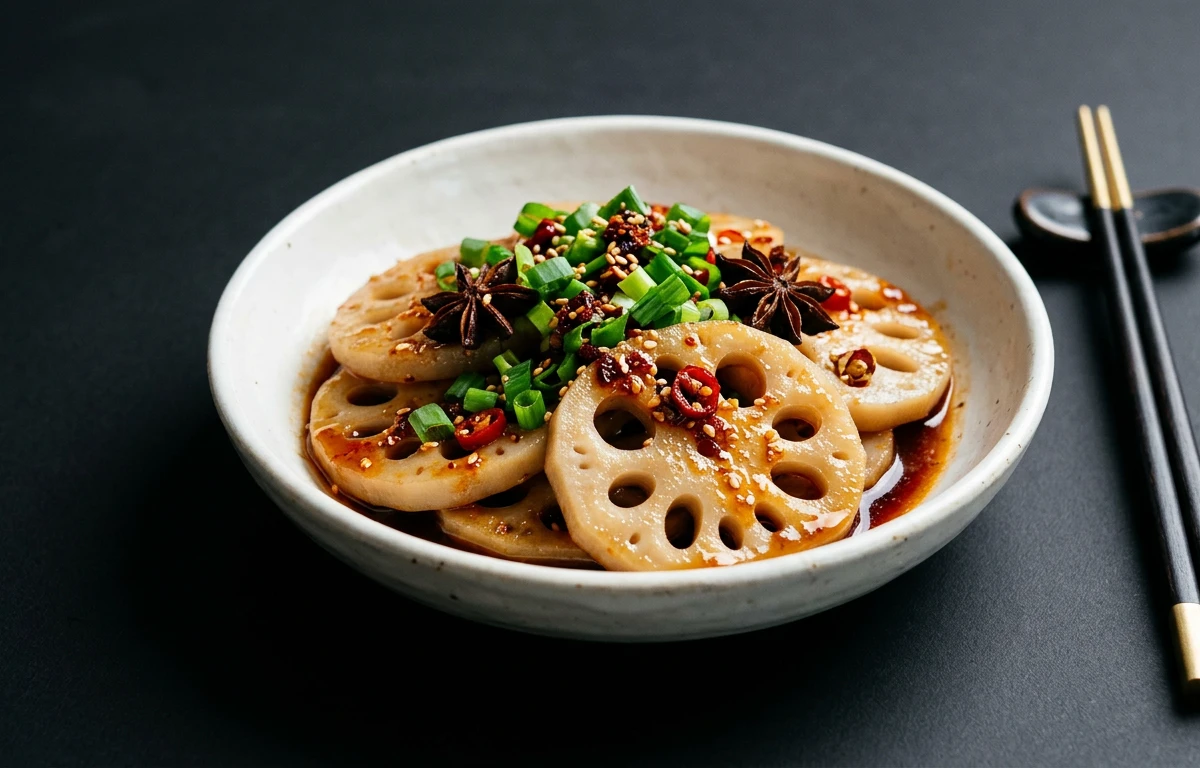
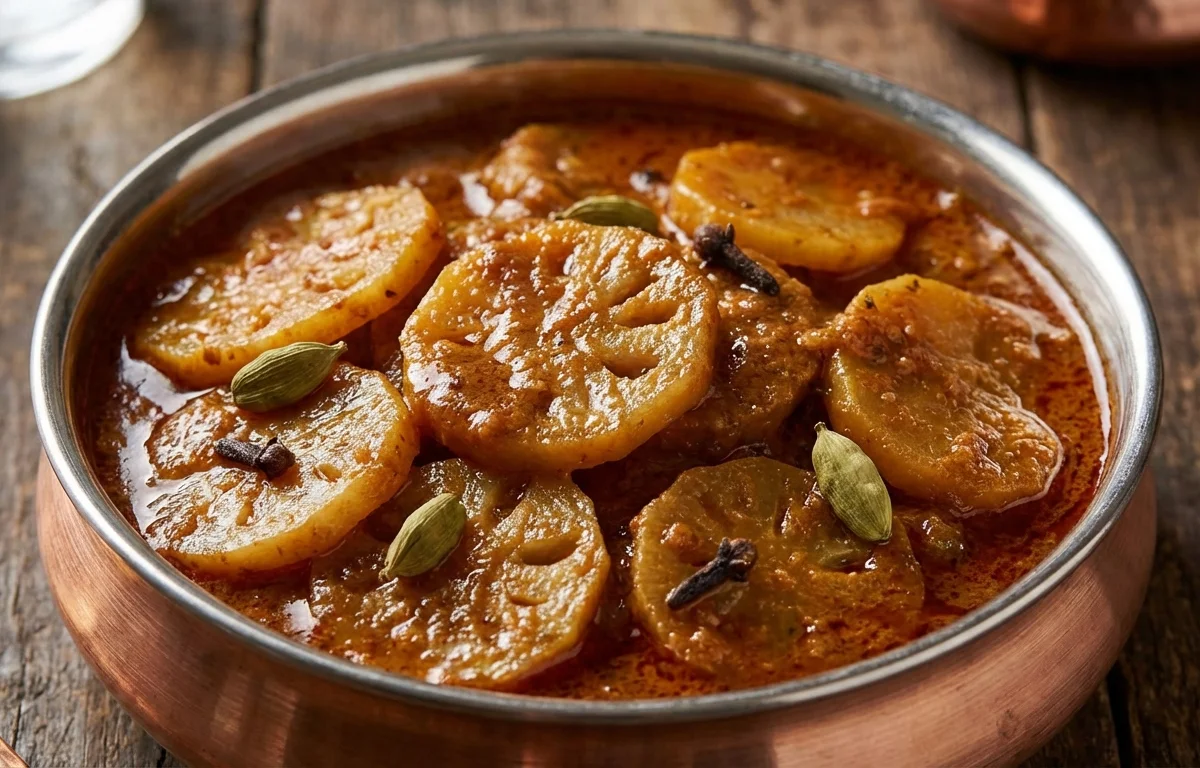
A simple Kashmiri home-style curry where turnip and lotus stem cook together until tender in a lightly spiced gravy. The flavors are gentle, earthy, and warming, making it a lovely side for steamed rice on a cold day.
For 4 servings
- prep · ~10 min
Prepare the turnip and lotus stem.
1.Peel the turnip and cut it into medium cubes.2.Peel the lotus stem, rinse the holes well under running water, and slice it into rounds.3.Keep both vegetables ready near the stove. - saute · ~2 min
Heat the mustard oil and add the hing.
Warm the mustard oil in a deep pan over medium heat until it just starts to smoke lightly. Lower the heat and add the asafoetida.
TIPHeating mustard oil well first softens its sharp raw taste. - saute · ~3 min
Coat the vegetables in the oil.
1.Add the sliced lotus stem and cubed turnip to the pan.2.Stir for 2 to 3 minutes so the vegetables are lightly coated in the oil.3.Keep the heat on medium and do not brown them. - mix · ~2 min
Add the spices and water.
Sprinkle in the dry ginger powder, fennel powder, turmeric powder, red chili powder, and salt. Pour in the water and stir well so the spices dissolve into the liquid.
- simmer · ~25 min
Simmer until the vegetables are tender.
Bring the curry to a gentle boil, then cover and cook on low heat until the turnip and lotus stem are tender and the gravy is light but flavorful. Stir once or twice during cooking.
TIPLotus stem should be tender but still hold its shape; overcooking can make it break apart. - serve · ~1 min
Serve hot.
Check the seasoning and serve Gogji Nadru hot with plain steamed rice.
What to keep in mind.
7 tips from the recipe — small details that make a real difference to the final dish.
- 1Rinse the lotus stem holes thoroughly to remove trapped grit before slicing.
- 2Let the mustard oil lightly smoke, then reduce the heat so its raw pungency mellows.
- 3Cut the turnip into even medium cubes so it softens at the same pace as the lotus stem.
- 4Do not brown the vegetables; this curry tastes best with a pale, delicate Kashmiri-style gravy.
- 5Simmer gently, not rapidly, so the lotus stem stays intact and the turnip turns tender without mushiness.
- 6If the gravy reduces too much before the vegetables are done, add a small splash of hot water.
- 7This curry tastes even better after a short rest, once the fennel and dry ginger settle into the broth.
Adapt it for your goals.
Low-oil
Use a little less mustard oil and add a spoonful of hot water while sautéing; good if you want a lighter everyday version.
jainJain
Skip the asafoetida if needed and focus on fennel and dry ginger for aroma while keeping the rest of the dish simple and sattvic.
spicierSpicier
Increase Kashmiri chili slightly for deeper color and a warmer finish without changing the basic flavor profile too much.
thinner brothThinner-broth
Add a bit more water for a soupier curry that pairs especially well with plain rice in cold weather.
Why this is on our healthy list.
Fiber-Rich Vegetables
Turnip and lotus stem both add fiber, making this simple curry hearty and satisfying despite its light gravy.
Lightly Spiced and Gentle
The seasoning relies on fennel, dry ginger, turmeric, and a little chili rather than a heavy masala base, keeping the dish comforting and balanced.
Plant-Based Side Dish
With vegetables, spices, water, and mustard oil as the base, this is a naturally vegan curry suited to simple home meals.
Frequently asked questions
It should be tender when pierced easily, but the slices should still hold their round shape and not crumble in the gravy.