Gongura Mamsam
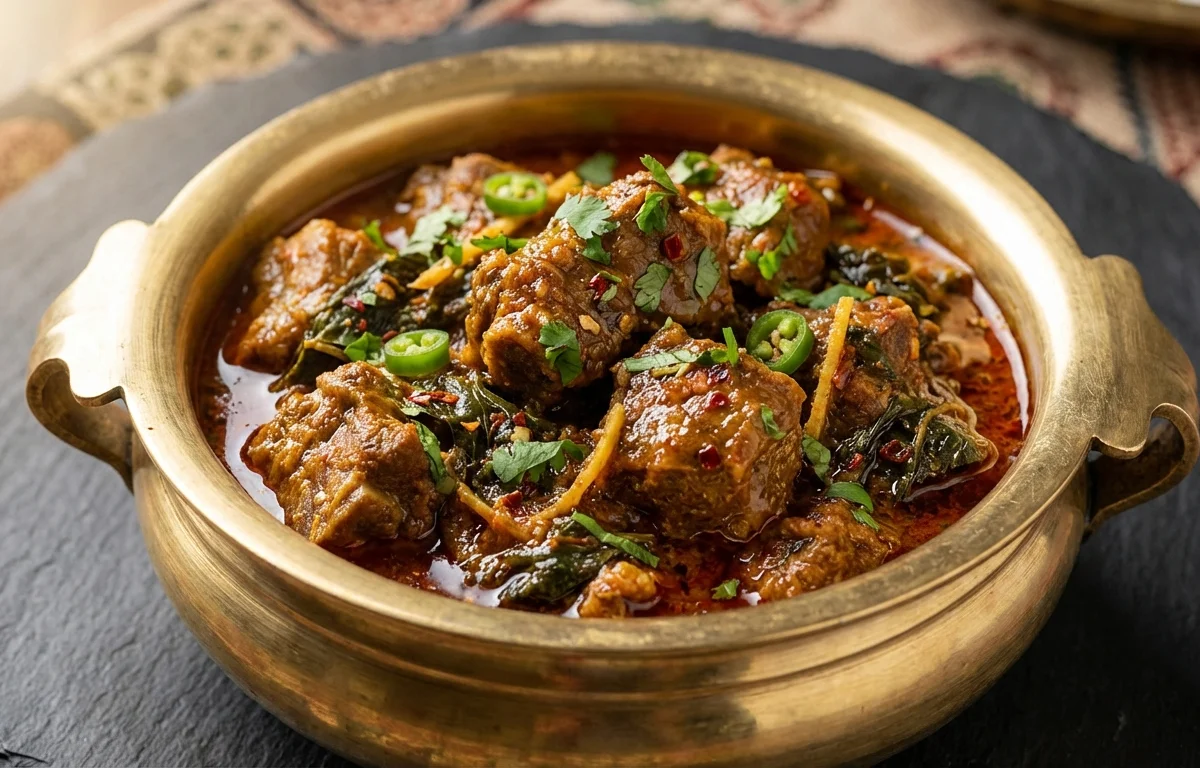
A bold Andhra mutton curry where tender meat cooks slowly with tangy gongura leaves, warm spices, and a rich onion base. The sour greens give the dish its signature deep, punchy flavor that pairs beautifully with hot rice.
For 4 servings
- prep · ~10 min
Prepare the gongura and mutton.
1.Wash the gongura leaves well and drain completely.2.Keep the mutton cleaned and ready in medium curry-cut pieces.3.Slice the onions, chop the tomatoes, slit the green chilies, and measure the spices.TIPDry the gongura as much as possible so it cooks down faster and keeps its bright tang. - saute · ~6 min
Cook the gongura leaves.
Heat 1 tsp oil in a pan over medium heat. Add the gongura leaves and cook until they wilt fully, turn soft, and lose most of their raw sharpness, 5 to 6 minutes. Cool slightly and mash them lightly.
- saute · ~9 min
Start the masala base.
1.Heat the remaining oil in a pressure cooker over medium heat.2.Add cumin seeds, bay leaf, cloves, green cardamom, and cinnamon; cook until fragrant, about 30 seconds.3.Add the sliced onions and cook until golden, 6 to 7 minutes.4.Add the ginger-garlic paste and sauté until the raw smell fades, about 1 minute.TIPKeep the heat medium once the whole spices go in so they flavor the oil without burning. - saute · ~6 min
Build the curry masala.
1.Add the green chilies and chopped tomatoes.2.Cook until the tomatoes soften and turn pulpy, 4 to 5 minutes.3.Add turmeric powder, red chili powder, coriander powder, garam masala, and salt.4.Mix well and cook for 1 minute so the spices bloom. - pressure cook · ~25 min
Pressure cook the mutton.
Add the mutton and mix well so the pieces are coated with the masala. Pour in the water, stir, and pressure cook until the mutton is tender, about 20 to 25 minutes after full pressure, depending on the cut.
TIPTenderness matters more than exact time; older goat meat can need a little longer. - simmer · ~10 min
Mix in the gongura and thicken the curry.
Let the pressure drop naturally and open the cooker. Add the cooked gongura and mix well. Simmer uncovered for 8 to 10 minutes until the sour greens blend into the gravy and the curry turns thick and glossy.
- garnish
Garnish with coriander leaves.
- serve
Serve hot with rice or roti.
What to keep in mind.
7 tips from the recipe — small details that make a real difference to the final dish.
- 1Wilt the gongura separately first; this removes its raw edge and keeps the curry from tasting harshly sour.
- 2Drain the washed gongura thoroughly so extra water does not thin the gravy later.
- 3Brown the onions to a true golden stage, not just soft, for the deep Andhra-style base.
- 4Cook the tomatoes until oil starts to separate before adding mutton, or the masala can taste raw.
- 5After pressure cooking, check one bone-in piece; the meat should yield easily but not fall apart completely.
- 6Simmer uncovered after adding gongura until the curry looks glossy, since the leaves release moisture as they cook.
- 7This curry tastes even better after a few hours of resting, when the sour gongura and mutton juices meld.
Adapt it for your goals.
Spicier-andhra-style
Increase green chilies or red chili powder for a fiercer heat that matches the bold sourness of gongura.
bonelessBoneless
Use boneless mutton for easier serving; reduce pressure-cooking time slightly since it can soften faster.
chicken versionChicken-version
Make it with chicken for a quicker weeknight curry; the gongura still gives the signature tang with less cooking time.
drier curryDrier-curry
Use a little less water and simmer longer after adding gongura for a thicker, clingy masala to serve with rice.
Why this is on our healthy list.
Protein-Rich Main Dish
Mutton provides substantial protein, making this curry hearty and satisfying alongside rice or roti.
Leafy Greens in the Curry
Gongura adds the benefits of leafy greens while bringing the dish its characteristic tangy flavor.
Aromatic Spice Support
Ginger, garlic, cumin, coriander, and whole spices contribute flavor depth without relying on heavy cream or butter.
Frequently asked questions
Yes. Lamb works well, but it often cooks faster and has a milder flavor, so start checking tenderness a bit earlier.


.webp)