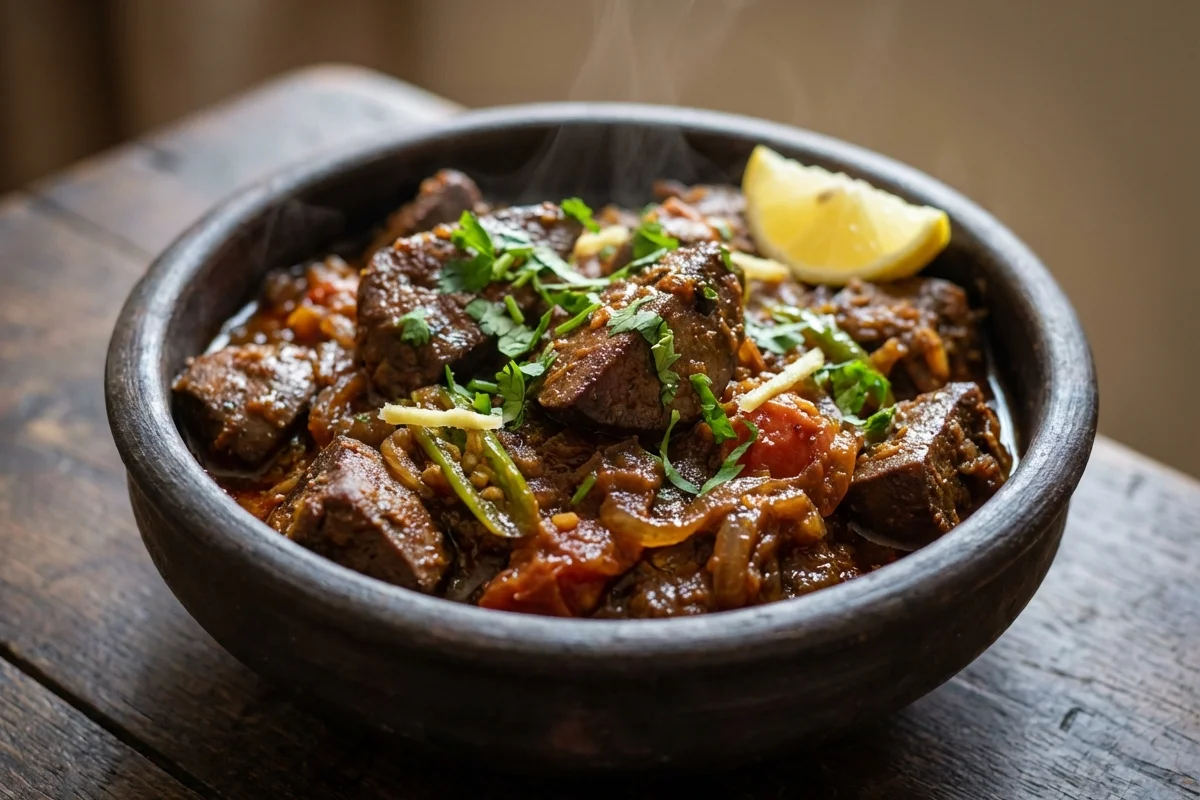
Gurda Kaleji Fry
A bold and spicy fry made with mutton kidney and liver, cooked quickly with onions, ginger, garlic, and everyday spices. It turns out rich, tender, and full of deep flavor, perfect with roti or as a side with a larger meal.
For 4 servings
- prep · ~10 min
Clean and cut the gurda and kaleji.
1.Rinse the mutton kidney and mutton liver well under running water.2.Trim any membranes or tough white parts.3.Cut both into small, even bite-size pieces.4.Keep them separate so the liver can go in slightly later if needed.TIPSmall, even pieces cook quickly and stay tender. - saute · ~8 min
Cook the onions and green chili.
1.Heat oil in a heavy pan over medium heat.2.Add the sliced onion and cook until light golden, 6 to 7 minutes.3.Add the green chili and stir for 30 seconds. - saute · ~6 min
Add ginger-garlic paste and tomatoes.
1.Add the ginger-garlic paste and cook until the raw smell fades, about 1 minute.2.Add the chopped tomato and mix well.3.Cook until the tomato softens and starts to break down, 4 to 5 minutes. - saute · ~1 min
Add the spices.
Add coriander powder, red chili powder, turmeric powder, black pepper, and salt. Mix for 30 seconds so the spices coat the onion-tomato base without burning.
TIPKeep the heat medium at this stage so the ground spices do not turn bitter. - saute · ~5 min
Cook the kidney first.
Add the mutton kidney and cook over medium-high heat for 4 to 5 minutes, stirring often. Let its extra moisture cook off before adding the liver.
- saute · ~7 min
Add the liver and fry until just cooked.
1.Add the mutton liver and mix well with the masala.2.Cook uncovered over medium heat for 5 to 7 minutes, stirring often.3.Let the mixture turn semi-dry and lightly browned at the edges.TIPDo not overcook the liver or it will become dry and grainy. - garnish · ~1 min
Finish with garam masala, lemon juice, and coriander leaves.
Sprinkle in the garam masala, add lemon juice, and toss in the chopped coriander leaves. Mix for a few seconds and turn off the heat.
- serve
Serve hot.
Serve the Gurda Kaleji Fry hot with roti, naan, or as a spicy side with dal and rice.
What to keep in mind.
7 tips from the recipe — small details that make a real difference to the final dish.
- 1Keep kidney and liver in separate bowls so you can add the liver later and avoid overcooking it.
- 2Trim all white membranes from the kidney well; those bits turn chewy and can give a stronger smell.
- 3Cook the kidney first until its released liquid mostly evaporates before adding liver for a cleaner, richer fry.
- 4Stop cooking as soon as the liver is just firm and lightly browned at the edges; overdone liver turns grainy fast.
- 5Use a wide heavy pan so the mixture fries semi-dry instead of steaming in its own moisture.
- 6Add lemon juice only at the end to brighten the offal without toughening it during cooking.
- 7This dish reheats best gently on low heat for a few minutes; high heat can make the liver dry.
Adapt it for your goals.
Low-oil
Use a good nonstick or heavy pan and reduce the oil slightly; cook the onions slowly so the masala still develops flavor.
extra spicyExtra-spicy
Add more green chili and a little extra red chili powder if you want a sharper, dhaba-style heat.
dry fryDry-fry
Cook a few minutes longer after the liver is done until the masala clings tightly and the edges are more browned for a drier finish.
with capsicumWith-capsicum
Add sliced capsicum near the end for a slight crunch and a fresher contrast to the rich gurda kaleji.
Why this is on our healthy list.
Rich in Protein
Goat kidney and liver make this dish naturally high in protein, which helps make it filling and satisfying.
Iron-Forward Ingredients
Liver is known for being rich in iron, making this preparation a nutrient-dense choice among meat dishes.
Vitamin-Rich Offal
Organ meats like liver provide important vitamins, while coriander, tomato, and lemon add freshness and supportive plant compounds.
Frequently asked questions
Kidney releases more moisture and needs a little longer, while liver cooks very quickly and turns dry if added too early.