
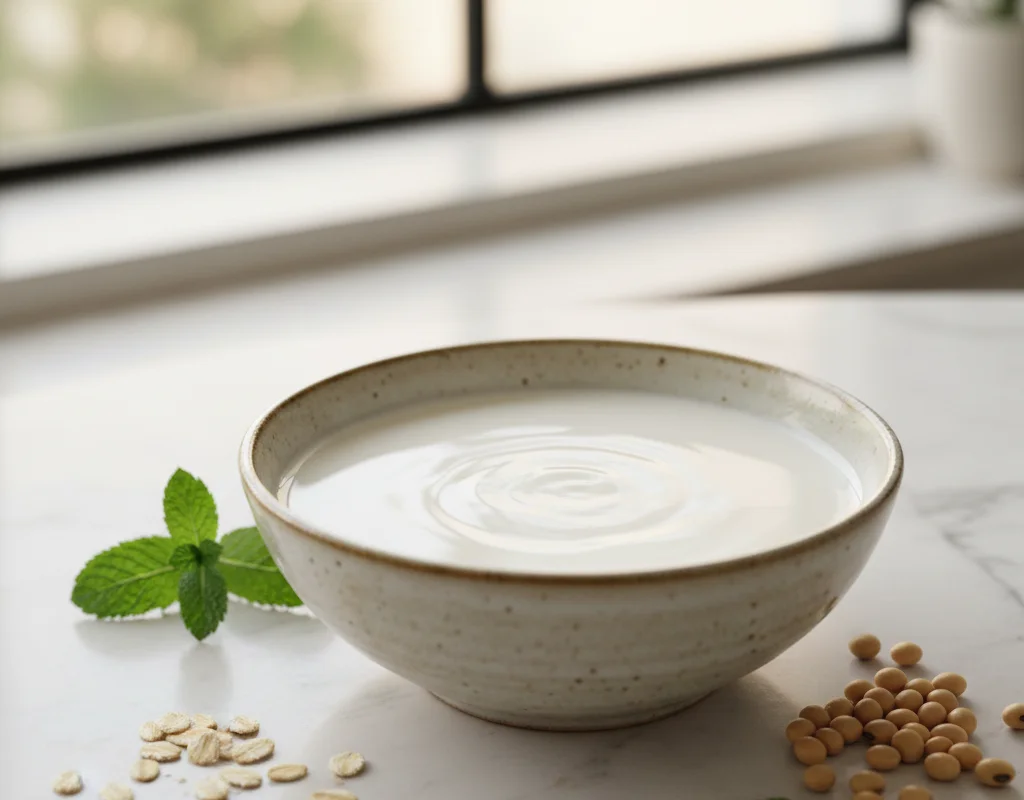
Unsweetened Soy Milk
Creamy, fresh, and surprisingly easy to make at home. This homemade soy milk recipe uses just two ingredients and gives you a pure, plant-based milk without any preservatives or sweeteners.
For 4 servings
Soak the soybeans
- Rinse the dried soybeans thoroughly under cold water.
- Place them in a large bowl and cover with at least 3-4 inches of water.
- Let them soak for 8-12 hours, or overnight. The beans will more than double in size.
Prepare the soaked beans
- Drain the soaking water and rinse the soybeans again.
- For a less 'beany' flavor and smoother texture, gently rub the beans between your hands to remove the skins. This is optional but recommended.
- Discard the skins and give the beans a final rinse.
Blend the soybeans
- Place half of the soaked and peeled soybeans into a high-speed blender.
- Add 2 cups of fresh, filtered water.
- Blend on high for 1-2 minutes until the mixture is completely smooth and creamy.
Strain the soy milk
- Place a nut milk bag or cheesecloth over a large pot or bowl.
- Pour the blended soybean mixture into the bag.
- Twist the top of the bag and squeeze firmly to extract all the liquid. The liquid is your raw soy milk, and the pulp left inside is called okara.
Repeat and cook the milk
- Transfer the okara to a separate bowl. Repeat the blending and straining process with the remaining soybeans and 2 more cups of water.
- Pour all the strained raw soy milk into a large pot.
- Bring the milk to a gentle boil over medium heat, then immediately reduce the heat to a low simmer. Skim off any foam that forms on the surface.
- Simmer for 20 minutes, stirring occasionally to prevent it from sticking to the bottom. This cooking step is crucial to make the milk digestible and remove the raw bean taste.
Cool and store
- After simmering, remove the pot from the heat and let the soy milk cool completely.
- Stir in the pinch of salt if using.
- Once cool, transfer the milk to a clean, airtight glass jar or bottle and store it in the refrigerator for up to 5 days.
What to keep in mind.
5 tips from the recipe — small details that make a real difference to the final dish.
- 1For a creamier milk, you can reduce the water slightly to 3.5 cups.
- 2Don't skip the cooking step! Raw soy milk contains enzymes that can be difficult to digest and has an unpleasant flavor.
- 3Watch the pot carefully as it comes to a boil, as soy milk can foam up and boil over very quickly.
- 4The leftover pulp, okara, is rich in fiber and protein. You can use it in baking, veggie burgers, or granola.
- 5To remove the skins easily after soaking, just rub the beans together in a bowl of water and the skins will float to the top.
Adapt it for your goals.
Sweet
For a sweetened version, blend in 1-2 pitted dates, 1 tablespoon of maple syrup, or 1/2 teaspoon of vanilla extract after the milk has been cooked and cooled.
healthyHealthy
To make a fortified version, you can blend in a calcium supplement powder after cooking, once the milk has cooled slightly.
quickQuick
If you have a dedicated soy milk maker, you can use it to automate the blending, cooking, and straining process.
budget friendlyBudget friendly
This recipe is already very budget-friendly. Buying dried soybeans in bulk is one of the most economical ways to make plant-based milk.
Why this is on our healthy list.
Complete Plant Protein
Soybeans are one of the few plant sources that provide all nine essential amino acids, making soy milk a complete protein.
Dairy-Free & Lactose-Free
A perfect alternative for those with lactose intolerance or a dairy allergy, offering a creamy texture without any dairy.
No Additives or Preservatives
When you make it at home, you get pure soy milk without the gums, thickeners, or preservatives often found in store-bought versions.
Rich in Isoflavones
Soy contains isoflavones, which are plant-based compounds that have been linked to various health benefits, including supporting heart health.
Frequently asked questions
Yes, homemade soy milk is very healthy. It's a great source of plant-based protein, isoflavones, and is naturally free from cholesterol and lactose. Making it at home also means you can control the ingredients, avoiding any unwanted additives, gums, or sweeteners.


