
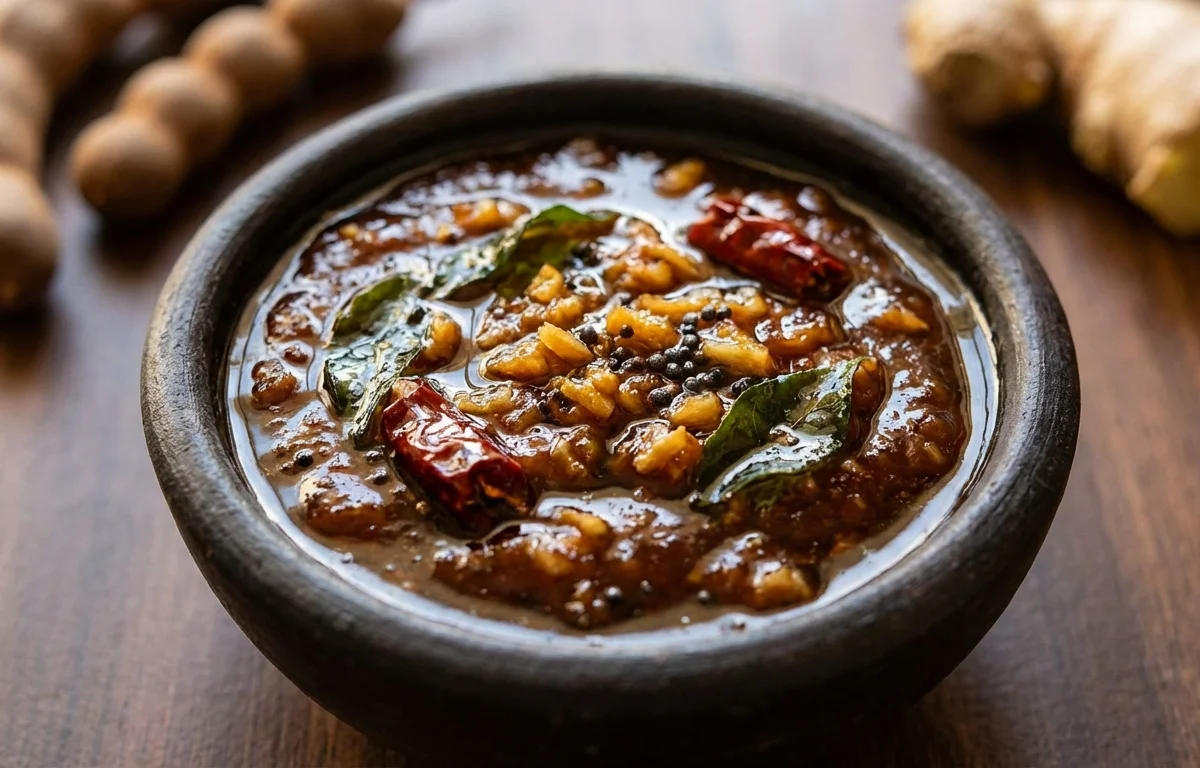
Inji Puli
A classic Kerala condiment with a bold sweet, sour, and spicy balance. Ginger is cooked down with tamarind and jaggery until glossy and thick, making it perfect alongside a sadya or simple rice meal.
For 8 servings
- prep · ~15 min
Soak the tamarind and prepare the ginger.
1.Soak the tamarind in warm water for 15 minutes.2.Peel and finely chop the ginger.3.Finely chop the green chili.TIPChop the ginger small and even so it cooks down nicely and gives the pickle its glossy texture. - boil · ~2 min
Extract the tamarind pulp.
Squeeze the soaked tamarind well in the water and strain the extract into a bowl. Discard the fibers and seeds.
- temper · ~2 min
Make the tempering.
1.Heat coconut oil in a pan over medium heat.2.Add mustard seeds and let them splutter.3.Add dried red chili and curry leaves.4.Add asafoetida and stir for a few seconds.TIPKeep the heat medium so the spices bloom in the oil without burning. - saute · ~7 min
Cook the ginger and green chili.
Add the chopped ginger and green chili to the pan. Cook, stirring often, until the ginger smells fragrant and lightly deepens in color.
- saute · ~1 min
Add the spice powders.
Add turmeric powder and red chili powder. Mix quickly for a few seconds so the spices coat the ginger evenly.
TIPDo not let the chili powder sit too long in the hot oil or it can turn bitter. - simmer · ~15 min
Simmer with tamarind, jaggery, and salt.
Pour in the tamarind extract, then add jaggery and salt. Bring to a gentle simmer and cook until the mixture thickens, turns glossy, and the raw tamarind taste disappears.
- rest · ~20 min
Cool the Inji Puli.
Take the pan off the heat and let the mixture cool completely. It thickens a little more as it stands.
- serve
Serve or store the Inji Puli.
What to keep in mind.
6 tips from the recipe — small details that make a real difference to the final dish.
- 1Fry the chopped ginger until its raw smell fades completely; this keeps the final inji puli rounded, not harsh.
- 2Strain the tamarind extract well so no fibers or seeds remain in the glossy sauce.
- 3After adding chili powder, stir only briefly before the tamarind goes in to prevent bitterness.
- 4Cook down until the oil lightly resurfaces at the edges and the mixture coats the spoon thickly.
- 5Cool fully before storing, as inji puli thickens more on standing and its sweet-sour balance settles.
- 6Use a clean, dry spoon for serving so the condiment keeps better in the refrigerator.
Adapt it for your goals.
Jaggery-forward
Add a little more jaggery for a sweeter, sadya-style version with a softer tamarind bite.
spicierSpicier
Increase green chili or red chili powder for a hotter condiment that pairs especially well with plain rice and curd.
garlickyGarlicky
Add a few finely chopped garlic cloves with the ginger for a deeper, more robust pickle-like flavor.
thicker pachadi styleThicker-pachadi-style
Reduce it a bit longer for a thicker, more spoonable inji puli that sits neatly on a sadya leaf.
Why this is on our healthy list.
Ginger-rich digestive support
This dish uses a generous amount of ginger, an ingredient traditionally valued for warming flavor and digestive comfort.
Antioxidant spices
Ginger, curry leaves, mustard seeds, chilies, and turmeric bring plant compounds that add both flavor and antioxidant value.
Small-portion flavor booster
Because inji puli is served as a condiment, a little goes a long way in adding bold taste to a simple meal.
Frequently asked questions
It should look glossy and thick, the raw tamarind taste should be gone, and the mixture should lightly coat the spoon.



.webp)
.webp)