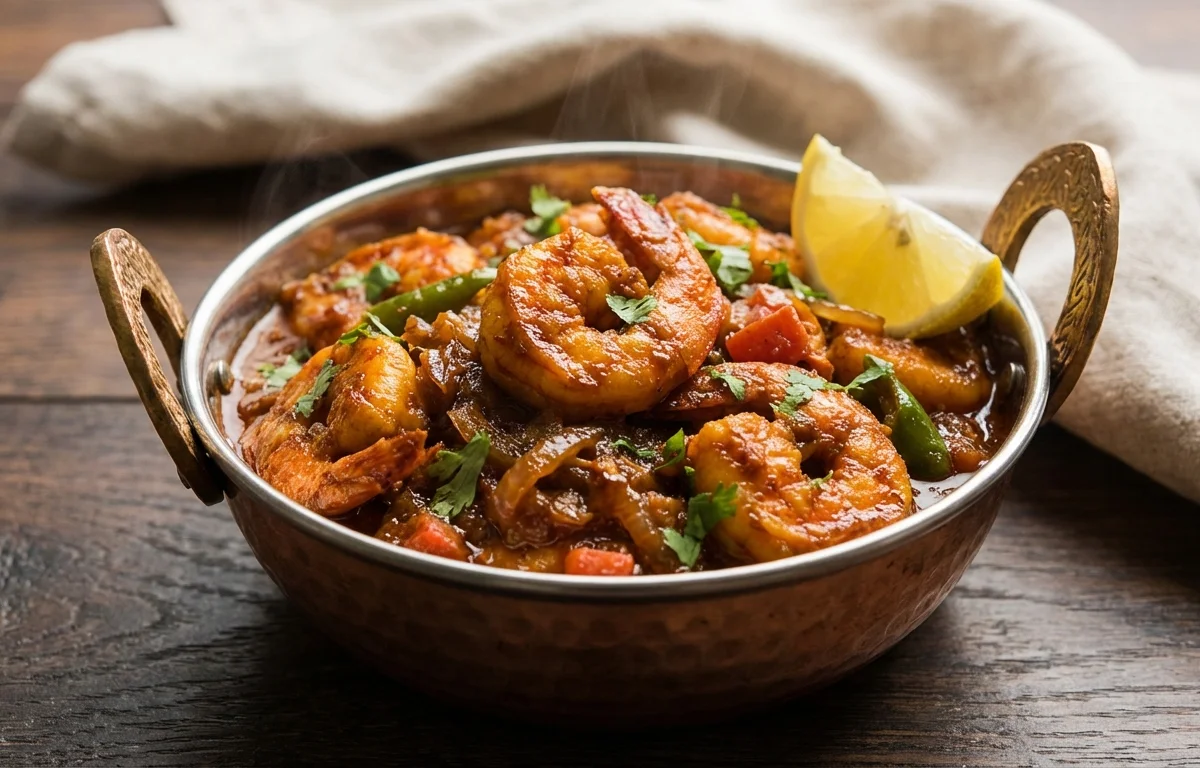
Jhinga Masala
Tender prawns cooked in a spiced onion-tomato masala that is rich, lightly tangy, and full of everyday Indian flavor. This quick curry comes together fast and tastes wonderful with roti, naan, or a small serving of rice.
For 4 servings
- prep · ~15 min
Prep the prawns and masala ingredients.
1.Clean and devein the prawns if needed, then pat them dry.2.Finely chop the onion and tomato.3.Slit the green chilies and chop the coriander leaves. - saute · ~3 min
Cook the prawns briefly.
Heat 1 tbsp oil in a pan over medium heat. Add the prawns and a pinch of turmeric powder, then cook for 1 to 2 minutes until they just start turning opaque. Remove and keep aside.
TIPDo not fully cook the prawns here or they can turn rubbery later. - temper · ~1 min
Start the masala base.
In the same pan, heat the remaining 1 tbsp oil. Add cumin seeds and let them sizzle for a few seconds.
- saute · ~7 min
Cook the onions and aromatics.
1.Add the chopped onion and cook until light golden, 5 to 6 minutes.2.Add the ginger-garlic paste and green chilies.3.Cook for 1 minute until the raw smell fades. - saute · ~6 min
Build the tomato masala.
1.Add the chopped tomato and salt.2.Add red chili powder, coriander powder, and the remaining turmeric powder.3.Cook, stirring often, until the tomatoes break down and the masala looks thick, 5 to 6 minutes.TIPIf the masala starts catching at the bottom, splash in a spoonful of water and keep cooking. - simmer · ~4 min
Finish the curry with the prawns.
Add water and mix well. Slide the prawns back into the pan and simmer gently for 3 to 4 minutes until they are fully cooked and coated in the masala. Sprinkle in garam masala at the end.
TIPPrawns cook very quickly; stop as soon as they curl and turn opaque. - garnish
Add lemon juice and coriander leaves.
- serve
Serve hot with roti, naan, or rice.
What to keep in mind.
7 tips from the recipe — small details that make a real difference to the final dish.
- 1Pat the prawns very dry before the first sauté so they sear lightly instead of steaming in the pan.
- 2Only cook the prawns until just opaque in the first round; they finish in the masala and stay tender.
- 3Let the onion turn light golden before adding ginger-garlic paste, or the curry can taste sharp and undercooked.
- 4Cook the tomato masala until it looks thick and slightly glossy; that is the cue the raw tomato taste is gone.
- 5Add lemon juice only after switching off or lowering the heat so the fresh tang stays bright.
- 6If using frozen prawns, thaw completely and drain well to keep the masala from turning watery.
- 7This curry is best eaten fresh, but leftovers can be refrigerated for a day and reheated very gently.
Adapt it for your goals.
Spicier
Add an extra green chili or a little more red chili powder for a sharper, hotter masala that still keeps the dish quick.
low oilLow-oil
Reduce the oil slightly and use small splashes of water while bhunaoing the masala; useful if you want a lighter everyday curry.
gravy styleGravy-style
Add a bit more water for a looser curry that pairs better with steamed rice than with roti or naan.
coconut styleCoconut-style
Stir in a few spoonfuls of coconut milk at the end for a softer, coastal-style finish and milder heat.
Why this is on our healthy list.
Lean Seafood Protein
Prawns provide protein that makes this curry satisfying without needing heavy dairy or rich gravy ingredients.
Tomato and Onion Base
The curry gets much of its body from tomatoes and onions, adding vegetables and depth instead of cream.
Aromatic Spice Support
Ginger, garlic, cumin, coriander, and turmeric add flavor complexity while keeping the ingredient list simple and wholesome.
Frequently asked questions
They turn opaque and curl lightly. Remove from heat as soon as they are just cooked, because overcooked prawns become rubbery fast.