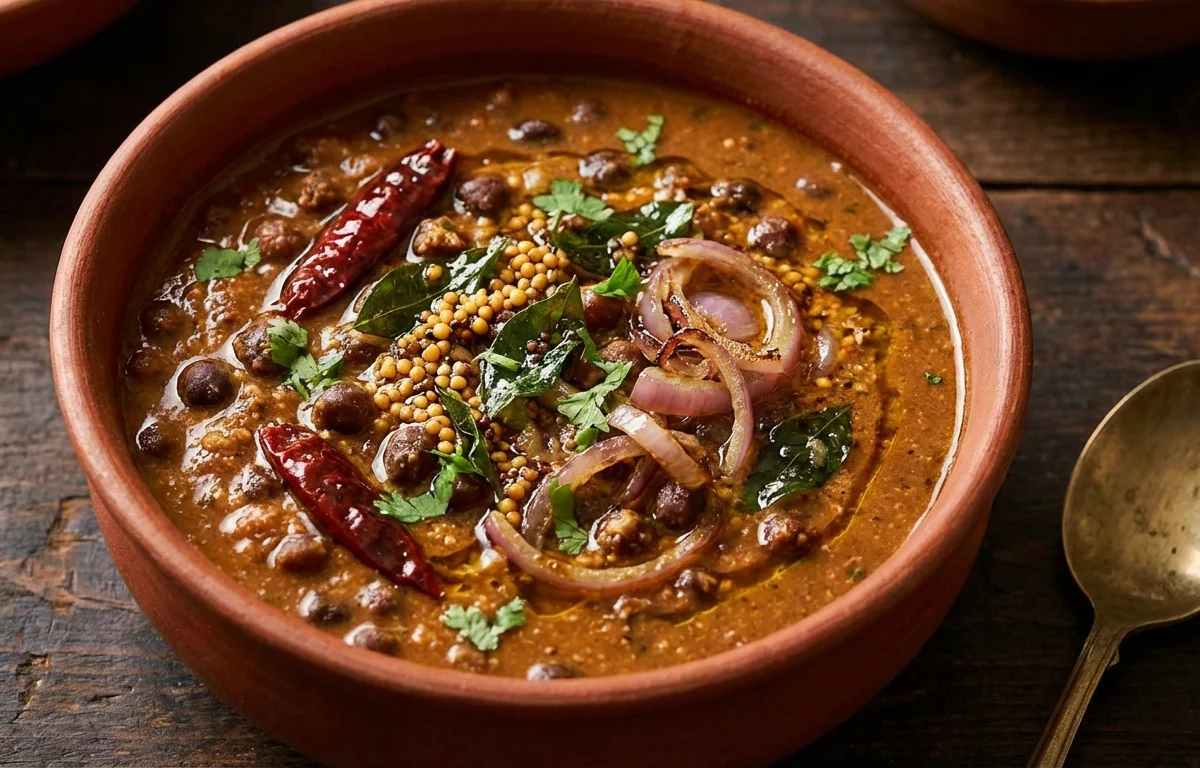
Kadale Ghasi
A homestyle Mangalorean chickpea curry with a rich coconut and roasted spice masala. It has gentle heat, a deep earthy flavor, and a slightly tangy finish that makes it perfect with neer dosa, poori, or rice.
For 4 servings
- prep · ~480 min
Soak the chickpeas.
Rinse the black chickpeas well and soak them in plenty of water overnight or for 8 hours.
- pressure cook · ~30 min
Pressure cook the chickpeas.
1.Drain the soaked chickpeas and transfer them to a pressure cooker.2.Add 3 cups water and 0.5 tsp salt.3.Pressure cook until the chickpeas are soft but still hold their shape, about 20 minutes after the first whistle.4.Let the pressure release naturally and reserve the chickpeas with their cooking liquid.TIPWell-cooked chickpeas give the curry its creamy body, so press one between your fingers to check tenderness. - roast · ~5 min
Roast the masala ingredients.
1.Heat 1 tsp oil in a pan over low to medium heat.2.Add coriander seeds, dried red chili, and fenugreek seeds.3.Roast for 30-40 seconds until fragrant.4.Add grated coconut and roast until lightly golden, 3-4 minutes.TIPKeep the heat moderate so the coconut turns golden and sweet, not dark and bitter. - mix · ~5 min
Grind the masala.
Cool the roasted mixture slightly, then grind it with tamarind and a little water to a smooth, thick paste.
- simmer · ~10 min
Cook the curry.
1.Add the ground masala to the cooked chickpeas.2.Mix well and add a little more water if the curry looks too thick.3.Bring it to a gentle simmer over medium heat.4.Cook for 8-10 minutes, stirring now and then, until the flavors come together. - serve
Serve hot.
Serve Kadale Ghasi hot with neer dosa, poori, idli, or plain rice.
What to keep in mind.
6 tips from the recipe — small details that make a real difference to the final dish.
- 1Use the chickpea cooking liquid while simmering; it adds body and keeps the curry from tasting diluted.
- 2Roast the coconut only to light golden, not brown, so the masala stays sweet, nutty, and not bitter.
- 3Grind the masala very smooth for the classic ghasi texture; a coarse paste makes the curry feel gritty.
- 4If the chickpeas are still firm after pressure cooking, cook them longer before adding the masala.
- 5Let the curry rest 10-15 minutes after simmering; the coconut, tamarind, and spices meld noticeably as it sits.
- 6The curry thickens on standing, so loosen leftovers with hot water and simmer briefly before serving again.
Adapt it for your goals.
Spicier
Increase the dried red chilies or use a hotter variety for a bolder curry that pairs especially well with neer dosa.
onion garlic freeOnion-garlic-free
Keep it as written for a clean, temple-style version; this suits festive meals and those avoiding onion and garlic.
thinner gravyThinner-gravy
Add extra reserved cooking liquid for a looser consistency if serving with rice instead of poori or idli.
fresh coconut richFresh-coconut-rich
Use slightly more grated coconut for a fuller, creamier ghasi if you want a more indulgent, dosa-friendly curry.
Why this is on our healthy list.
Protein and Fiber from Chickpeas
Black chickpeas make this curry filling and satisfying, with plant protein and fiber that support steady energy and fullness.
Mineral-Rich Legume Base
Kala chana is a wholesome pulse commonly valued for its naturally occurring iron and other essential minerals.
Spice-Powered Digestion Support
Coriander, fenugreek, tamarind, and dried red chilies bring flavor while also contributing traditional digestive benefits.
Minimal Added Oil
Only a small amount of oil is used to roast the masala, so the richness comes mainly from coconut and slow cooking.
Frequently asked questions
Yes, but the flavor and texture will change. Black chickpeas give Kadale Ghasi its earthier taste and firmer bite, while white chickpeas make it milder and softer.