
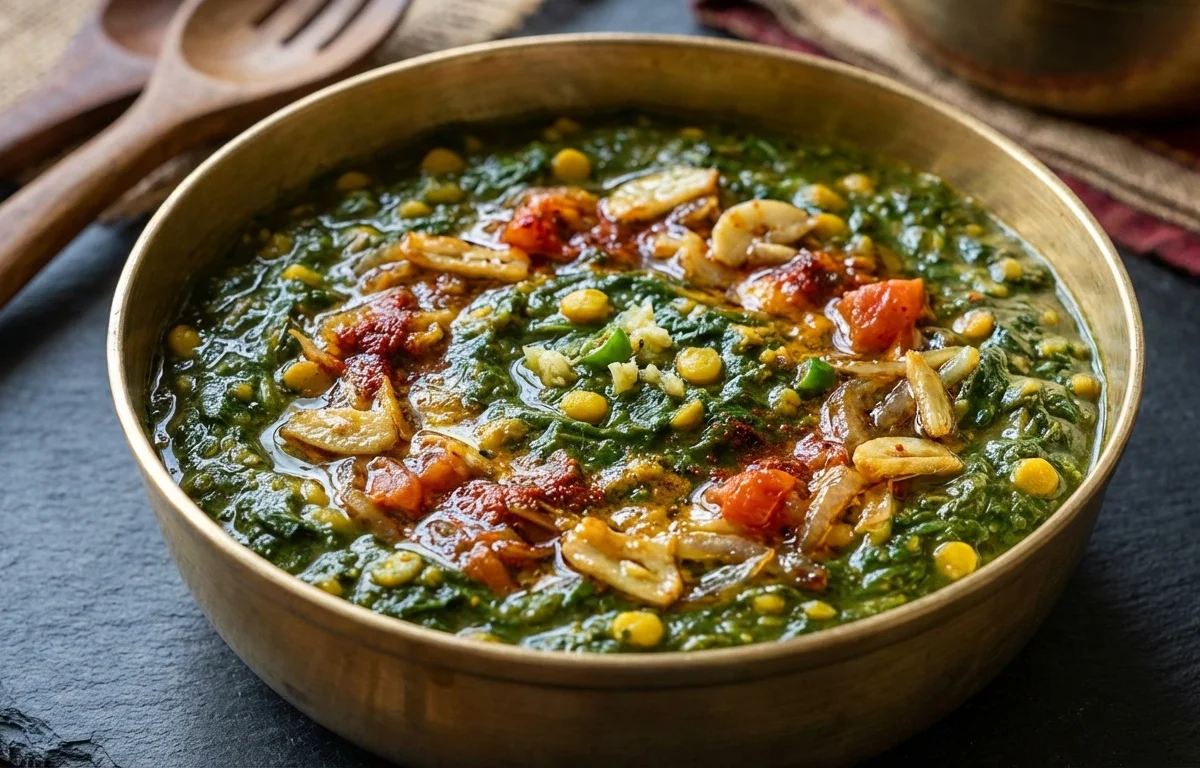
Kadam Saag
A rustic leafy greens dish from eastern India, Kadam Saag brings together tender saag, simple spices, and a gentle mustardy finish. It cooks into a soft, comforting side that tastes best with hot rice or roti.
For 4 servings
- prep · ~15 min
Clean and cut the greens and vegetables.
1.Wash the kadam leaves in several changes of water until no grit remains.2.Roughly chop the leaves and tender stems.3.Cube the potato, pumpkin, and eggplant into small even pieces.4.Slit the green chilies. - boil · ~8 min
Boil the kadam leaves until just soft.
Bring the water to a boil in a pot. Add the chopped kadam leaves and cook for 6 to 8 minutes until softened, then drain well and lightly squeeze out extra water.
TIPDo not overboil the leaves or they can lose their fresh, slightly earthy taste. - saute · ~9 min
Cook the vegetables in mustard oil.
1.Heat the mustard oil until it reaches a light smoking point, then lower the heat.2.Add nigella seeds and let them sizzle for a few seconds.3.Add the green chilies, potato, pumpkin, and eggplant.4.Add turmeric powder and salt, then mix well.5.Cook for 6 to 8 minutes, stirring often, until the vegetables are nearly tender.TIPHeating mustard oil well at the start softens its sharp raw flavor. - mix · ~2 min
Mix in the boiled kadam leaves.
Add the drained kadam leaves to the pan and mash and mix them gently with the vegetables so everything comes together evenly.
- simmer · ~7 min
Cook until the saag turns soft and semi-dry.
Cover and cook on low heat for 5 to 7 minutes, stirring once or twice, until the leaves and vegetables are fully tender and the mixture is soft and semi-dry.
TIPIf the pan looks too dry before the vegetables soften, sprinkle in 1 or 2 tablespoons of water instead of adding more oil. - serve
Serve hot with rice or roti.
What to keep in mind.
7 tips from the recipe — small details that make a real difference to the final dish.
- 1Wash the kadam leaves in several changes of water, especially around the stems, since grit can hide there and ruin the soft texture.
- 2Cut the potato, pumpkin, and eggplant quite small so they finish cooking by the time the saag turns semi-dry.
- 3After boiling the leaves, squeeze out excess water well; otherwise the final saag can taste diluted instead of earthy and mustardy.
- 4Let the mustard oil just reach a light smoke before tempering the nigella seeds to remove its raw sharpness.
- 5Stir the pumpkin gently once it softens so it holds some shape and does not completely disappear into the mash.
- 6The dish is done when the greens look soft and cohesive, and the vegetables can be mashed easily with the back of the spoon.
- 7Kadam Saag keeps well for a day in the fridge and often tastes even better after the mustard oil and nigella settle in.
Adapt it for your goals.
Low-oil
Use a little less mustard oil and add small splashes of water while simmering; you still get the saag texture with a lighter finish.
spicierSpicier
Add an extra slit green chili or crush one into the hot oil for a sharper heat that suits rice especially well.
no potatoNo-potato
Skip the potato for a greener, lighter saag where the kadam leaves and pumpkin stand out more clearly.
mixed saagMixed-saag
Combine kadam leaves with a little spinach or amaranth if you want a softer, milder flavor while keeping the rustic Bengali style.
Why this is on our healthy list.
Leafy Green Goodness
Kadam leaves contribute plant compounds and the general benefits associated with leafy greens in a simple, minimally processed preparation.
Vegetable-Rich Side Dish
Potato, pumpkin, and eggplant add variety, making this saag a more balanced vegetable accompaniment than greens alone.
Cooked with Mustard Oil
Mustard oil gives strong flavor with a modest amount of fat, so a small serving of saag feels satisfying alongside plain rice or roti.
Frequently asked questions
It is better not to. Boiling softens the leaves, removes some harshness, and helps the final saag cook down evenly.





-curry.webp)
.webp)