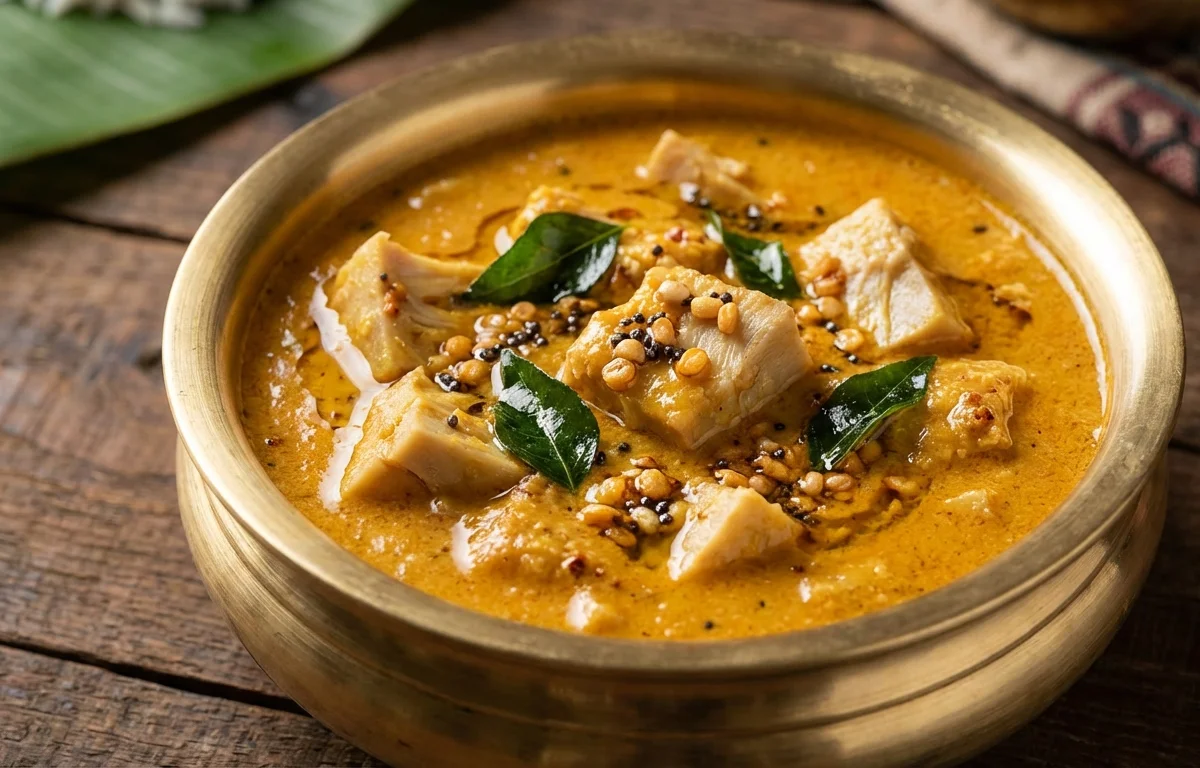
Kadgi Gashi
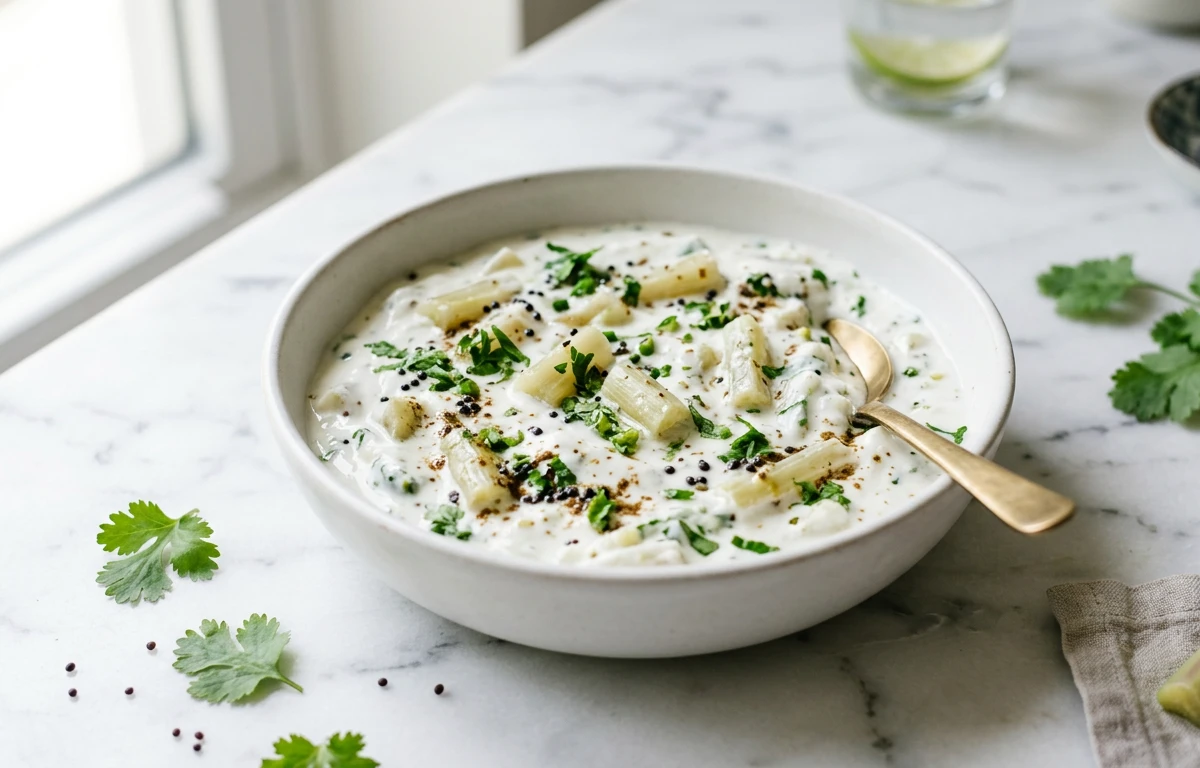
Kadgi Gashi is a Mangalorean-style ripe raw jackfruit curry with a gently spicy coconut masala and a tangy tamarind finish. It is rich without being heavy and pairs especially well with rice or neer dosa.
For 4 servings
- prep · ~20 min
Prep the jackfruit and soak the tamarind.
1.Peel the raw jackfruit, remove the seeds, and cut the flesh into medium cubes.2.Soak the tamarind in a little warm water for 15 minutes.3.Measure the coconut and spices so the masala is ready to grind.TIPRub a little oil on the knife and hands before cutting jackfruit if it feels sticky. - boil · ~15 min
Cook the jackfruit until just tender.
Add the jackfruit to a pot with 500 ml water, turmeric powder, and half of the salt. Bring to a boil, then cook until the pieces are tender but still hold their shape.
TIPDo not overcook the jackfruit or it will break down once simmered in the masala. - saute · ~3 min
Toast the spices for the masala.
1.Heat 1 tsp oil in a small pan over low heat.2.Add dried red chili, coriander seeds, cumin seeds, and fenugreek seeds.3.Toast gently until aromatic and a shade darker, about 1-2 minutes.TIPKeep the heat low so the fenugreek does not turn bitter. - mix · ~3 min
Grind the coconut masala.
Grind the toasted spices with grated coconut, soaked tamarind, and 100 ml water to a smooth, thick paste.
- simmer · ~10 min
Simmer the curry.
Add the ground masala to the cooked jackfruit along with the remaining water and salt. Mix well and simmer on low heat until the gravy thickens slightly and the raw coconut smell disappears.
TIPStir every few minutes so the coconut masala does not catch at the bottom. - temper · ~1 min
Make the tempering.
1.Heat the remaining 1 tsp oil in a small pan.2.Add mustard seeds and let them splutter.3.Add curry leaves and fry for a few seconds. - garnish
Pour the tempering over the curry.
- serve
Serve hot with rice or neer dosa.
What to keep in mind.
7 tips from the recipe — small details that make a real difference to the final dish.
- 1Oil your knife and palms before cutting kadgi; the sap can get very sticky.
- 2Cook the jackfruit only until a knife slides in with slight resistance so the cubes stay intact.
- 3Toast the chilies and fenugreek on low heat; scorched fenugreek will make the whole gashi bitter.
- 4Grind the coconut masala very smooth for the classic Mangalorean texture and even coating.
- 5Simmer until the raw coconut aroma fades; that is the cue the gravy has cooked through.
- 6Rest the curry 10-15 minutes after tempering so the jackfruit absorbs the tangy-spicy masala better.
- 7This gashi tastes even better the next day; refrigerate and reheat gently with a splash of water.
Adapt it for your goals.
Spicier
Increase the dried red chilies or use a hotter variety for a sharper, more fiery gashi that still keeps the coconut base.
onion garlicOnion-garlic
Add a little sautéed onion and garlic to the masala before grinding for a less traditional but deeper, more savory curry.
thicker gravyThicker-gravy
Use slightly less water while simmering if you want a thicker gashi to serve with neer dosa or idli.
vegetable mixVegetable-mix
Add a few chunks of potato or yam with the jackfruit for a heartier curry and a varied texture.
Why this is on our healthy list.
Fiber-Rich Main Ingredient
Raw jackfruit adds satisfying bulk and fiber, making the curry filling while still based on a fruit rather than meat.
Spice-Based Digestive Support
Cumin, coriander, fenugreek, and curry leaves bring traditional aromatic spices that add flavor without relying on heavy cream or butter.
Plant-Based Fats
Fresh coconut provides richness and body from plant sources, helping the curry feel satisfying with only a small amount of added oil.
Frequently asked questions
Yes, if fresh kadgi is unavailable. Drain it well and simmer more gently, since canned jackfruit is usually softer and can break apart faster.