Kaleji Fry
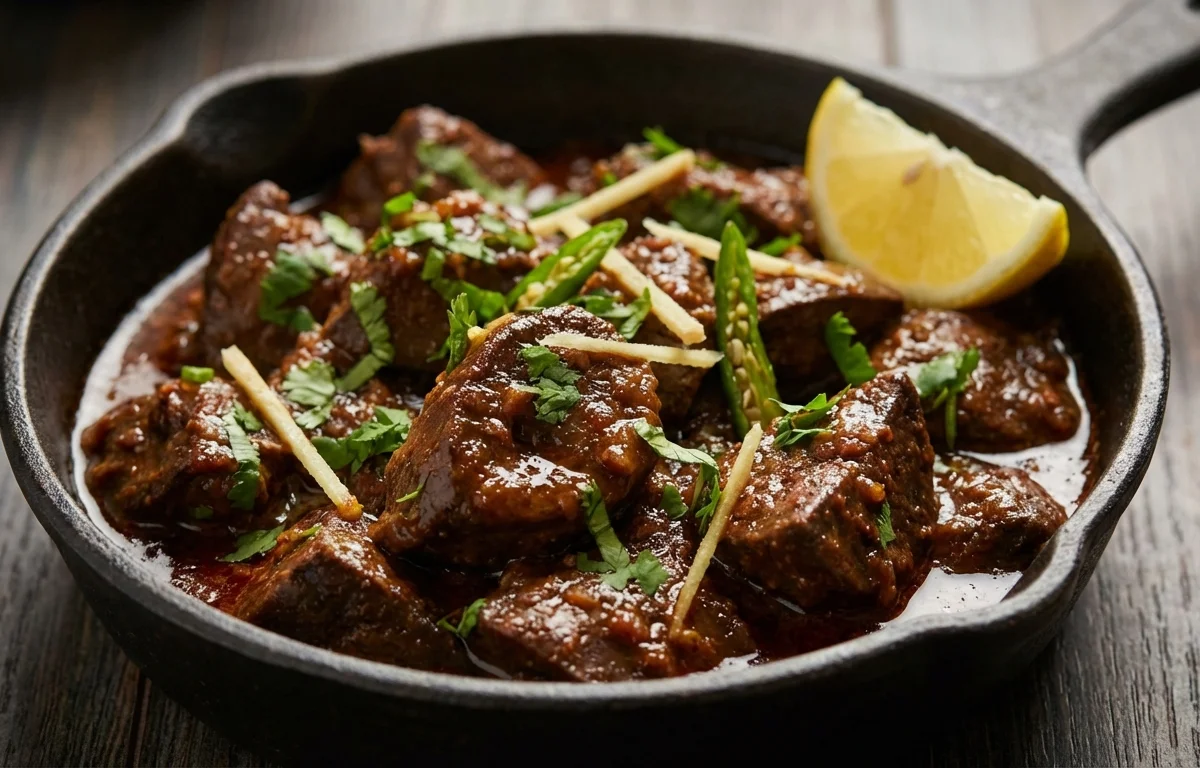
Tender pieces of goat liver cooked quickly with onions, ginger, garlic, and everyday spices until nicely coated and lightly crisp at the edges. This homestyle Indian fry is rich, bold, and best served hot with roti or rice.
For 4 servings
- prep · ~5 min
Clean and prep the liver.
1.Rinse the goat liver well and drain completely.2.Trim any tough bits and cut into bite-size pieces.3.Keep the pieces aside while you prepare the masala.TIPDo not soak the liver for long; too much soaking can dull its flavor and texture. - saute · ~7 min
Cook the onion base.
1.Heat oil in a wide pan over medium heat.2.Add cumin seeds and let them sizzle for a few seconds.3.Add sliced onion and cook until lightly golden, 5 to 6 minutes.4.Add green chili and ginger-garlic paste, then cook until the raw smell fades, about 1 minute.TIPUse a wide pan so the liver fries instead of steaming. - saute · ~6 min
Make the masala.
1.Add chopped tomato and cook until soft and pulpy, 4 to 5 minutes.2.Add turmeric powder, red chili powder, coriander powder, and salt.3.Mix well and cook for 1 minute so the spices bloom. - fry · ~5 min
Fry the liver with the masala.
1.Add the goat liver to the pan and toss well to coat with the masala.2.Cook on medium-high heat for 3 to 4 minutes, stirring often.3.Pour in water and mix once.TIPDo not overcook at this stage; liver turns tough very quickly. - simmer · ~8 min
Cook until tender and semi-dry.
Cover and cook on low heat for 6 to 8 minutes until the liver is just tender. Uncover, sprinkle garam masala, and cook a little longer until the masala coats the pieces and the pan looks semi-dry.
TIPThe liver is done when it is tender inside but still moist; stop cooking as soon as it reaches that point. - garnish
Finish with coriander leaves and lemon juice.
- serve
Serve hot.
Serve the kaleji fry hot with roti, paratha, or a small portion of rice.
What to keep in mind.
7 tips from the recipe — small details that make a real difference to the final dish.
- 1Pat the goat liver very dry after rinsing so it fries properly instead of releasing water and steaming.
- 2Slice the liver into even bite-size pieces so all the pieces turn tender at the same time.
- 3Let the onions reach light golden before adding liver; this gives the fry a sweeter, deeper masala base.
- 4Cook the tomatoes until the oil starts separating slightly, or the masala can taste raw and sharp.
- 5Use a wide pan and avoid overcrowding so the liver gets lightly crisp edges rather than a grey, boiled texture.
- 6Stop cooking as soon as the center is just tender; overcooked liver becomes grainy and chewy very fast.
- 7Add the lemon juice only at the end, off the heat if possible, to keep its fresh brightness.
Adapt it for your goals.
Dry-style
Skip a little of the water and cook uncovered longer at the end for a drier kaleji fry with more concentrated masala and crisper edges.
spicierSpicier
Add extra slit green chilies and a bit more red chili powder for a sharper, hotter version that pairs well with paratha.
with potatoWith-potato
Add small parboiled potato cubes to the masala before the liver for a homestyle kaleji aloo style fry that stretches the dish.
milderMilder
Reduce the green chili and red chili powder for a softer spice profile while keeping the ginger, garlic, and garam masala.
Why this is on our healthy list.
Rich in Iron
Goat liver is naturally rich in iron, making this dish a notable choice when you want an iron-dense savory meal.
High-Protein Main
The liver provides substantial protein, which helps make this fry filling even when served with simple roti or rice.
Packed with Micronutrients
Liver is known for being nutrient-dense, and the onions, tomatoes, chilies, and coriander add additional plant compounds and freshness.
Frequently asked questions
Cook it briefly over medium-high heat, then simmer only until just tender. The biggest mistake is overcooking, which makes liver tough and dry.