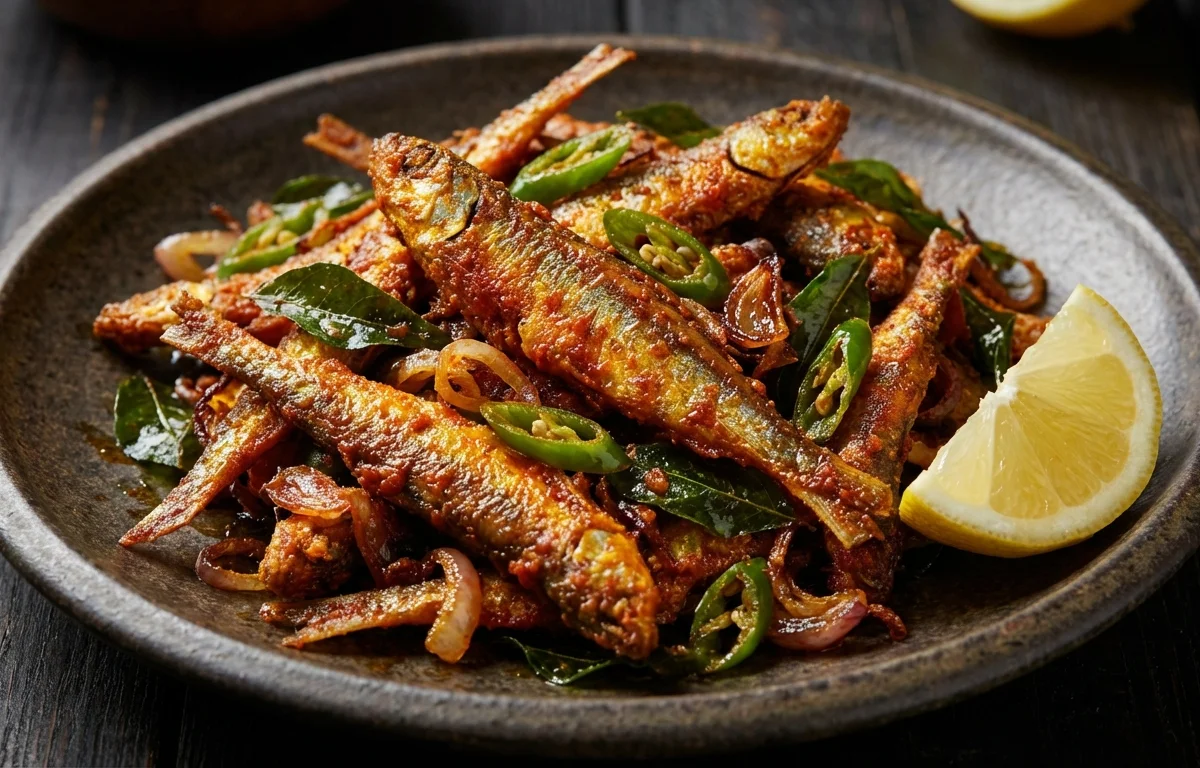
Karuvadu Varuval
A bold, rustic South Indian stir-fry made with salted dried fish, caramelized onions, and fiery spices. This intensely savory dish delivers crispy edges and a spicy kick that pairs perfectly with steamed rice and rasam. Ready in under 30 minutes, it's a beloved coastal comfort food.
For 4 servings
- prep · ~20 min
Clean and soak the dried fish.
1.Break the dried fish into small bite-sized pieces, discarding any hard bones or fins.2.Soak the pieces in warm water for 15-20 minutes to reduce saltiness and soften them slightly.3.Drain completely and pat dry with a kitchen towel.TIPSoaking is essential — it removes excess salt and rehydrates the fish just enough. Don't skip this step. - fry · ~5 min
Shallow fry the dried fish.
1.Heat 2 tablespoons of oil in a heavy-bottomed pan over medium heat.2.Add the drained fish pieces in a single layer and fry for 3-4 minutes, stirring occasionally.3.Once the fish turns crisp and golden, remove and set aside on a plate.TIPFry on medium heat — high heat burns the dried fish quickly and makes it bitter. - saute · ~8 min
Sauté onions until deep golden.
1.In the same pan, add the remaining 1 tablespoon oil.2.Add the sliced onions and a pinch of salt. Cook on medium heat for 7-8 minutes until they turn deep golden brown.3.Stir frequently to prevent burning.TIPDeep browning the onions is crucial — it creates the sweet, caramelized base that balances the intense fish. - saute · ~6 min
Build the aromatic masala.
1.Add crushed garlic, chopped ginger, slit green chilies, and curry leaves to the onions.2.Sauté for 1-2 minutes until the raw smell of ginger-garlic disappears.3.Add chopped tomatoes and cook until they turn soft and mushy (about 3-4 minutes).TIPCook the tomatoes down completely until the oil starts to separate — raw tomato will make the dish soggy. - saute · ~1 min
Bloom the spice powders.
1.Lower the heat to prevent burning.2.Add turmeric powder, red chili powder, coriander powder, cumin powder, and crushed black pepper.3.Sauté for 30-40 seconds until the spices release their aroma.TIPKeep the heat low — dry spice powders burn in seconds and turn the dish bitter. - fry · ~6 min
Combine fish with the masala and crisp it up.
1.Add the fried fish pieces back to the pan.2.Toss well to coat every piece with the masala.3.Spread the mixture evenly and cook on medium heat for 3-4 minutes without stirring too much, letting the bottom crisp up.4.Gently scrape and flip, cooking for another 2 minutes.TIPLet the fish sit undisturbed for a minute at a time — this builds the crispy, chewy texture that makes Karuvadu Varuval irresistible. - garnish · ~1 min
Finish with lemon juice and coriander.
1.Turn off the heat.2.Squeeze fresh lemon juice over the top and toss once.3.Garnish generously with chopped coriander leaves. - serve
Serve hot with steamed rice and rasam.
Transfer to a serving bowl. This dish is best eaten immediately with plain steamed rice, a drizzle of sesame oil, and a side of tangy rasam or sambar.
TIPKaruvadu Varuval tastes even better after resting for 10 minutes — the flavors deepen. Serve warm, not piping hot, for the best taste.
What to keep in mind.
7 tips from the recipe — small details that make a real difference to the final dish.
- 1Always soak the dried fish in warm water to remove excess salt and rehydrate.
- 2Fry the fish on medium heat to achieve crisp edges without bitterness.
- 3Caramelize the onions until deep golden to create a sweet base that balances the fish.
- 4Cook the tomatoes until the oil separates to avoid a soggy final dish.
- 5Bloom the spice powders on low heat to prevent burning and bitterness.
- 6Let the fish sit undisturbed while frying to build a crisp, chewy texture.
- 7Rest the finished dish for 10 minutes before serving to let flavors deepen.
Adapt it for your goals.
Low-oil
Use a non-stick pan and reduce oil by half; fry the fish pieces first without oil until dry, then add minimal oil for the masala. Ideal for those watching their fat intake.
spicy masalaSpicy-masala
Add 1 teaspoon of garam masala along with the spice powders and increase green chilies to 5 for an extra aromatic, fiery kick.
coconut flavoredCoconut-flavored
Stir in 2 tablespoons of fresh grated coconut at the very end for a subtle sweetness and creamy texture that complements the coastal flavors.
Why this is on our healthy list.
Rich in Protein
Dried fish is a concentrated source of protein, which supports muscle repair and keeps you full longer.
Source of Omega-3 Fatty Acids
Small dried fish like anchovies provide omega-3s that support heart and brain health.
High in Calcium
Eating dried fish with bones provides a natural boost of calcium for strong bones and teeth.
Anti-Inflammatory Spices
Turmeric, ginger, and black pepper contain compounds that may help reduce inflammation in the body.
Frequently asked questions
Yes, but small fish like anchovies work best because they become crisp and are easy to eat whole. Avoid very large dried fish which may be too tough.