
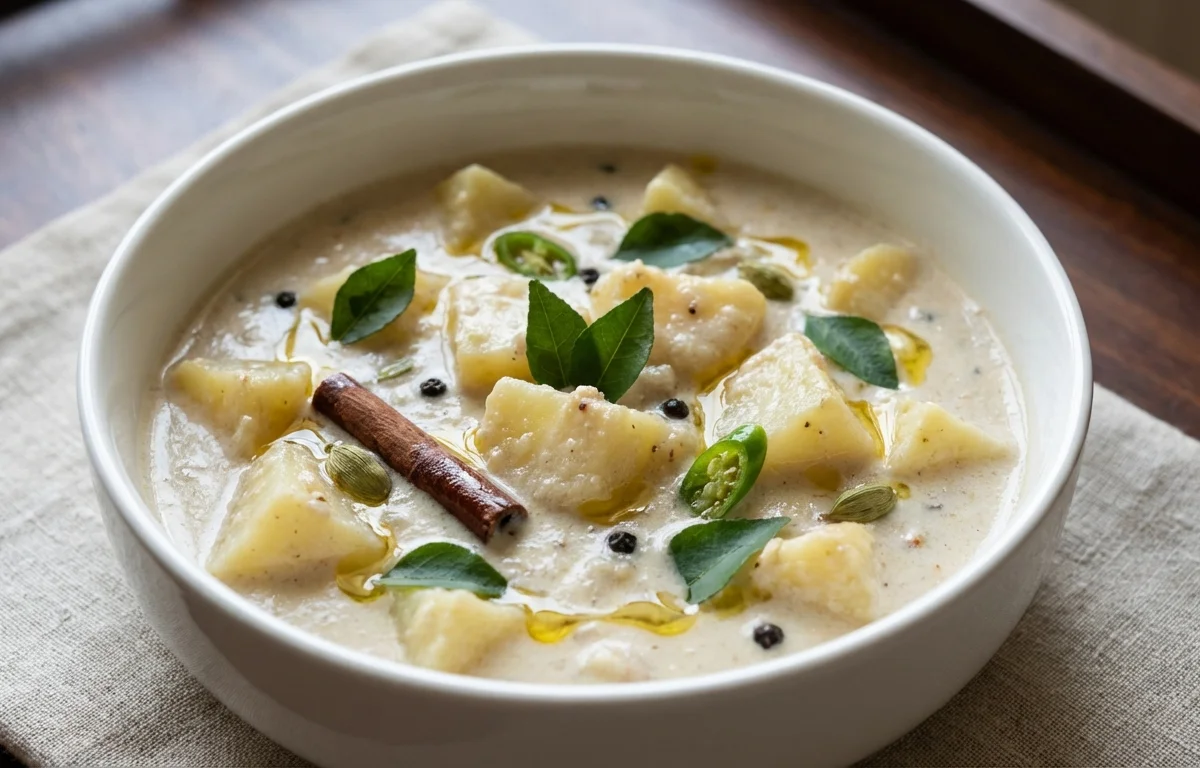
Kerala Potato Stew
A gentle, coconut-milk-simmered potato stew from Kerala that's light yet deeply comforting. Thin slices of potato and green chili float in a mildly spiced, fragrant coconut gravy brightened with fresh ginger and curry leaves. Traditionally served with appam or idiyappam, it's a beautiful balance of creamy, spicy, and earthy notes.
For 4 servings
- prep
Prepare the potatoes and aromatics.
1.Peel and slice potatoes into thin, even rounds (about ¼ inch thick).2.Slice onions thin, slit green chilies lengthwise, and julienne the ginger.3.Keep thick coconut milk separate from thin coconut milk. - simmer · ~12 min
Cook the potato stew base.
1.In a deep pot, combine sliced potatoes, onions, green chilies, ginger strips, 10 curry leaves, and 1 tbsp coconut oil.2.Add 2 cups water and 0.5 tsp salt. Stir gently.3.Bring to a boil, then reduce heat to a simmer and cook until potatoes are just tender (10–12 minutes). - simmer · ~5 min
Add thin coconut milk and finish the stew.
1.Pour in 1.5 cups thin coconut milk. Stir and continue simmering for 5 more minutes for flavors to blend.2.Add the 0.5 cup thick coconut milk. Stir gently and switch off the heat immediately—do not boil.3.Season with a pinch of freshly crushed black pepper. Stir once.TIPNever boil after adding thick coconut milk; it splits and the stew turns grainy. - temper · ~3 min
Make the coconut oil tempering.
1.Heat 2 tsp coconut oil in a small pan over medium heat.2.Add 2 sliced shallots and fry until golden and crisp.3.Toss in 2 dried red chilies, 6 curry leaves, and 3 whole peppercorns. Fry 20 seconds until fragrant and curry leaves crackle. - garnish
Pour the tempering over the stew and serve.
Pour the hot tempering over the stew. Gently swirl once to distribute the aromatic infused oil. Serve warm with appam, idiyappam, or rice.
What to keep in mind.
6 tips from the recipe — small details that make a real difference to the final dish.
- 1Slice potatoes evenly to ensure they cook at the same rate and don't break apart.
- 2Use second-extract (thin) coconut milk for the base and reserve first-extract (thick) for finishing — this prevents the stew from becoming too rich too early.
- 3Do not boil after adding thick coconut milk; gentle heat only, or it will curdle and turn grainy.
- 4Let the tempering sizzle for just 20 seconds after adding curry leaves and chilies to preserve their aroma without burning.
- 5If making ahead, store the stew and tempering separately, then combine just before serving to keep the oil fragrant.
- 6For a silkier texture, crush a few potato slices against the side of the pot before adding thick coconut milk.
Adapt it for your goals.
Vegan
Already vegan, but swap the traditional appam for a plant-based rice pancake or serve with steamed rice for a fully vegan Kerala meal.
protein richProtein-rich
Add 1 cup of cooked chickpeas or paneer cubes along with the thin coconut milk for a heartier stew that still keeps the mild, creamy flavor.
low fatLow-fat
Substitute half the thick coconut milk with cashew milk or almond milk blended with a pinch of cornstarch to reduce fat while keeping a creamy texture.
spicySpicy
Add 1 teaspoon of crushed black pepper or 2 more slit green chilies in step 2 for a noticeably hotter stew that still respects the dish's balance.
gluten freeGluten-free
Naturally gluten-free, but confirm idiyappam or appam are made from rice flour if serving with them.
Why this is on our healthy list.
Rich in Healthy Fats
Coconut milk provides medium-chain triglycerides (MCTs), which are easily digestible and can support energy metabolism.
Good Source of Potassium
Potatoes supply potassium, an essential mineral for maintaining healthy blood pressure and muscle function.
Anti-Inflammatory Spices
Ginger, black pepper, and curry leaves are traditionally used for their natural anti-inflammatory and digestive properties.
Frequently asked questions
Yes. Use the thin (watery) part from the top for the base, and reserve the thick cream layer for finishing — shake the can well and separate before using.



.webp)
.webp)