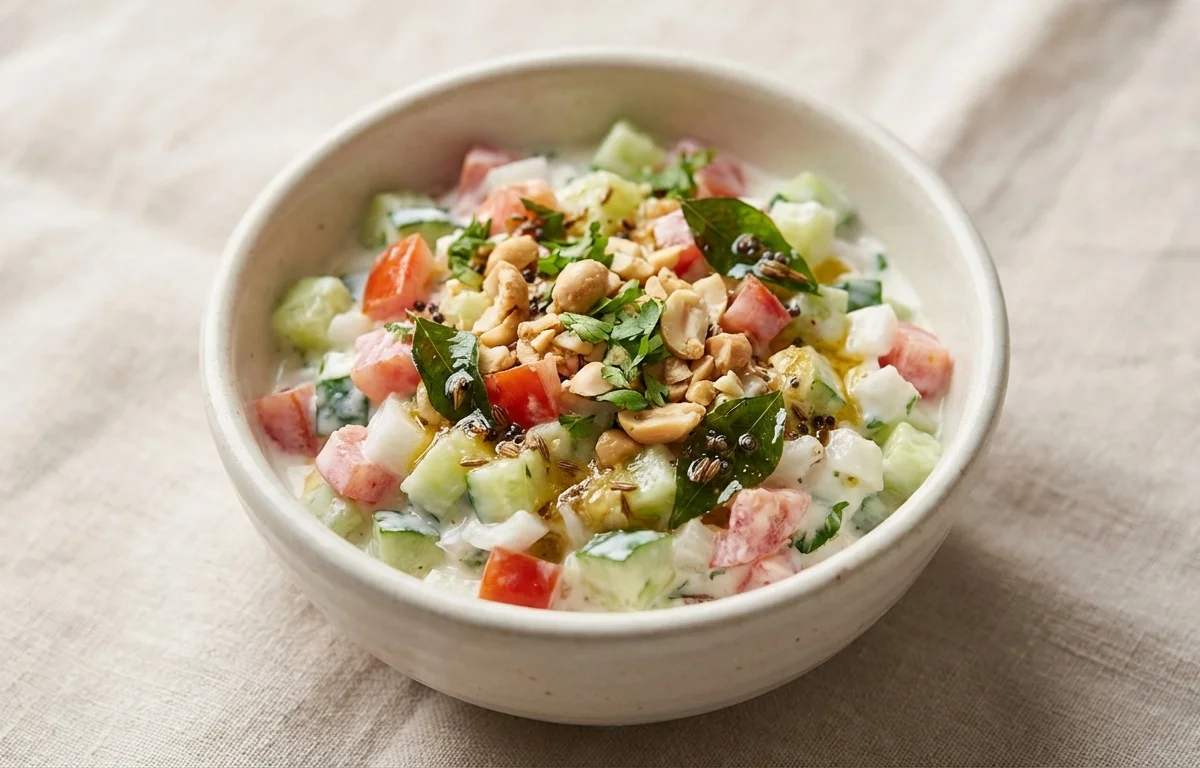
Koshimbir
A fresh Maharashtrian salad made with crunchy cucumber, onion, tomato, and peanut, brightened with lemon and a simple tempering. It is light, cooling, and easy to pair with dal, rice, roti, or everyday thali meals.
For 4 servings
- prep · ~10 min
Chop the vegetables.
1.Finely chop the cucumber and place it in a mixing bowl.2.Finely chop the tomato and onion and add them to the bowl.3.Add the chopped green chili, chopped cilantro, and crushed roasted peanuts. - mix · ~1 min
Season the salad.
Add lemon juice, salt, and sugar to the bowl. Mix gently until everything is evenly coated.
- temper · ~1 min
Make the tempering.
1.Heat oil in a small pan over medium heat.2.Add mustard seeds and let them splutter.3.Add cumin seeds, asafoetida, and curry leaves and cook for a few seconds until fragrant.TIPKeep the heat medium so the tempering smells nutty and fragrant, not burnt. - assemble · ~1 min
Pour the tempering over the koshimbir.
Pour the hot tempering over the prepared salad and mix well so the flavors spread through the vegetables.
- serve
Serve the koshimbir fresh.
What to keep in mind.
7 tips from the recipe — small details that make a real difference to the final dish.
- 1Deseed the cucumber if it is very watery, so the koshimbir stays crisp instead of turning soggy.
- 2Add salt and lemon just before serving; cucumber and tomato release water quickly once seasoned.
- 3Crush the roasted peanuts coarsely, not to a powder, so you keep that signature nutty crunch.
- 4Let the mustard seeds fully splutter before adding cumin, or the tempering can taste raw.
- 5Pour the hot tadka directly over the salad and mix immediately to spread the aroma evenly.
- 6If making ahead, keep the chopped vegetables chilled and add peanuts and tempering at the last minute.
- 7Use a small pinch of sugar only to balance the lemon and onion, not to make the salad sweet.
Adapt it for your goals.
No-onion
Skip the onion for a cleaner, lighter version that still tastes complete from peanuts, lemon, chili, and tadka.
jainJain
Omit onion and asafoetida, then add a little extra cucumber and tomato for a Jain-friendly fresh salad.
coconutCoconut
Add a few tablespoons of fresh grated coconut for a softer texture and a more festive Maharashtrian touch.
yogurtYogurt
Mix in a little plain curd for a creamier, cooling koshimbir that pairs especially well with spicy thali meals.
Why this is on our healthy list.
Hydrating Fresh Vegetables
Cucumber and tomato make this salad light and refreshing while contributing water and everyday micronutrients.
Good Fats From Peanuts
Roasted peanuts add satisfying texture along with plant-based fats and some protein, making the salad more filling.
Herbs and Spices With Digestive Appeal
Cilantro, cumin, curry leaves, ginger-free chili heat, and lemon bring bright flavor that helps the salad feel lively and easy to eat.
Frequently asked questions
Yes, chop the vegetables a few hours ahead and refrigerate them, but add salt, lemon juice, peanuts, and tempering just before serving.



.webp)