
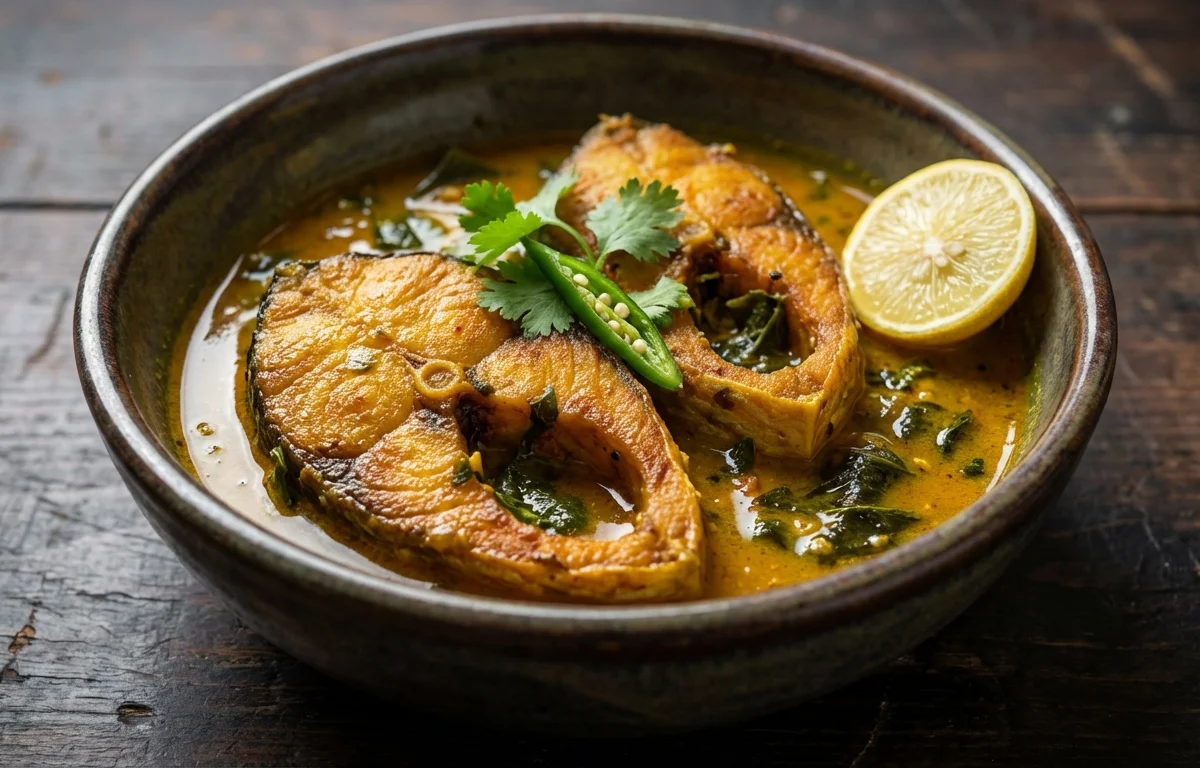
Kosu Xaak di Maas
A rustic, soul-warming Assamese fish curry where tender pieces of river fish are gently simmered with colocasia leaves in a light, aromatic broth. The leaves melt into the gravy, giving it a unique, slightly earthy body that pairs beautifully with plain steamed rice.
For 4 servings
- prep · ~7 min
Prepare the colocasia leaves.
1.Remove the thick stems and central veins from the colocasia leaves.2.Wash the leaves thoroughly and roughly chop them into strips.3.Boil 1 cup of water in a small pan, add the chopped leaves and a pinch of salt.4.Simmer for 5-7 minutes until the leaves soften completely. Drain and set aside. - prep · ~10 min
Marinate the fish.
1.Rub the fish pieces with turmeric powder and a pinch of salt.2.Let them rest for 10 minutes to absorb the flavors.TIPUse river-water fish like rohu or catla for the most authentic Assamese taste. - temper · ~5 min
Make the base.
1.Heat mustard oil in a deep pan or kadai until it reaches its smoking point.2.Reduce the heat, add the crushed garlic and slit green chilies.3.Sauté for 30 seconds until fragrant, then add the chopped onions.4.Cook the onions until they turn soft and translucent.TIPHeating mustard oil to its smoking point removes its raw pungency and makes it mellow. - saute · ~3 min
Cook the greens.
1.Add the blanched colocasia leaves to the pan.2.Stir gently and sauté with the onion mixture for 2-3 minutes. - simmer · ~10 min
Build the gravy.
1.Pour in 3 cups of hot water and add the remaining turmeric powder.2.Add the sliced elephant apple to the pan for tanginess.3.Bring the liquid to a gentle boil and let it simmer for 10 minutes until the raw smell of the greens disappears.TIPElephant apple (ou tenga) gives a distinct fruity sourness. If unavailable, add lemon juice at the very end. - simmer · ~10 min
Poach the fish.
1.Slide the marinated fish pieces gently into the simmering gravy.2.Ensure the fish is submerged without breaking it.3.Cover the pan and cook on low heat for 8-10 minutes until the fish is firm and opaque.4.Gently swirl the pan once or twice during cooking instead of using a ladle.TIPDo not stir the curry once the fish is added; it will break the delicate fillets. - garnish · ~5 min
Rest and serve.
Turn off the heat and let the curry sit covered for 5 minutes so the flavors settle. Drizzle a few drops of raw mustard oil on top for aroma before serving.
TIPThis curry tastes even better the next day as the greens infuse deeper into the broth.
What to keep in mind.
6 tips from the recipe — small details that make a real difference to the final dish.
- 1Always heat mustard oil until it smokes to tame its sharpness and unlock nutty notes.
- 2Handle fish gently—slide pieces into the gravy and swirl the pan instead of stirring.
- 3Select tender colocasia leaves; older leaves can be fibrous and bitter.
- 4Let the curry rest off heat for 5 minutes so the fish absorbs the broth's flavor.
- 5For a thicker gravy, mash a few cooked colocasia leaves against the pan before adding water.
- 6Make ahead: the curry tastes deeper the next day as the greens infuse the broth.
Adapt it for your goals.
Prawn substitute
Swap rohu for large freshwater prawns (gaam kukurua). Reduce poaching time to 5-6 minutes. The sweet prawn flavor pairs beautifully with the earthy leaves.
low oilLow-oil
Reduce mustard oil to 1 tbsp and dry-toast the garlic and chilies before adding onions. A lighter version that still captures the essence.
non traditional greensNon-traditional greens
If colocasia leaves are unavailable, replace with tender spinach or kale. The texture changes slightly, but the earthy-herbal character remains.
Why this is on our healthy list.
Rich in Iron & Fiber
Colocasia leaves are packed with iron and dietary fiber, supporting healthy digestion and red blood cell production.
Lean Protein Source
Rohu fish provides high-quality, low-fat protein essential for muscle repair and satiety.
Anti-inflammatory Spices
Turmeric and garlic offer natural anti-inflammatory compounds that may support joint health.
Frequently asked questions
Substitute with 1 tbsp fresh lemon juice added at the end of cooking, or use a small piece of raw green mango for similar sourness.




-curry.webp)
.webp)