Kothu Parotta
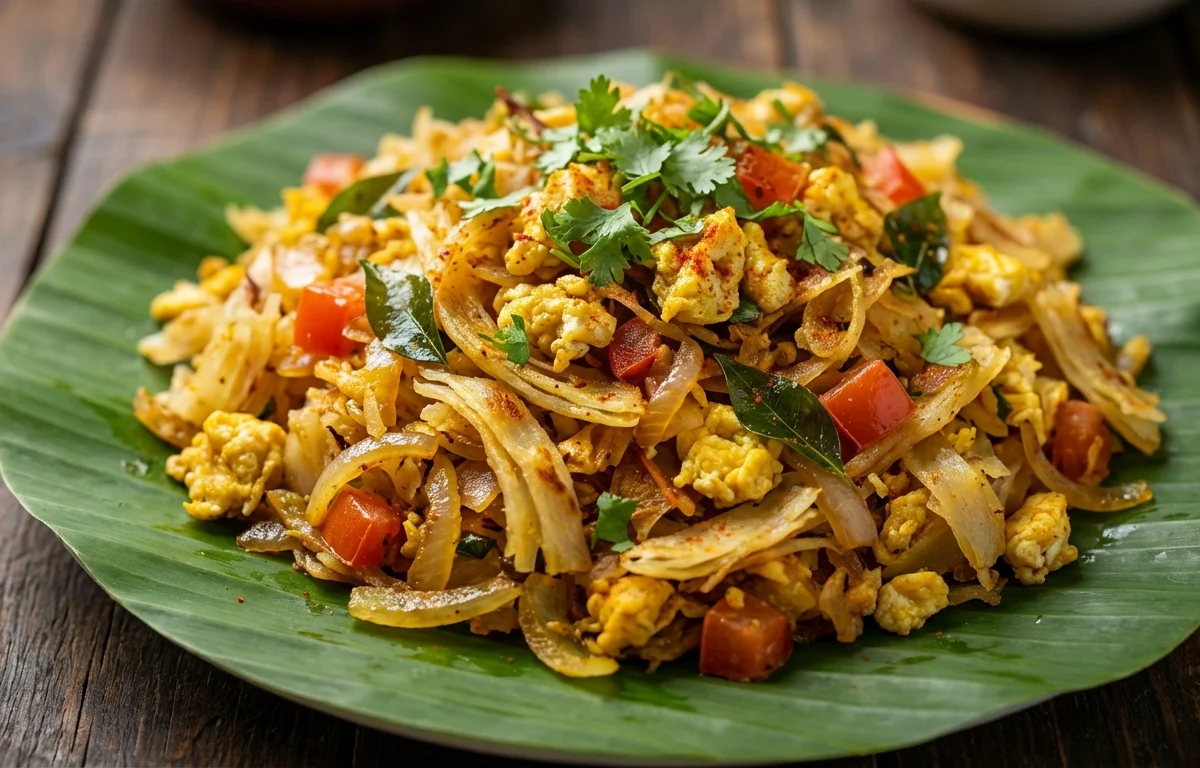
Shredded flaky parottas tossed on a hot tawa with eggs, onion, tomato, green chili, and warming spices make this Tamil street-food favorite deeply savory, spicy, and satisfying in every bite.
For 4 servings
- knead · ~6 min
Knead the parotta dough.
Mix all-purpose flour, sugar, 1 pinch salt, 1 tbsp oil, and water into a soft dough. Knead for 5 to 6 minutes until smooth and pliable.
TIPA softer dough gives flakier parottas, so avoid making it stiff. - rest · ~20 min
Rest the dough.
Rub the dough lightly with a little oil, cover, and let it rest for 20 minutes.
- prep · ~10 min
Divide and shape the parottas.
1.Divide the dough into 4 equal balls.2.Grease your work surface lightly with oil.3.Roll or stretch each ball very thin.4.Pleat the sheet into a strip and coil it into a round.5.Rest the coils for 5 minutes, then flatten each into a parotta.TIPA thin stretch and loose coil create the layered texture needed for good kothu parotta. - fry · ~12 min
Cook the parottas.
1.Heat a tawa over medium heat.2.Cook each parotta with a little oil until brown spots appear on both sides.3.Press gently as it cooks so the layers puff slightly.4.Set aside until warm, then clap or crush lightly to loosen the layers. - prep · ~3 min
Shred the parottas.
Stack the cooked parottas and chop or tear them into small bite-size strips.
- saute · ~10 min
Cook the masala base.
1.Heat the remaining oil on a wide tawa or kadai over medium heat.2.Add fennel seeds and curry leaves; cook until fragrant.3.Add onions and green chili, then cook until the onions soften and turn light golden.4.Add ginger-garlic paste and cook until the raw smell disappears.5.Add tomatoes and cook until soft and pulpy. - saute · ~1 min
Add the spice powders.
Add turmeric powder, red chili powder, coriander powder, black pepper, garam masala, and the remaining salt. Mix well and cook for 1 minute.
TIPKeep the heat medium so the spice powders toast without burning. - fry · ~2 min
Scramble the eggs into the masala.
Crack the eggs directly into the pan and scramble them into the masala until just set and softly cooked.
- mix · ~4 min
Toss the parotta with the masala.
1.Add the shredded parotta to the pan.2.Mix and chop it through the masala with two spatulas or flat spoons.3.Toss well so every piece is coated.4.Cook for 3 to 4 minutes until hot and lightly crisp at the edges.TIPThe quick chopping and tossing on a hot pan gives kothu parotta its signature street-style texture. - garnish · ~1 min
Finish with coriander leaves.
Sprinkle chopped coriander leaves over the top and give it one final toss.
- serve
Serve hot.
Serve the kothu parotta hot straight from the pan.
What to keep in mind.
6 tips from the recipe — small details that make a real difference to the final dish.
- 1Keep the parotta dough soft and slightly oily; a stiff dough won’t give you the flaky shreds this dish needs.
- 2Let the cooked parottas cool just until warm before clapping or crushing, so the layers separate without turning gummy.
- 3Cook the tomatoes down until jammy and pulpy; wet, undercooked tomatoes can make the kothu soggy.
- 4Scramble the eggs only until softly set, since they will cook a bit more when tossed with the shredded parotta.
- 5Use a wide tawa or kadai so the parotta can hit the hot surface and crisp at the edges instead of steaming.
- 6If making ahead, prepare and shred the parottas earlier, then do the final kothu toss just before serving for the best texture.
Adapt it for your goals.
Chicken-kothu
Add cooked shredded chicken to the masala before the eggs for a heartier, street-stall style version with extra savory depth.
veg kothuVeg-kothu
Skip the eggs and add chopped cabbage, capsicum, or mushrooms to the onion-tomato base for a vegetable-forward version.
salna styleSalna-style
Splash in a little veg or chicken salna while tossing the shredded parotta for a juicier, messier, more restaurant-style finish.
store bought parottaStore-bought-parotta
Use ready-made frozen parottas when short on time; it gives a faster weeknight version while keeping the classic texture.
Why this is on our healthy list.
Protein from Eggs
The eggs add satisfying protein, making the dish more filling and balanced than plain parotta alone.
Aromatics and Herbs
Onion, tomato, green chili, curry leaves, ginger, garlic, and coriander bring plant compounds and freshness along with flavor.
Spice-Driven Flavor
Fennel, turmeric, coriander powder, pepper, and garam masala provide bold taste, so the dish gets depth from spices rather than heavy sauces.
Frequently asked questions
Yes. Cook frozen or store-bought parottas until flaky, cool slightly, then shred and continue with the masala as written.