
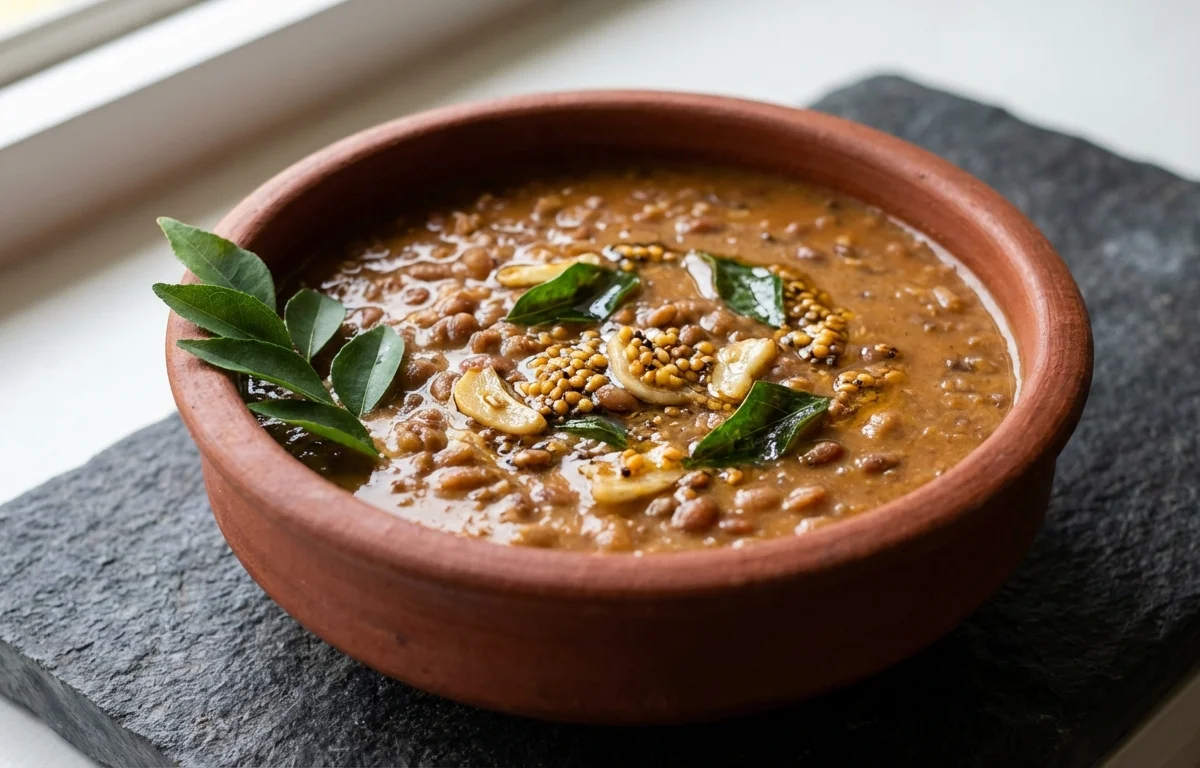
Kulith Koddel
A rustic, tangy coconut curry from the Konkan coast starring nutty horse gram. Whole roasted spices and coconut are ground into a fragrant masala paste that thickens the gravy beautifully. A fiery tempering of garlic and dried red chili finishes this protein-packed, earthy dish that pairs wonderfully with steamed rice.
For 4 servings
- prep
Soak the horse gram.
Wash the horse gram thoroughly and soak in enough water for at least 6 hours or overnight. Drain and set aside.
TIPLonger soaking reduces cooking time and makes the dal easier to digest. - pressure cook · ~25 min
Pressure cook the horse gram.
Add the soaked and drained horse gram to a pressure cooker with 3 cups of fresh water, turmeric powder, and salt. Close the lid and cook on medium heat for 5-6 whistles. Let the pressure release naturally.
TIPThe horse gram should be soft and mash easily when pressed between fingers. - roast · ~7 min
Roast the spices and coconut.
1.Heat a small pan over medium-low heat. Add coriander seeds, cumin seeds, peppercorns, and 4 dried red chilies.2.Dry roast, stirring continuously, until fragrant and slightly darkened (2-3 minutes). Transfer to a plate.3.In the same pan, add grated coconut. Roast on low heat until golden brown and aromatic (3-4 minutes).TIPWatch the coconut carefully — it can burn quickly. Keep the heat low. - mix · ~3 min
Grind the masala paste.
Add the roasted spices and roasted coconut to a blender. Pour in about 1 cup of water and grind to a very smooth, fine paste. Scrape down the sides as needed.
TIPThe paste should be silky smooth. A coarse paste will not thicken the curry properly. - simmer · ~10 min
Simmer the curry.
Open the pressure cooker. Mash the cooked horse gram lightly with the back of a spoon. Stir in the tamarind paste and the ground masala paste. Mix well and bring to a gentle simmer on low heat.
TIPAdd a splash of warm water if the curry seems too thick. Simmer for at least 8-10 minutes for the raw masala smell to cook out. - temper · ~2 min
Make the tempering.
1.Heat coconut oil in a small tadka pan until shimmering.2.Add mustard seeds and let them crackle and pop (30 seconds).3.Add curry leaves, crushed garlic cloves, and 2 broken dried red chilies.4.Sauté until the garlic turns golden and the aroma fills the kitchen (30-45 seconds).TIPUse a small pan for tempering to intensify the sizzle — the aroma explosion makes this dish special. - mix · ~5 min
Pour the tempering over the curry.
Immediately pour the sizzling tempering over the simmering Kulith Koddel. Close the lid, turn off the heat, and let it rest for 5 minutes.
TIPDon't stir right away — letting the tempering sit on top infuses all the flavors beautifully. - serve
Serve hot with steamed rice.
Give the curry a gentle stir just before serving. Ladle into bowls and serve piping hot with steamed rice and a drizzle of raw coconut oil if desired.
TIPThis curry tastes even better the next day after the flavors have melded.
What to keep in mind.
6 tips from the recipe — small details that make a real difference to the final dish.
- 1Soak horse gram for at least 8 hours to reduce cooking time and improve digestibility.
- 2Dry-roast the coconut on low heat until golden brown to unlock its nutty aroma without burning.
- 3Grind the masala paste very smooth — a coarse paste won't thicken the gravy properly.
- 4Simmer the curry for 8–10 minutes after adding the masala to cook out any raw spice smell.
- 5Pour the sizzling tempering over the curry and let it rest without stirring for 5 minutes.
- 6Kulith Koddel tastes even better the next day after the flavors have melded overnight.
Adapt it for your goals.
Low-oil
Reduce coconut oil in tempering to 1 teaspoon and skip the final drizzle of raw oil. Still delicious and lighter.
high proteinHigh-protein
Add 1/2 cup of cooked chickpeas or mung beans along with horse gram for an extra protein boost.
veganVegan
This recipe is already vegan as written — no modifications needed. Perfect for plant-based diets.
gluten freeGluten-free
Naturally gluten-free. Ensure your tamarind paste and spice powders are certified gluten-free if needed.
Why this is on our healthy list.
Rich in Plant Protein
Horse gram is one of the highest-protein legumes, making this curry an excellent source of plant-based protein for muscle repair and satiety.
High in Iron
Horse gram is a good source of iron, which supports healthy blood and energy levels. The tamarind and vitamin C in the spices aid absorption.
Supports Digestion
Cumin, pepper, and curry leaves are known for their digestive properties, while the soaking and pressure cooking make horse gram easier to digest.
Low in Fat
With only a small amount of coconut and oil, this curry is naturally low in unhealthy fats, relying on spices for flavor.
Frequently asked questions
Yes, you can use canned horse gram. Skip the soaking and pressure cooking — just rinse and add directly to the simmering gravy. Reduce salt accordingly.



.webp)


.webp)